NEP 2020 and the return of Indian languages to higher education
June 29, 2026
  • Read Ecopy
  • Circulation
  • Advertise
  • Careers
  • About Us
  • Contact Us
Android AppiPhone AppArattai
Organiser
  • ‌
  • Bharat
    • Assam
    • Bihar
    • Chhattisgarh
    • Jharkhand
    • Maharashtra
    • View All States
  • World
    • Asia
    • Europe
    • North America
    • South America
    • Africa
    • Australia
  • Editorial
  • International
  • Opinion
  • RSS @ 100
  • More
    • Op Sindoor
    • Analysis
    • Sports
    • Defence
    • Politics
    • Business
    • Economy
    • Culture
    • Special Report
    • Sci & Tech
    • Entertainment
    • G20
    • Azadi Ka Amrit Mahotsav
    • Vocal4Local
    • Web Stories
    • Education
    • Employment
    • Books
    • Interviews
    • Travel
    • Law
    • Health
    • Obituary
  • Subscribe
    • Subscribe Print Edition
    • Subscribe Ecopy
    • Read Ecopy
  • ‌
  • Bharat
    • Assam
    • Bihar
    • Chhattisgarh
    • Jharkhand
    • Maharashtra
    • View All States
  • World
    • Asia
    • Europe
    • North America
    • South America
    • Africa
    • Australia
  • Editorial
  • International
  • Opinion
  • RSS @ 100
  • More
    • Op Sindoor
    • Analysis
    • Sports
    • Defence
    • Politics
    • Business
    • Economy
    • Culture
    • Special Report
    • Sci & Tech
    • Entertainment
    • G20
    • Azadi Ka Amrit Mahotsav
    • Vocal4Local
    • Web Stories
    • Education
    • Employment
    • Books
    • Interviews
    • Travel
    • Law
    • Health
    • Obituary
  • Subscribe
    • Subscribe Print Edition
    • Subscribe Ecopy
    • Read Ecopy
Organiser
  • Home
  • Bharat
  • World
  • Operation Sindoor
  • Editorial
  • Analysis
  • Opinion
  • Culture
  • Defence
  • International Edition
  • RSS @ 100
  • Magazine
  • Read Ecopy
Home Bharat

From Colonial Classrooms to Civilisational Confidence: How NEP 2020 is reclaiming Indian languages in higher education

India’s higher education landscape is undergoing a historic linguistic transformation under NEP 2020, breaking long-standing English dominance. From engineering to medicine, learning in Indian languages is reshaping access, equity, and academic confidence

WEBDESKWEBDESK
Jan 17, 2026, 10:00 am IST
in Bharat, Education
Follow on Google News
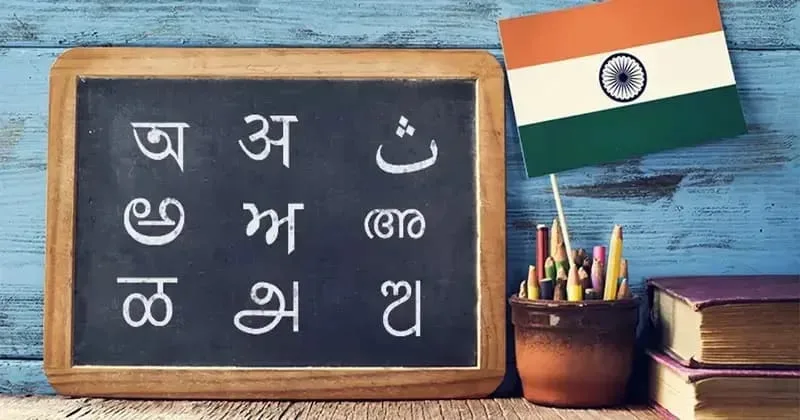
Representative image

Representative image

FacebookTwitterWhatsAppTelegramEmail

For decades after Independence, Bharat’s higher education system remained shaped by a colonial linguistic legacy in which English functioned both as a gatekeeper of opportunity and a barrier to access. The National Education Policy (NEP) 2020 marked a decisive shift away from this imbalance by reaffirming a civilisational insight: education is most empowering when imparted in one’s mother tongue.

Reimagining technical education beyond english

A landmark development in this transformation occurred on January 6, 2026, when IIT Indore advanced Hindi as a functional language of science and technology through Abhyuday-3, a National Technical Hindi Seminar. Organised in collaboration with IIT Jodhpur and CSIR–NIScPR, the initiative sought to institutionalise technical Hindi across teaching, research, and administrative domains. Its central objective was to reduce linguistic barriers for students from Hindi-medium backgrounds who have historically been underrepresented in technical education.

This milestone built upon an earlier precedent set by IIT Jodhpur, which in September 2025 became the first Indian Institute of Technology to offer first-year BTech instruction in Hindi. By doing so, it challenged the long-held assumption that engineering excellence is intrinsically linked to English proficiency.

Indian languages on the national and global stage

The impact of the NEP has also extended beyond Bharat’s borders. In July 2025, Sri Lanka’s Kotelawala Defence University launched a Hindi language programme in partnership with the Swami Vivekananda Cultural Centre. This initiative strengthened Bharat–Sri Lanka civilisational ties, positioning education as a bridge for cultural continuity and linguistic exchange.

Within Bharat, the multilingual vision of the National Education Policy began translating into institutional practice. IGNOU, through a memorandum of understanding with the Odisha government, initiated the delivery of all academic programmes in Odia, from undergraduate degrees to certificate courses. This intervention illustrated how higher education in regional languages can directly empower tribal, rural, and first-generation learners by aligning academic instruction with linguistic familiarity.

Also Read: Somnath: 10 year girl depicts Op Sindoor valour at Shaurya Sabha; PM Modi hits out at colonial mindset in the country

AICTE as the driving force

The All India Council for Technical Education (AICTE) emerged as a central institutional catalyst in this transformation. As early as October 2021, AICTE approved BTech programmes in Hindi and supported their rollout through AI-enabled translation of core engineering textbooks.

By April 2025, AICTE announced plans to make engineering textbooks available in 12 Indian languages. More than 600 titles had already been published, with several others under development. Concurrently, regional-language engineering programmes expanded across 22 colleges nationwide, collectively offering 2,580 seats, marking a structural shift rather than a symbolic gesture.

Medicine and technology in the mother tongue

Medical education also underwent a significant recalibration. Rajasthan and Chhattisgarh introduced Hindi-medium MBBS programmes from the 2024–25 academic session, primarily to accommodate students from rural and Hindi-medium backgrounds. These initiatives echoed Prime Minister Narendra Modi’s repeated emphasis on eliminating linguistic discrimination in professional education.

In the digital learning ecosystem, IIT Madras, through NPTEL, broadened access by offering Python programming and data structures courses in Tamil. Simultaneously, institutions across the country translated thousands of hours of technical content into multiple Indian languages, widening participation in technology-driven education.

Outcomes: From policy vision to ground reality

The results of these reforms have moved beyond intent into measurable outcomes. At IIT Jodhpur, enrolment in Hindi-medium engineering programmes showed sustained demand, with 116 students in the first batch and 96 in the subsequent intake. Students reported greater confidence and conceptual clarity during their foundational year, enabling a smoother transition to English-medium instruction in later semesters.

Similarly, IIT-BHU’s move towards introducing Hindi-medium instruction in the first year is expected to reduce linguistic inequities at one of Bharat’s most prestigious institutions.

Regional-language graduates prove their worth

Scepticism surrounding regional-language education was decisively challenged by outcomes from Pimpri Chinchwad College of Engineering in Pune. The first batch of Marathi-medium engineers, graduating in 2025, achieved a 60 percent placement rate, with salary packages reaching up to ₹10 lakh per annum. Their performance demonstrated clear parity with English-medium graduates in both competence and employability.

Medical education finds a balanced model

States such as Madhya Pradesh, which pioneered Hindi-medium MBBS education, reported that nearly 30 percent of students opted for Hindi instruction, citing improved conceptual understanding and reduced academic stress. Over time, institutions evolved a hybrid Hindi–English model, offering flexibility while maintaining academic rigour.

Rising enrolments and cultural confidence

Nationwide data reflected growing acceptance of regional-language education. Vacant seats in regional-language engineering programmes declined sharply—from 80 percent in 2021–22 to 53 percent in 2022–23. Tamil Nadu, Andhra Pradesh, and Uttar Pradesh emerged as leading adopters of this model.

Beyond statistics, these reforms strengthened Bharat’s linguistic self-confidence. In Sri Lanka, Hindi education advanced cultural diplomacy, while in Odisha and Tamil Nadu, regional languages gained large-scale academic legitimacy. Collectively, these developments indicate that NEP 2020 has begun translating its philosophical vision into a durable transformation of Bharat’s higher education landscape.

 

Topics: NEP 2020Technical EducationHigher Education ReformMother Tongue EducationIndian LanguageEducation EquityAcademic Inclusion
ShareTweetSendShareSend
✮ Subscribe Organiser YouTube Channel. ✮
✮ Join Organiser's WhatsApp channel for Nationalist views beyond the news. ✮
Previous News

West Bengal: Suvendu Adhikari files defamation suit against Mamata Banerjee, seeks Rs 100 crore damages

Next News

Tamil Nadu: DMK, TVK diluting Pongal sanctity by rebranding as ‘Dravida Pongal’, imposing it on Christians, Muslims

Related News

Tamil Nadu Governor Rajendra Vishwanath Arlekar addressing the first session of the 17th Tamil Nadu Legislative Assembly on June 18, 2026.

Tamil Nadu: Joseph govt first policy statement mirrors DMK narrative on language politics and Centre-State disputes

ABVP protests at Telangana School Education Directorate over closure of 24,000 government schools

NEP 2020: Foundation laid, reforms awaited

Idea is to make Nalanda a global centre of learning once again: Prof Sachin Chaturvedi

Representative Image (Thus is n AI Generated image)

NEP 2020: Bharat’s greatest gift for humanity; Testament to truth, consciousness & eternal bliss

BJP pushes NEP-style school reforms in Bengal, flags failures under TMC

West Bengal: BJP Govt unveils school reform blueprint no heavy bags, less homework; Flags failures under TMC

Load More

Latest News

People jump into streams in Paris, unable to bear the heat and railway tracks melting in Germany due to heatwaves

Europe heatwaves peak amid human-caused climate change; Death toll crosses 1300, infrastructures melt & NRIs miss India

BKS National General Secretary at a gathering in Jaipur wherein he urged the government to provide 4 times more compensation to the farmers once their land is acquired

Bharatiya Kisan Sangh urges government to pay fourfold compensation to farmers for agricultural land acquisition

The Netherlands' return of the 11th-century Chola-era Leiden Copper Plates to India marks a significant milestone in restoring India's cultural heritage

Historic Homecoming: Netherlands returns 11th-century Leiden Copper Plates to India, preserving legacy of Chola Empire

Keralam: BJP complains to Kannur Collector over oath taken in the name of Allah by UDF, SDPI councillors; seeks action

Reawakening of Bengal

Civilians injured in Afghanistan after Pakistan airstrike

Afghan Govt says Pakistani air strikes kill 36 Civilians, injure 163 amid escalating border tensions

Chinese President Xi Jinping

From Economic Miracle to Authoritarian Revival: Why Xi is rewriting China’s social contract

Malkangiri police recover large cache of Maoist arms and explosives

Major Maoist arms cache recovered in Malkangiri; Odisha records seventh anti-insurgency seizure within three weeks

PM Modi attended the National Day celebrations marking the 50th anniversary of Seychelles’ Independence as the Guest of Honour

PM Modi in Seychelles 50th National Day as Guest of Honour; Indian Army marches, reflecting stronger security ties

The Ghaziabad administration demolished an alleged illegal two-storey 'Mazar' on UPSIDA land in Loni, citing government land encroachment

Bulldozer Action in Ghaziabad: Alleged illegal two-storey ‘Mazar’ on UPSIDA land razed in Loni

Load More
  • Privacy
  • Terms
  • Cookie Policy
  • Refund and Cancellation
  • Delivery and Shipping

© Bharat Prakashan (Delhi) Limited.
Tech-enabled by Ananthapuri Technologies

  • Home
  • Search Organiser
  • Bharat
    • Assam
    • Bihar
    • Chhattisgarh
    • Jharkhand
    • Maharashtra
    • View All States
  • World
    • Asia
    • Africa
    • North America
    • South America
    • Europe
    • Australia
  • Editorial
  • Operation Sindoor
  • Opinion
  • Analysis
  • Defence
  • Culture
  • Sports
  • Business
  • RSS @ 100
  • Entertainment
  • More ..
    • Sci & Tech
    • Vocal4Local
    • Special Report
    • Education
    • Employment
    • Books
    • Interviews
    • Travel
    • Health
    • Politics
    • Law
    • Economy
    • Obituary
  • Subscribe Magazine
  • Read Ecopy
  • Advertise
  • Circulation
  • Careers
  • About Us
  • Contact Us
  • Policies & Terms
    • Privacy Policy
    • Cookie Policy
    • Refund and Cancellation
    • Terms of Use

© Bharat Prakashan (Delhi) Limited.
Tech-enabled by Ananthapuri Technologies