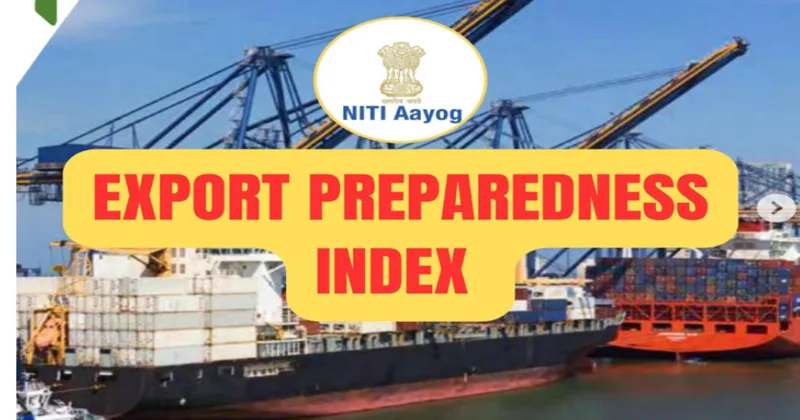
LUCKNOW: Uttar Pradesh has achieved the fourth position nationally in the Export Preparedness Index (EPI) 2024, released by NITI Aayog. UP has jumped three spots from seventh place in 2022 to fourth in NITI Aayog’s Export Preparedness Index 2024, showing the Yogi Adityanath government’s steady efforts to improve export infrastructure, simplify policies, and strengthen industries. What makes this accomplishment even more noteworthy is that Uttar Pradesh, despite being landlocked, has emerged as the top-performing landlocked state in India, surpassing several coastal states with natural advantages. This progress demonstrates the state’s determination and strategic planning to overcome geographic limitations through policy innovation and infrastructure expansion.
Traditionally, landlocked states face considerable logistical and infrastructural hurdles that limit their participation in global trade. However, under Chief Minister Yogi Adityanath’s leadership, Uttar Pradesh has redefined this narrative. With a strong focus on industrial policy reforms, logistics modernisation, and digital facilitation, the UP government has created an export-friendly ecosystem that rivals coastal states.
According to the EPI 2024 rankings, Uttar Pradesh now ranks just behind export powerhouses such as Maharashtra, Tamil Nadu, and Gujarat, indicating UP’s growing industrial strength and improved competitiveness. Officials say this rise is due to steady policy efforts such as the Uttar Pradesh Export Promotion Policy, improved road connectivity through expressways, and the One District, One Product (ODOP) scheme, which helps local industries and artisans reach global markets.
Four Pillars Driving Export Preparedness
The Export Preparedness Index 2024, developed by NITI Aayog, evaluates the performance of states and Union Territories across four core pillars: export infrastructure, business ecosystem, policy and governance, and export performance. These are further divided into 13 sub-pillars and 70 indicators to provide a holistic picture of a state’s trade readiness.
Uttar Pradesh’s performance across all four pillars has been robust. It shows major progress in logistics, ease of doing business, and diversification of export products. The report highlighted that expanding transport infrastructure, modern warehousing, and industrial clusters have played a pivotal role in improving UP’s trade environment.
The Yogi Adityanath government has launched multiple infrastructure projects, including Purvanchal Expressway, Bundelkhand Expressway, and Ganga Expressway, which have substantially improved the movement of goods across regions. Coupled with the upcoming multimodal logistics hubs and defence corridors, these projects have turned Uttar Pradesh into a major economic centre in northern India.
Also, good governance has been central to Uttar Pradesh’s progress. The state has implemented a series of business-friendly reforms that have streamlined procedures for exporters, reduced red tape, and encouraged private sector participation. Simplified online processes for export registration, incentives for exporters, and district-level facilitation centres have made the system more transparent and efficient.
The establishment of the Export Promotion Bureau (EPB) and the Nivesh Mitra single-window system has increased institutional support for businesses. These platforms provide end-to-end assistance. The government has also emphasised digital transformation to ensure accountability, speed, and traceability in export processes. The state’s One District, One Product (ODOP) scheme has been a game-changer in empowering local artisans and small manufacturers.
Under the Yogi government, Uttar Pradesh has invested heavily in building state-of-the-art export infrastructure to reduce transportation costs and logistics time. New inland container depots, dry ports, and integrated freight terminals are being developed to enhance supply chain efficiency. Once operational, Jewar International Airport is expected to become a major logistics hub, connecting Uttar Pradesh directly to international trade routes. Additionally, the National Waterway-1 on the Ganga River provides an alternative mode of transport for goods from eastern Uttar Pradesh to ports in West Bengal, further reducing costs and enhancing export competitiveness. The upcoming Gorakhpur and Lucknow industrial corridors will also act as major drivers of manufacturing and export growth in the coming years.
The Yogi Adityanath government’s export strategy has been inclusive, benefiting both large industries and small-scale enterprises. This diversification has made Uttar Pradesh more resilient to global market fluctuations. To encourage women entrepreneurs, the government has extended special incentives for female-led export ventures. The focus on skill development and capacity-building programs through partnerships with industry bodies has also equipped thousands of young people with employment-ready skills in export-oriented sectors.