Washington: US Treasury Secretary Scott Bessent is set to press Group of Seven (G7) nations and key partner countries to urgently reduce their dependence on China for critical minerals, as Washington intensifies efforts to counter Beijing’s dominance over strategic raw materials. A senior US official said Bessent will raise the issue when he hosts a high-level meeting of finance and cabinet ministers on January 12.
The gathering, which begins with a dinner on Sunday evening, will bring together finance ministers or senior cabinet officials from the G7 advanced economies, the European Union, Australia, India, South Korea and Mexico. The official, who spoke on condition of anonymity due to the sensitivity of the discussions, said the meeting reflects growing concern in Washington over China’s increasing use of critical mineral supply chains as a geopolitical tool.
India is expected to play a significant role in the discussions. New Delhi is likely to be represented by Union Minister for Electronics and Information Technology Ashwini Vaishnaw, underlining India’s rising strategic importance in global efforts to diversify critical mineral supply chains. The US decision to actively involve India signals Washington’s recognition of India as a reliable and indispensable partner in countering supply-chain vulnerabilities created by China’s dominance.
Together, the countries participating in the meeting account for nearly 60 percent of global demand for critical minerals, which are essential for defence manufacturing, semiconductors, clean energy technologies, batteries and advanced industrial processes. US officials believe coordinated action among these economies is crucial to reduce collective exposure to supply disruptions. “Urgency is the theme of the day,” the senior US official said. “This is a massive undertaking involving many countries and multiple dimensions. We simply need to move faster.”
Bessent told the media on Friday that he had been pushing for a dedicated meeting on critical minerals since a G7 leaders’ summit held in Canada in June. At that summit, he delivered a detailed presentation on rare earths and strategic minerals to heads of state from the United States, Britain, Japan, Canada, Germany, France, Italy and the European Union. Although leaders agreed on an action plan to secure supply chains and strengthen economic resilience, Bessent has expressed frustration over what he sees as insufficient urgency in translating commitments into concrete action.
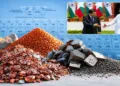
China currently dominates the global critical minerals ecosystem, refining between 47 percent and 87 percent of key materials such as copper, lithium, cobalt, graphite and rare earth elements, according to data from the International Energy Agency. With Beijing threatening tighter export controls, concerns have intensified among industrialised nations.
Japan remains the only G7 country that took decisive steps to diversify its supply chains after China abruptly cut off critical mineral exports in 2010. Most other G7 members continue to rely heavily on Chinese supplies, leaving their economies and defence industries vulnerable.
The US Treasury is expected to issue a statement following Monday’s meeting, though officials cautioned that a binding joint action plan is unlikely at this stage. “The United States is calling everyone together, demonstrating leadership, and sharing our vision for the road ahead,” the official said. “We are ready to move with partners who share the same sense of urgency. Others can join when they recognise how serious this challenge is.”
While the Trump administration has not disclosed specific next steps, it is actively pursuing agreements to boost domestic production and secure alternative supplies through partnerships with trusted countries such as Australia, Ukraine and other producers.
Washington signed a landmark agreement with Australia in October aimed at countering China’s dominance in critical minerals, involving an $8.5 billion project pipeline and leveraging Australia’s proposed strategic reserve of rare earths and lithium. Canberra has since reported strong interest from Europe, Japan, South Korea and Singapore. The urgency of the meeting has been heightened by reports that China has begun restricting exports of rare earths and high-strength magnets to Japanese companies, while also banning certain dual-use exports to the Japanese military. US officials said the meeting was planned well before these developments, but acknowledged that the situation underscores the scale of the challenge.
India builds strategic muscle in critical minerals amid global supply chain churn
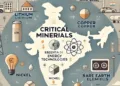
India, for its part, is rapidly positioning itself as a central pillar in the global critical minerals strategy. New Delhi launched the National Critical Mineral Mission (NCMM) in 2025 to secure supply chains for clean energy, electronics and defence, while reducing import dependence. Under the mission, the Geological Survey of India has significantly expanded exploration efforts. During the 2024–25 field season alone, the GSI initiated 195 exploration projects, including 35 in Rajasthan, aimed at identifying and evaluating critical mineral deposits. More than 100 critical mineral blocks are slated for auction, and exploration is being extended to offshore areas rich in polymetallic nodules containing cobalt, nickel, manganese and rare earth elements.
In a major boost to domestic manufacturing, the Indian government has also approved a ₹7,280 crore programme to establish an integrated Rare Earth Permanent Magnet manufacturing ecosystem. The initiative is expected to strengthen India’s self-reliance, support advanced manufacturing, and position the country as a trusted global supplier in an increasingly fragmented world economy.
As global supply chains face growing geopolitical stress, India’s proactive approach and expanding capabilities are increasingly seen as vital to building a resilient, diversified and secure critical minerals architecture.