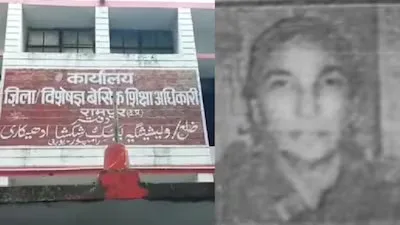
Authorities in Uttar Pradesh’s Rampur district have registered a criminal case against a woman accused of concealing her Pakistani nationality and fraudulently securing a government teaching job in the state’s Basic Education Department. According to officials, the woman allegedly worked as a primary school teacher for over three decades after obtaining employment in 1985 using forged documents that falsely projected her as an Indian citizen.
The case came to light following an internal inquiry conducted by the Basic Education Department, which revealed discrepancies in the woman’s identity and nationality. Based on the department’s findings, a formal complaint was filed with the police, leading to the registration of a First Information Report (FIR).
Identity and employment details
Police have identified the accused as Mahira Akhtar, also known as Farzana. She was posted as a teacher at a primary school in Kumhariya village in Rampur district. For decades, she reportedly served in the education department without her nationality being questioned, drawing salary and benefits meant exclusively for Indian citizens employed in government service.
Officials said she had allegedly obtained the job by presenting forged documents, including a fake residence certificate, to establish Indian citizenship.
What the Police Say
Additional Superintendent of Police Anurag Singh confirmed that an FIR has been registered at Azim Nagar police station based on the complaint submitted by the Basic Education Department.
“An FIR has been registered under sections 318(4), 336, 338 and 340 of the Bharatiya Nyaya Sanhita for cheating and forgery. It is alleged that despite being a Pakistani national, she secured a job in the education department by using a fake residence certificate,” Singh said, as quoted by PTI.
The sections invoked relate to cheating, use of forged documents, and fraudulent representation, indicating the seriousness with which authorities are treating the case.
The Woman’s Background
According to police investigations so far, the woman’s personal history involves cross-border movement and multiple changes in marital status. Officials stated that she married a Pakistani national in 1979, following which she acquired Pakistani citizenship.
After her divorce, she is believed to have returned to India on a Pakistani passport. Around 1985, she reportedly married a local resident in Rampur. Soon after, she applied for and secured employment in the Uttar Pradesh Basic Education Department by allegedly concealing her Pakistani nationality and presenting herself as an Indian citizen.
How she entered Government service
The year 1985 appears to be central to the case. It was during this period that the woman secured her appointment as a government teacher. At the time, verification processes were largely manual and decentralised, making it easier for forged documents to escape scrutiny.
Officials believe she used a fake residence certificate to meet eligibility requirements for government employment. Over the years, she continued in service without her nationality being flagged during routine administrative checks, promotions, or service record updates.
The case surfaced only recently when the Basic Education Department conducted a detailed internal inquiry. The inquiry reportedly uncovered evidence pointing to forged documents and misrepresentation of nationality.
Following the inquiry, the department suspended the woman from service and subsequently dismissed her after confirming that she was not an Indian citizen. The department then submitted a detailed report to the police, recommending criminal action.
Based on this report, Rampur police registered the FIR and began formal investigation proceedings.
Investigation underway, no arrest yet
Police officials said that the investigation is currently ongoing. Authorities are collecting documentary evidence, including employment records, educational certificates, identity documents, and travel history.
Additional Superintendent of Police Anurag Singh confirmed that no arrest has been made so far, and that due process is being followed. Investigators are also examining how the forged documents were created, whether any middlemen were involved, and whether administrative lapses enabled the woman to remain in service for decades.
Larger questions raised
The case has triggered broader concerns about verification mechanisms within government departments, particularly during the pre-digital era. It has also raised questions about whether similar cases could exist undetected, especially in sensitive sectors like education.
Security experts point out that government employment is restricted to Indian citizens for reasons tied to national integrity and public trust. Any breach of this principle, intentional or systemic, is viewed as a serious matter.
If proven, the case could have multiple legal consequences, including criminal conviction for cheating and forgery. It may also prompt a review of past recruitment procedures and trigger audits of old service records in the education department.
Administratively, authorities may also examine whether officials responsible for verification at the time can be held accountable for lapses that allowed the alleged fraud to continue unchecked for over 30 years.
As the investigation continues, the case is expected to serve as a cautionary example for government departments across the country, highlighting the need for robust identity verification, periodic audits, and institutional accountability, especially in roles that directly impact public trust and national interest.