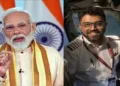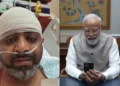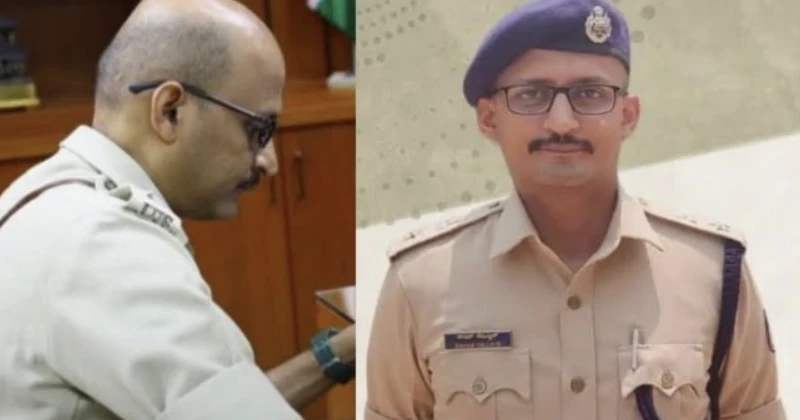
BELLARI: The alleged suicide attempt by an honest young and serving IPS officer has sent shockwaves across Karnataka’s administrative and police circles, raising serious questions about the state government’s handling of disciplinary action against officers in politically sensitive situations. District Superintendent of Police (SP) Pawan Nejjoor (IPS, 2016 batch), who was suspended following the Bellary violence, attempted suicide on January 2, after allegedly slipping into deep mental distress due to what is being described as a sudden and harsh government decision.
According to official sources, SP Pawan Nejjoor consumed an overdose of pills at his residence in Tumkur and was rushed to a hospital by family members. He is currently undergoing treatment, and doctors have stated that his condition is stable. Senior police officers have visited the hospital, even as the incident has triggered intense debate within the force and the wider public domain.
The state government suspended SP Pawan Nejjoor on charges of dereliction of duty following violence in Bellary city during the installation of a statue of Valmiki Maharshi. The incident occurred near the SP Circle, where a dispute between two political factions over the erection of banners escalated into stone-pelting, arson, damage to public property, and even firing on Thursday. The violence quickly took a political turn, drawing statewide attention.
Based on a preliminary report submitted by the Director General and Inspector General of Police (DG & IGP), the government invoked the All India Services (Disciplinary and Appeal) Rules, 1969, and suspended the young officer. The charges included failure to control the riot effectively and allegedly mis-briefing senior officers about the ground situation.
However, the swiftness of the suspension, without a detailed inquiry or opportunity for the officer to present his version, has drawn sharp criticism. Many within the police department believe SP Nejjoor was made a “convenient scapegoat” for a politically charged situation that spiralled beyond the control of any single officer.
Colleagues and well-wishers describe Pawan Nejjoor as a sincere and efficient officer with a clean service record.
The suspension, they say, came as a devastating personal and professional blow. “When officers are punished overnight for law-and-order failures that have political roots, it destroys morale across the force,” a senior police official remarked privately.
The suicide attempt has intensified accusations that the government acted in a knee-jerk manner, prioritising political optics over fairness and institutional responsibility. Critics argue that instead of standing by officers working under extreme pressure, the government has sent a chilling message: accountability flows only downward.
The incident has caused deep unease among IPS officers, especially younger cadres. Several retired officers have openly questioned whether the state government has adequate mechanisms to assess complex riot situations before initiating punitive action. “Law and order failures are systemic. Singling out one officer without examining political interference, intelligence inputs, manpower constraints, and command decisions is unjust,” a former DGP said.
The timing of the suspension, coming soon after the firing incident near the residence of former minister Janardhana Reddy, has further fuelled speculation that political pressure influenced administrative decisions.
Pro-people organisations have now demanded an immediate review of the suspension order and a fair, transparent inquiry into the Bellary violence. Many have also urged the government to introduce stronger mental health support systems for officers facing high-stress postings and disciplinary proceedings.
“This is not just about one officer,” said a rights activist. “When a young IPS officer is pushed to such an extreme, it reflects a deeper failure of governance, empathy and institutional accountability.”