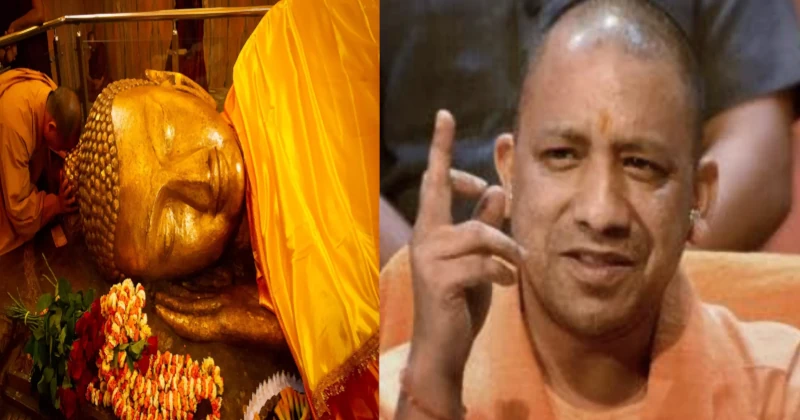
LUCKNOW: Uttar Pradesh’s Buddhist Circuit is rapidly emerging as a global identity rooted in faith, heritage, and inclusivity. With over 61 lakh visitors recorded in the first nine months of 2025, the state’s major Buddhist sites i.e., Sarnath, Kushinagar, Shravasti, Kaushambi, Kapilvastu, and Sankisa have witnessed a remarkable rise in domestic and international tourist footfall. According to the state’s Tourism Department, nearly 59 lakh of these were domestic visitors, while about 2.72 lakh were international tourists. The Uttar Pradesh Tourism Department anticipates that the total footfall could cross 64 lakh by the end of 2025, marking one of the highest-ever annual visitor counts across the state’s spiritual destinations.
The Buddhist Circuit covers six major heritage sites – Sarnath, Kushinagar, Shravasti, Kaushambi, Kapilvastu, and Sankisa, each representing a milestone in Bhagwan Buddha’s life and teachings. These sites collectively form a living testimony to India’s ancient spiritual traditions and its timeless message of peace, compassion, and enlightenment.
Uttar Pradesh’s Buddhist Circuit is emerging as a global spiritual and cultural destination, with over 61 lakh visitors in the first nine months of 2025. From Sarnath to Kushinagar, sustained policy focus and infrastructure development are strengthening UP’s global tourism… pic.twitter.com/t4hXOXZUkL
— Awanish K Awasthi (@AwasthiAwanishK) December 30, 2025
Tourism and Culture Minister Jaiveer Singh said the increasing numbers reaffirm the deep spiritual bond that people across the world share with these sacred sites. He credited the progress to the visionary leadership of Prime Minister Narendra Modi and the guidance of Chief Minister Yogi Adityanath, who have emphasized heritage preservation and tourism inclusivity.
“Uttar Pradesh is strengthening its role as the spiritual heartland of Buddhism,” Singh stated. “Our focus is on improving infrastructure, preserving ancient monuments, and creating a visitor-friendly experience that respects the sanctity of these holy sites.” Among the circuit destinations, Kushinagar, where Bhagwan Buddha attained Mahaparinirvana, recorded the highest footfall with nearly 18.6 lakh visitors, including about 1.9 lakh international tourists, reaffirming its status as a global centre of Buddhist faith.
Sarnath, where Bhagwan Buddha delivered his first sermon, welcomed around 17.75 lakh visitors, of which over 64,000 were international travellers. Sarnath’s newly renovated museum, improved visitor pathways, and digital interpretive exhibits have added to its appeal as both a spiritual and educational destination.
The ancient site of Kaushambi witnessed a strong surge in visitors, registering 23 lakh tourists, of which 3,000 were foreigners. The region holds deep historical significance as Bhagwan Buddha is believed to have spent several monastic seasons here. The ongoing development of eco-tourism facilities and heritage restoration has helped put Kaushambi on the global Buddhist tourism map.
Kapilvastu, the birthplace of Prince Siddhartha, who later became the Buddha, also drew 51,000 visitors, including more than 15,000 international tourists, showcasing renewed global curiosity about Buddha’s early life. Meanwhile, Shravasti and Sankisa recorded 79,000 and 30,000 visitors respectively, reinforcing the interconnected significance of these sacred destinations.
To enhance connectivity and improve the travel experience, the Uttar Pradesh government has undertaken several large-scale projects. Roads linking Buddhist sites have been widened and beautified, while the Kushinagar International Airport has strengthened air connectivity with key Buddhist nations like Thailand, Japan, and Sri Lanka. Plans are also underway to upgrade Sarnath and Shravasti circuits with modern visitor centres, cultural plazas, and interpretation facilities.
In addition, the Buddhist Circuit Tourist Train has been gaining traction, offering pilgrims a seamless spiritual journey across major Buddhist landmarks. Digital platforms and virtual tours launched by the Tourism Department have made these sites accessible to global audiences, especially scholars and practitioners unable to travel physically. “Buddhism originated in India, but its spirit belongs to the world,” said a senior official from the Tourism Department. “Our goal is to ensure that Uttar Pradesh remains a bridge between India’s ancient wisdom and modern global tourism.”
As 2025 draws to a close, the success of the Buddhist Circuit stands as a shining example of how faith, culture, and governance can converge to build a global identity rooted in peace and inclusivity. With record visitor numbers, sustained reforms, and continued international engagement, Uttar Pradesh is truly reaffirming its place as the spiritual heart of global Buddhism.