The purpose of the British colonisers is served. Despite having been forced out of India – the Jewel in the Imperial Crown – in 1947, the cracks and fissures they created within the Indian society continue to worsen, especially aided by the Leftists (Maoists).
The skirmishes within sections of the Indian society over the Battle of Koregaon Bheema fought between the East India Company’s rag-tag army under Captain Francis Staunton and the Maratha army in Pune on January 1, 1818 has now gained gargantuan shape.
In the recent years, a narrative that has taken shape and gained prominence is that the Battle of Koregaon Bheema (also known as the Battle of Bhima Koregaon – or Battle of Corygaum during the British era) was a battle that pitted the Brahminical hegemony of the Peshwas (part of the Maratha Resistance or Confederacy) against the valour of the so-called lower castes (Mahars). Nothing could be farther from the truth, says Advocate Rohan Balasaheb Jamadar Malvadkar (Rohan Malvadkar, for short).
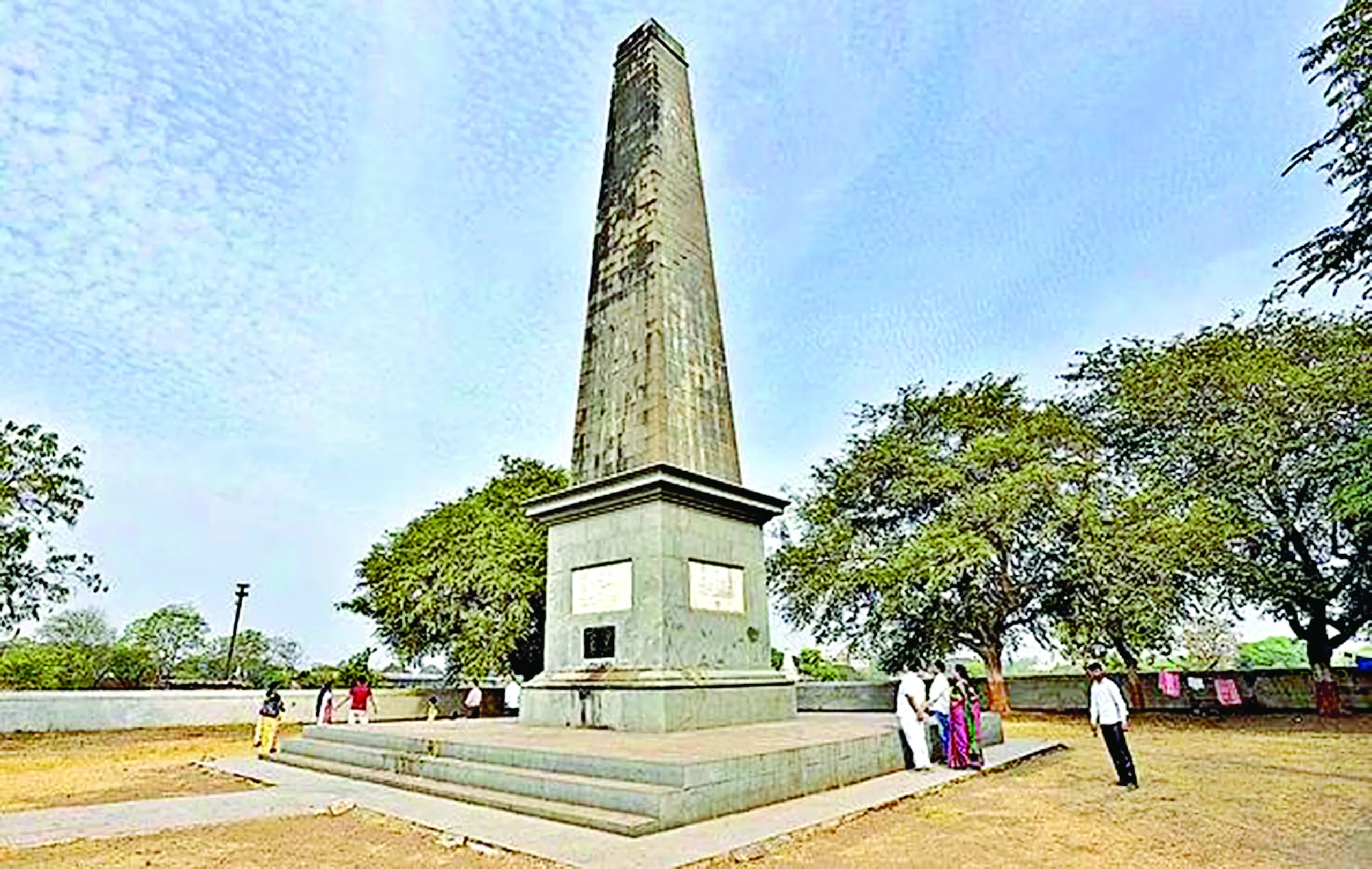
Advocate Malvadkar is the son of a retired Army officer (Maratha Regiment) and his grandfather too was an army man. He is the seventh descendant of Khandoji Malvadkar – the soldier whom the British (East India Company) army officers of Bombay Presidency had appointed as caretaker of the monument raised at village Perane (Koregaon village lies on the opposite bank of the river Bhima).
The monument is called as ‘Jaystambh’ or Victory Pillar and it is a ‘military monument’ erected by the British Government in 1821 in memory of its soldiers, who fought against the Peshwas during the Maratha rule at Koregaon Bhima on January 1, 1818.
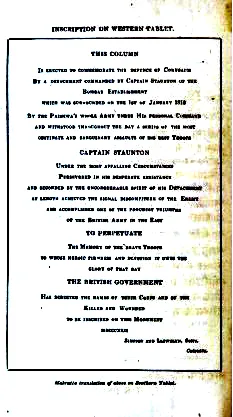
Malvadkar points out that neither sides won decisively in this battle. He cites the plaque put up cast in stone on the western face of the monument.
Inscription on Tablet
“This Column erected to commemorate the defence of Corygaum by a detachment by Captain Staunton of the Bombay Presidency which was surrounded on January 1, 1818, by the Paishwa’s whole army under his personal command and withstood throughout the day a series of the most obstinate and sanguinary assaults of his troops…”
Malvadkar points out that the British do not mention a victory but resistance – in a pitched and closely fought battle. The pillar plaque shows the names of all those who fought or were part of the British army under Captain Staunton but do not mention any castes as the dominant group in this battle.
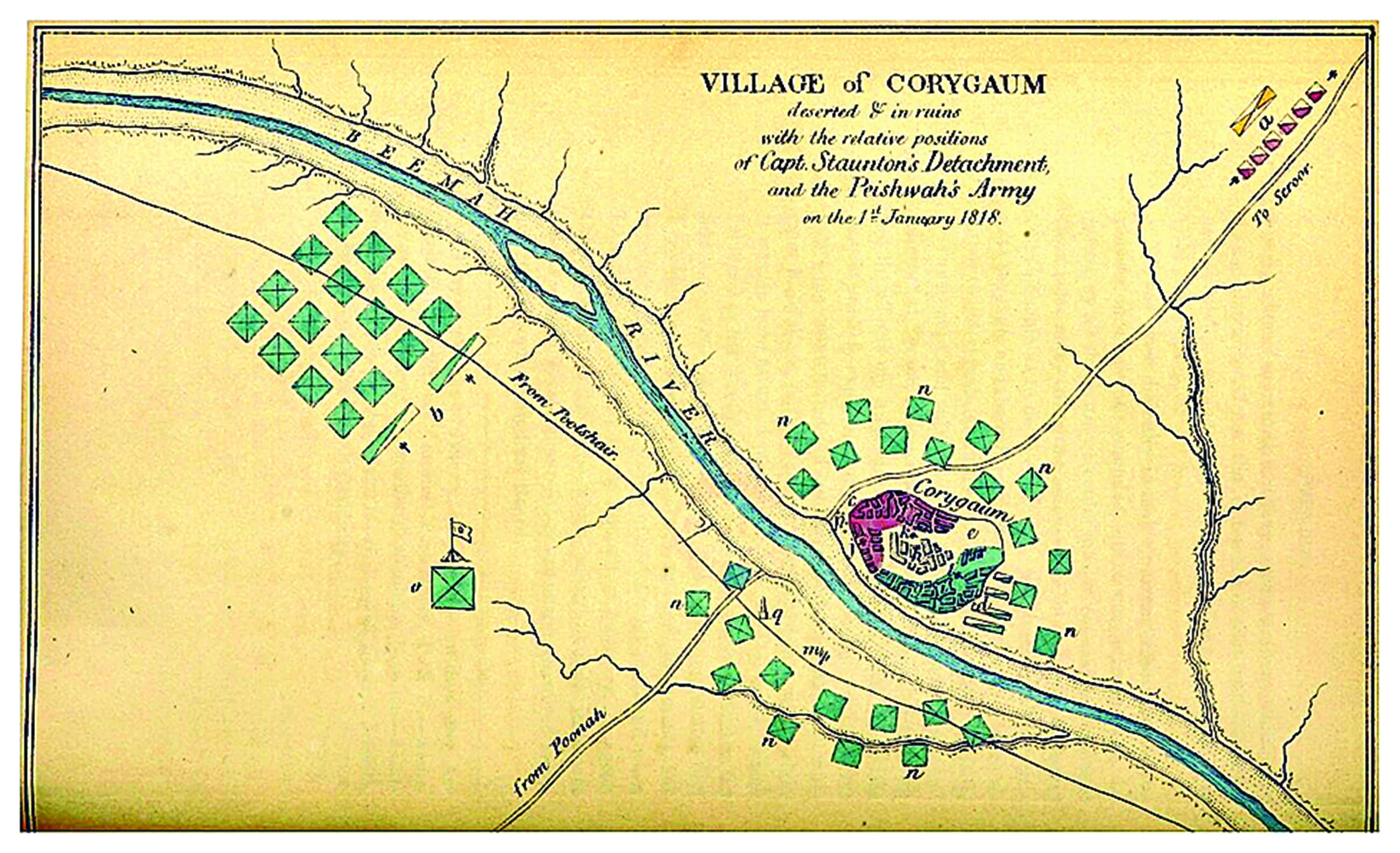
Before locking horns with the British at Koregaon on January 1, 1818, the Peshwa (Bajirao-II, the grandson of the great warrior statesman Bajirao I) had been robbed of his capital and home turf Poonah (Pune) as a consequence of the earlier two Anglo-Maratha wars. On December 31, 1817, the Peshwa was in fact, chalking a safe passage to the Maratha king Chhatrapati Pratapsingh Maharaj (a descendant of the great Chhatrapati Shivaji Maharaj) to his capital Satara. Malvadkar states that the rumour that the Peshwa with his 28,000-strong army (20,000 Cavalry, 8,000 Infantry) was attempting to attack Pune from outside was set off as a red herring to distract Colonel Daniel Burr of the East India Company who sat in Pune.
Colonel Burr asked the Company troops stationed at Shirur for help. The troops dispatched from Shirur under Captain FF Staunton came across the Peshwa’s forces, resulting in the Battle of Koregaon.
In principle, approximately only 2,000 soldiers (not 28,000) of the Peshwa stayed back for the encounter at Koregaon. The 2000 were divided into three infantry parties each comprising 600 Arabs, Gosains and soldiers.
Meanwhile, the EIC (British) troops at Koregaon under Captain FF Staunton comprised 834 men with a composition as under:
Breakdown of British
Indian Infantry (Bombay Native Infantry) where the majority were sepoys from various Indian communities, not exclusively Mahars. So was the case with the 2nd Battalion, 1st Regiment of Bombay Native Infantry, where again the Mahars did not constitute the entire unit.
British Officers: Captain Staunton led the force with a handful of European officers and soldiers.
Artillery Personnel: This group included Indian and European gunners operating the two
6-pounder cannons.
Other Indian Communities: Marathas, Rajputs, Muslims,
and others.
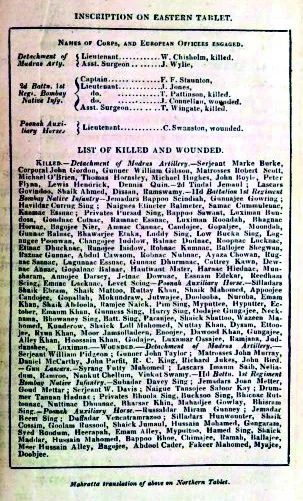
Malvadkar tells Organiser that although there is no record of their exact number, it is obvious that all of them were not Mahars. If the casualty figures are anything to go by, there too the majority of those died in the battle (27 out of 49) were not Mahars.
The Peshwa army’s largest flank continued on its way to Satara and the forces that engaged Captain Staunton ultimately withdrew before the arrival of a larger British force led by General Joseph Smith.
Later, unfortunately, while the Peshwa was in the midst of prolonged attempts to regain control of Pune from the EIC army, the two sides met at the Battle of Ashti (a spot to the east of Pune and in Solapur district). The two armies fought on February 19, 1818 – in the Third Anglo-Maratha War (the last pitched attempts by the Marathas to thwart the British in 1817-18) – thus marking a major turning point in Indian history. The British victory in the battle at Ashti led to them to finally gaining control over a large portion of India.
This is why many consider the Battle at Koregaon Bhima as an unfortunate event, not one to be proud of erection of JayStambh
The British officers decided to erect a monument to the battle that turned their fortunes. It was decided to erect an obelisk or stone pillar to commemorate the event with the names of those who fought on the British side inscribed on it.
The contents of the final order that appointed Cundojee (Khandoji Malvadkar) through the letter from the Military Department letter reads as under:
“Military Department
N.3146
Bombay Castle 22nd November 1824
Sir,
The erection of the Pillar intended to commemorate the Battle of Corygaum having been completed, the Hon’ble the Governor in Council has resolved, in view to its preservation, that it shall be placed under the charge of a Meritorious Soldier of the Corps who may have been present at the action with the rank and Pay of a Jemadar
I have, therefore, to convey the request of the Governor in Council that his Excellency the Commander in Chief will be pleased to direct St. Colonel Staunton to select one of the most serving family men of the Grenadier Regiment, not being of the purvarree cast, for the trust in question one, who will be interested in the preservation of the building, and capable at the same time of affording Travellers information on the interesting subject which the monument is designed to a commemorate.
The trust is to be considered hereditary, but, in case of the failure of any Male issue to be person enjoying the grant, it will rest with the Government to appoint a successor.
The grant of a Piece of Land contiguous to the Pillar, or of an annual sum of money (in addition to the rank & Pay of a Jemadar granted to the first Incumbent) will be assigned for the maintenance of person in charge.”
The bias and prejudice of the British against those on the lower rungs of the caste system is evident in their framing of the conditions they set on the appointment of the caretaker to the Jaystambh though a letter issued by the Military Department.
“I have therefore to convey the request of the Governor in Council that his Excellency the Commander in Chief will be pleased to direct St Colonel Staunton to select one of the most serving family men of the Grenadier Regiment, not being of the purvarree cast, for the trust in question,” says the EIC Military in its earlier letters. Advocate Jamadar Malvadkar says that the word ‘purvarree’ stands for the lower castes or Mahars.
Is the monument a repugnant monument?
Post-Independence the Indian government decided to do away with all symbols of imperialism, and of particular concern were the battle honours won during British rule that were “particularly repugnant” to national sentiments. The Indian Army, which recognises gallant performances by grant of battle honours, Theatre Honours, and Honour Titles to units to reinforce motivation of soldiers for acts of valour during war – has disowned a part of its legacy after Independence.
Even Dr Ambedkar categorically demanded creation of Mahar regiment during his speech at Koregaon on January 1, 1927 and called this participation by depressed classes as a last resort and ‘not a matter of pride’. The British records also mention that it was the ‘Bombay Army’ fought on behalf of the British and it consisted of people from others castes and communities. Reducing this battle between the British and Marathas to a caste war is the recent Left-Islamist fascination to further the caste war and exploiting sentiments for the political gains. Although we need to work on inclusive society and get rid of caste-based discrimination all spheres of national life, neither Maoist fronts nor Islamists would help in achieving the idea of ‘annihilation of caste’, it would only lead to ‘exploitation of caste’ for political ends. (This article was first published on Jan 12, 2025)