Bengaluru: Kogilu Cross, a locality near the city, is at risk of becoming a hub for sleeper cells, BJP’s opposition leader R Ashoka has warned. He has demanded that the government verify the citizenship of the illegal residents in the area and hand over the investigation to the National Investigation Agency (NIA).
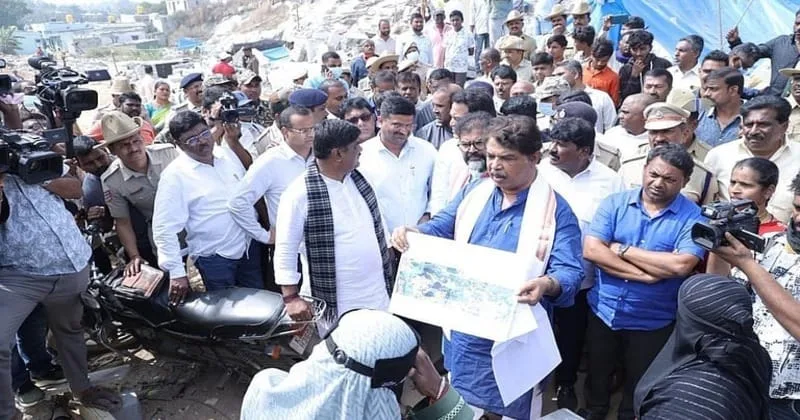
On December 31, R Ashoka, accompanied by BJP leaders, visited Kogilu Cross, a controversial area that has been the subject of land clearing operations. During the visit, Ashoka interacted with the residents and inquired about their background, including the details of their identification and legal documents. His investigation revealed that several residents lacked identification cards, raising concerns over their citizenship status.
Ashoka, after speaking to a local woman, pointed out that according to Google Maps, the area only had homes established recently, as there were no homes recorded on the map just one year ago. He expressed doubts over the authenticity of the claims that these residents had been living there for 25 years. He suggested that this could be a case of illegal settlements being rapidly established.
ಕೋಗಿಲು ಗ್ರಾಮದ ಬಳಿಯ ಸರ್ಕಾರಿ ಜಾಗದಲ್ಲಿನ ಅನಧಿಕೃತ ನಿರ್ಮಾಣಗಳನ್ನು ತೆರವುಗೊಳಿಸಿರುವ ಸ್ಥಳಕ್ಕೆ ಇಂದು ಭೇಟಿ ನೀಡಿ ಪರಿಶೀಲನೆ ನಡೆಸಿ ಮಾಹಿತಿ ಪಡೆದುಕೊಳ್ಳಲಾಯಿತು.
ಈ ಸಂದರ್ಭದಲ್ಲಿ ವಿಧಾನ ಪರಿಷತ್ ಪ್ರತಿಪಕ್ಷ ನಾಯಕರಾದ ಶ್ರೀ @NswamyChalavadi, ಶಾಸಕರಾದ ಶ್ರೀ @drashwathcn, ರಾಜ್ಯ ಕಾರ್ಯದರ್ಶಿಗಳಾದ ಶ್ರೀ ತಮ್ಮೇಶ್ ಗೌಡ,… pic.twitter.com/Ei0he3uEPf
— R. Ashoka (@RAshokaBJP) December 31, 2025
Ashoka emphasized that the government needs to first verify the citizenship of these residents before offering them new homes. He questioned how the government could continue with land clearance operations without fully understanding the legal status of the people living in these areas. He also criticized the Deputy Chief Minister, D.K. Shivakumar, for not visiting the site and claimed that the presence of Shivakumar’s associates in the area was a sign of political interference.
Further escalating his claims, Ashoka stated that the influx of people into Kogilu Cross mirrors the situation in West Bengal and Bangladesh. He warned that Karnataka was on the verge of becoming a “mini-Bangladesh” due to the unchecked growth of these illegal settlements. According to Ashoka, this pattern of settlement was part of a larger scheme orchestrated by local political figures, particularly Minister Zameer Ahmed, who allegedly influenced authorities to allow these illegal settlers to register themselves as locals.
In his address to the media, Ashoka pointed out that there were discrepancies in the population figures. While media reports initially mentioned around 160 residents, current estimates from authorities placed the number at over 280, with some even speculating that the number could rise to 400. This rapid population increase, according to Ashoka, is not a natural occurrence but a result of coordinated efforts. He claimed that the settlements were facilitated by people like Wasiim, a so-called political agent, who was allegedly involved in constructing unauthorized dwellings and assisting illegal migrants in acquiring local documents.
One of Ashoka’s major concerns was the provision of expensive electricity connections to these illegal residents by Bescom (Bangalore Electricity Supply Company). Despite the fact that there are over 4 lakh residents in the state without electricity, Ashoka argued that the Kogilu Cross area received special treatment, with authorities even bypassing proper procedures by installing power cables without meters, which could lead to potential accidents and fatalities.
He also condemned the government’s alleged priorities, pointing out that while 13,999 houses had been damaged due to floods, these illegal settlements were being prioritised for government housing. Ashoka was particularly incensed by the situation where Kannada-speaking people, particularly farmers and their children, were left homeless while illegal migrants received housing benefits.
According to Ashoka, the establishment of these unauthorized colonies could soon turn into centers of criminal activity, with sleeper cells and potentially even terrorists taking advantage of the situation. He warned that the government’s inability to control the situation would only exacerbate the security risks for the state.