Why India is big in AI and why the money is flowing in
August 11, 2026
  • Read Ecopy
  • Circulation
  • Advertise
  • Careers
  • About Us
  • Contact Us
Android AppiPhone AppArattai
Organiser
  • ‌
  • Bharat
    • Assam
    • Bihar
    • Chhattisgarh
    • Jharkhand
    • Maharashtra
    • View All States
  • World
    • Asia
    • Europe
    • North America
    • South America
    • Africa
    • Australia
  • Editorial
  • International
  • Opinion
  • RSS @ 100
  • More
    • Op Sindoor
    • Analysis
    • Sports
    • Defence
    • Politics
    • Business
    • Economy
    • Culture
    • Special Report
    • Sci & Tech
    • Entertainment
    • G20
    • Azadi Ka Amrit Mahotsav
    • Vocal4Local
    • Web Stories
    • Education
    • Employment
    • Books
    • Interviews
    • Travel
    • Law
    • Health
    • Obituary
  • Subscribe
    • Subscribe Print Edition
    • Subscribe Ecopy
    • Read Ecopy
  • ‌
  • Bharat
    • Assam
    • Bihar
    • Chhattisgarh
    • Jharkhand
    • Maharashtra
    • View All States
  • World
    • Asia
    • Europe
    • North America
    • South America
    • Africa
    • Australia
  • Editorial
  • International
  • Opinion
  • RSS @ 100
  • More
    • Op Sindoor
    • Analysis
    • Sports
    • Defence
    • Politics
    • Business
    • Economy
    • Culture
    • Special Report
    • Sci & Tech
    • Entertainment
    • G20
    • Azadi Ka Amrit Mahotsav
    • Vocal4Local
    • Web Stories
    • Education
    • Employment
    • Books
    • Interviews
    • Travel
    • Law
    • Health
    • Obituary
  • Subscribe
    • Subscribe Print Edition
    • Subscribe Ecopy
    • Read Ecopy
Organiser
  • Home
  • Bharat
  • World
  • Operation Sindoor
  • Editorial
  • Analysis
  • Opinion
  • Culture
  • Defence
  • International Edition
  • RSS @ 100
  • Magazine
  • Read Ecopy
Home Bharat

Big investments & big ambitions: Why India is big in AI and why the money is flowing in

India’s diversity deepens its AI advantage. Its internet population spans dozens of languages, voice-first users, low-literacy users, small merchants, informal workers and first-time digital citizens. For AI firms, this makes India one of the most valuable real-world testing grounds imaginable. Models trained or fine-tuned on Indian usage encounter edge cases, accents, behaviours and workflows that do not appear in wealthy Western markets

Shubhranshu SinghShubhranshu Singh
Dec 28, 2025, 12:00 pm IST
inBharat, Opinion, Sci & Tech
Follow on Google News
Representative Image

Representative Image

Facebook
Twitter
WhatsAppTelegramEmail

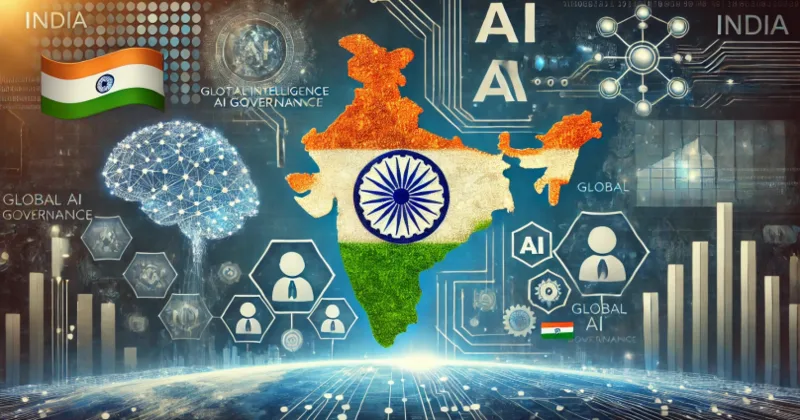
India’s sudden emergence as one of the world’s hottest destinations for “AI investment” can feel very inspiring. In just a few months, Amazon, Google and Microsoft have collectively promised close to 70 billion dollars for AI-related expansion in the country. New partnerships are being struck. AI tools are being bundled with telecom plans. Cheaper models are being rolled out for Indian users. Offices are opening and data centres are rising.

To some, this looks like India’s long-awaited technological arrival. To others, it feels like another chapter in a familiar story where foreign firms extract value from the Indian scale. Both instincts capture part of the truth. To understand what is really happening, India must first grasp why it has become so central to the global AI economy. The answer lies in scale.

The gravity of Indian scale

AI today is only by inputs. Models need users, data, energy and compute. India offers all four at once, at a magnitude that few countries can match. With close to a billion internet users, India is already the second-largest digital population in the world. Unlike China, it remains largely open to American technology firms. Android powers the overwhelming majority of smartphones. Messaging, search, shopping and payments already sit inside global platforms with massive installed bases. When AI features are layered onto these products, adoption can move at a speed that smaller or more fragmented markets simply cannot replicate.

Hence, American companies are willing to price aggressively in India. The immediate prize is not revenue, but reach. Locking in hundreds of millions of users early creates habit, dependency and data flows that compound over time.

In AI, Scale is the strategy.

India’s diversity deepens this advantage. Its internet population spans dozens of languages, voice-first users, low-literacy users, small merchants, informal workers and first-time digital citizens. For AI firms, this makes India one of the most valuable real-world testing grounds imaginable. Models trained or fine-tuned on Indian usage encounter edge cases, accents, behaviours and workflows that do not appear in wealthy Western markets. As global sources of fresh public data dry up, India’s multilingual, high-volume interactions become a precious resource.

Layered atop this is India’s digital public infrastructure. Systems for identity, payments and public services have pulled hundreds of millions of people online and created interoperable rails that private firms can build on. Few countries offer such a vast user base already wired into daily digital activity. From a global AI firm’s perspective, India is not just a market. It is a massive data engine.

Why the infrastructure rush came first

This is also why the first wave of capital looks so physical. Much of what is being described as “AI investment” is, in practice, investment in data centres, cloud regions and compute infrastructure. Steel, concrete, power lines and server racks are the visible face of India’s AI moment. This is not a contradiction. It is a prerequisite.

Across Asia, traditional data-centre hubs such as Singapore are hitting hard limits on land, energy and regulation. China, once the obvious alternative, is geopolitically fraught. India offers something rare: space, relatively competitive power costs, growing renewable capacity and political continuity. For global firms deploying long-lived assets, this combination matters more than rhetoric.

Data centres cannot be moved lightly. A hyperscale campus is a twenty year bet. Their arrival signals that India is now part of the core global compute map, not a peripheral endpoint. It also creates local benefits in terms of jobs, lower latency, cheaper cloud access for start-ups and infrastructure that governments can piggyback on. Yet, there is a central distinction India must not lose sight of. Data centres are the plumbing of the digital age. They are essential but they are not intelligence.

The risk of mistaking presence for power

The true value in AI does not sit in server racks. It sits in models, chips, algorithms, platforms and standards. It sits in who owns the intelligence, who sets the rules and who captures the compounding returns. If India is not careful, it could end up hosting the machinery of AI without owning its mind. The land will be Indian. The electricity will be Indian. The engineers will be Indian. The data will be generated by Indian lives. Still, the intellectual property, the core models and the governing frameworks could remain firmly offshore. That would turn India into a digital warehouse rather than a technological power.

This is not a hypothetical concern. In earlier waves of technological change, Indian firms often excelled at peripheral services while core platforms were built elsewhere. The danger today is subtler. Dependency no longer arrives through factories, but through cloud contracts, APIs and model access. Hosting compute is not the same as owning cognition.

Also Read: India seals 3rd 2025 trade pact with New Zealand as GCC, EU, Canada, Israel, Peru & Chile line up amid Trump tariff war

Why firms are willing to invest money in India

There is another paradox at work. India is vast in users but thin in paying customers. Subscription prices are low. Margins are tight. Running AI queries is expensive regardless of geography. From a narrow revenue perspective, India looks difficult. Yet firms keep coming. They come because India offers something more valuable than short-term profit and that is scale under live conditions. Engagement in India is often higher than in richer markets. Voice usage is growing rapidly. Behavioural data is rich. Products that work in India often work anywhere. India is a proving ground. Win here and global deployment becomes easier. Lose here and competitors will harvest the data advantage instead.

3 Essential Disciplines: The choice India faces

None of this is an argument against foreign investment. On the contrary, these inflows confirm that India has crossed a threshold of global relevance. Capital that is fixed to the ground must negotiate. Infrastructure creates leverage. But that only matters if it is used. India’s response now requires discipline, not triumphalism. Institutional discipline to ensure transparency, regulatory capacity and enforceable safeguards around data, security and interoperability.

Strategic discipline to ensure that domestic players, in cloud services, semiconductors and model development are deliberately nurtured, even if they lag in the short term. No serious power leaves the full stack of a foundational technology entirely outside its control. Being important to others is not the same as being powerful oneself. India’s AI moment is real. But it is still being shaped. The foundations are being poured at unprecedented scale. Above it will rise the AI edifice for India.


Topics: IndiaTechnologyArtificial IntelligenceData centresKnowledge EconomyAI InvestmentAI Strategy
Share
Tweet
SendShareSend
✮ Subscribe Organiser YouTube Channel. ✮
✮ Join Organiser's WhatsApp channel for Nationalist views beyond the news. ✮
Previous News

Operation Aaghat: Delhi police launch massive pre-2026 crackdown, over 600 criminals nabbed 

Next News

‘Behaved like demons’: Eyewitness gives chilling account of lynching of a co-worker of Dipu Chandra Das in Bangladesh

Related News

MEA condemns defacement of the Indian Embassy premises in Slovenia

India condemns attack on Embassy in Slovenia; MEA invokes Vienna Convention, affirms diplomatic premises as inviolable

India's Ambassador to the US Vinay Mohan Kwatra

Ambassador Kwatra debunks FCRA myths; Hails religious neutrality, law is a sovereign tool for national security

India presents peacocks to UN Geneva

India’s Peacock Diplomacy: New Delhi presents 5 peacocks to UN Geneva; Resonates cultural heritage & soft power

PoJK: The call for unfinished justice and India’s unwavering resolve to secure sovereignty

Why are young people forced to protest? A question that demands reflection!

Prime Minister Narendra Modi and Chinese President Xi Jinping(File Photo)

India-China Boundary Talks: New Delhi pushes for peace across the LAC; Seeks transparency over upstream hydro projects

Load More

Latest News

Tamil Nadu Assembly - image courtesy- CMO Tamil Nadu

Tamil Nadu Assembly resolution mandates Tamil Thai Vazhthu before other proceedings at State functions

Congress MP Rajmohan with Keralam CM VD Sateeshan (File Photo)

‘Not in this lifetime, even if PM Modi threatens to shoot us down’: Congress MP Rajmohan opposes full Vande Mataram

Former DMK minister M Subramanian (File Photo)

Tamil Nadu: Former DMK minister M Subramanian, wife Kanchana face trial as court frames charges in SIDCO land case

West Asia Conflict: Hormuz reopening hits deadlock as Iran adds conditions; US demands deal with Oman as prerequisite

Akhil Bharatiya Prabandh Samiti Baithak of the Bharatiya Kisan Sangh

Bharatiya Kisan Sangh Prabandh Samiti Baithak concludes in Meerut; focus on village empowerment & Farmers’ Welfare

14TH JPSC Civil Services Exam: Restoring reliability  of recruitment

Ceremonial lamp lighting at a program organised under the aegis of the Vidwat Parishad of Shishu Shiksha Samiti Assam

Vande Mataram is not merely an emotional expression, but declaration of national consciousness: Avneesh Bhatnagar

Our aim is to ensure India ranks among top 10 medal-winning countries at 2036 Olympics: Dr Mansukh Mandaviya

President of the Indian Olympic Association President P. T. Usha holds the Commonwealth Games flag alongside Gujarat Deputy Chief Minister Harsh Sanghavi and Neeraj Chopra during the closing ceremony of the Commonwealth Games 2026 at the OVO Hydro in Glasgow

Commonwealth Games 2026: Over to Amdavad

Turkey’s President Recep Tayyip Erdogan, Saudi Crown Prince Mohammed bin Salman, and Pakistan Prime Minister Shehbaz Sharif

Islamic NATO or Sunni Bloc? Saudi-Pakistan-Turkey pact faces question over Islam and sectarian divide

Load More
  • Privacy
  • Terms
  • Cookie Policy
  • Refund and Cancellation
  • Delivery and Shipping

© Bharat Prakashan (Delhi) Limited.
Tech-enabled by Ananthapuri Technologies

  • Home
  • Search Organiser
  • Bharat
    • Assam
    • Bihar
    • Chhattisgarh
    • Jharkhand
    • Maharashtra
    • View All States
  • World
    • Asia
    • Africa
    • North America
    • South America
    • Europe
    • Australia
  • Editorial
  • Operation Sindoor
  • Opinion
  • Analysis
  • Defence
  • Culture
  • Sports
  • Business
  • RSS @ 100
  • Entertainment
  • More ..
    • Sci & Tech
    • Vocal4Local
    • Special Report
    • Education
    • Employment
    • Books
    • Interviews
    • Travel
    • Health
    • Politics
    • Law
    • Economy
    • Obituary
  • Subscribe Magazine
  • Read Ecopy
  • Advertise
  • Circulation
  • Careers
  • About Us
  • Contact Us
  • Policies & Terms
    • Privacy Policy
    • Cookie Policy
    • Refund and Cancellation
    • Terms of Use

© Bharat Prakashan (Delhi) Limited.
Tech-enabled by Ananthapuri Technologies