India’s so-called “independent media” has often positioned itself as the last moral bulwark against what it labels as compliant or “godi” journalism. Platforms like Newslaundry routinely critique television news anchors, accuse mainstream media of access journalism, and project themselves as uncompromising watchdogs of power. However, a growing body of criticism now argues that this ethical stance collapses when examined closely, revealing selective outrage and partisan standards.
This charge has resurfaced following comparisons between Newslaundry’s reaction to a question asked by India Today journalists to Russian President Vladimir Putin and its own interview style with Left-leaning political figures.
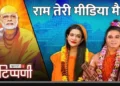
The controversy traces back to an episode of NL Tippani (Episode 264), where Newslaundry hosts ridiculed an India Today interaction with Vladimir Putin. During the exchange, India Today Global Business Editor Kalli Purie asked Putin whether he ever felt tired given his demanding schedule and whether he would take a break during the New Year and Christmas period.
Newslaundry mocked the question as cringeworthy and servile, presenting it as emblematic of journalistic sycophancy. The fatigue-related query was framed as evidence of reporters flattering power rather than interrogating it. Hosts derided the exchange, implying that such questions amounted to bootlicking rather than journalism.
A Different Standard for Ideological Allies
However, looking closer to Newslaundry’s tone shifted dramatically when one of its own reporters posed a strikingly similar question to CPI(M) leader and former Kerala health minister KK Shailaja. During that interview, the reporter asked Shailaja whether she was feeling tired, framing her exhaustion as a marker of dedication and sincerity.
Far from condemning the question, Newslaundry presented it as empathetic, humanising, and even courageous journalism. Shailaja’s fatigue was portrayed as evidence of virtue and commitment, with audiences told they were witnessing journalism that “speaks truth to power.”
The contrast exposes a glaring inconsistency. A question dismissed as sycophancy when asked of a foreign leader or a non-Left figure is celebrated as sensitivity and depth when posed to a political figure aligned with Newslaundry’s ideological worldview.
The problem is not the fatigue question itself but the criteria by which it is judged. A question does not transform from unethical to ethical based on the political ideology, party affiliation, or global standing of the person being interviewed. Yet, in Newslaundry’s framework, scrutiny appears to depend less on power and more on political convenience.
When the subject is a BJP leader, a foreign strongman, or an ideological opponent, soft questions are derided as grovelling. When the subject is a Left icon or progressive figure, similar questions are reframed as compassionate storytelling.
When Newslaundry raises serious issues with ideological allies, such as political violence or governance failures, the questioning often dissolves accountability into abstractions. Context replaces confrontation, and responsibility is softened through historical explanations rather than pressed through direct challenges.
In contrast, mainstream media figures are subjected to relentless ridicule for perceived deference, reinforcing the perception of a double standard.
The episode has reignited a broader debate on whether so-called independent media in India genuinely applies uniform ethical standards or merely repackages ideological alignment under the banner of principled journalism.
This is not about one interview or one question but about credibility. Condemning in others what is excused or even celebrated in oneself, they say, erodes trust and exposes editorial branding that masks partisan judgment.
At the heart of the controversy lies a simple question: is journalism being evaluated by consistent principles or by ideological allegiance? For critics of Newslaundry, the answer is increasingly clear. What is presented as “speaking truth to power” often turns out to be deciding which power deserves scrutiny and which deserves sympathy.
Once this pattern is noticed, the performance of moral superiority collapses, leaving behind not independent media, but ideological media with sharper branding and selective ethics.