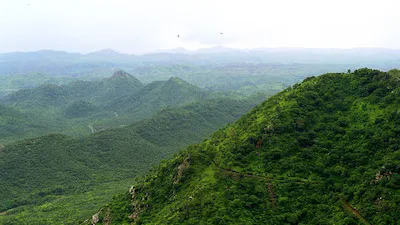
The Union government has pushed back against claims suggesting that the Aravalli Hills face an imminent ecological threat in the wake of a recent Supreme Court judgment on mining, asserting that the ruling has actually reinforced protections for the ancient hill range. In a detailed fact-check issued by the Press Information Bureau (PIB), the Centre said the narrative of environmental dilution is “misleading” and ignores the comprehensive safeguards endorsed by the apex court.
The clarification comes in the backdrop of the Supreme Court’s final judgment dated November 20, 2025, which accepted the recommendations of a high-level committee constituted under the Ministry of Environment, Forest and Climate Change (MoEF&CC). The committee comprised representatives from the states of Delhi, Haryana, Rajasthan and Gujarat, along with technical institutions such as the Forest Survey of India (FSI) and the Geological Survey of India (GSI).
According to the PIB, the Supreme Court has explicitly acknowledged the critical ecological role played by the Aravalli Hills, describing them as a natural barrier against desertification, a major groundwater recharge zone, and an important biodiversity habitat. The court also cautioned that unregulated mining in the region poses a “great threat to the ecology of the nation.”
The government emphasised that the apex court’s ruling strengthens conservation by approving a uniform, scientific and map-verifiable definition of the Aravalli Hills and Ranges. Officials said the lack of a clear definition in the past had led to ambiguity and selective interpretation, often resulting in environmental damage.
Under the newly accepted framework, the Aravalli Hills are defined as any landform rising 100 metres or more above the local relief. This definition covers not only the hill itself but also its supporting slopes and associated landforms up to the lowest contour encircling the hill.
The Aravalli Range, meanwhile, has been defined as two or more such hills located within a distance of 500 metres from each other. Importantly, the entire area between these hills, including valleys, foothills and smaller hillocks, has also been brought under the protective ambit.
The PIB clarified that it would be incorrect to conclude that mining is freely permitted in landforms below 100 metres. “Slopes, foothills and intervening areas are explicitly covered under the new definition, ensuring holistic protection of the landscape,” the note said.
The Supreme Court has also accepted the committee’s recommendation to prohibit mining in core and inviolate areas of the Aravallis. These include protected forests, eco-sensitive zones, wetlands, tiger reserves and Compensatory Afforestation Fund Management and Planning Authority (CAMPA) plantation sites.
Mining will be permitted only in a narrowly defined set of exceptional cases involving critical, strategic and atomic minerals, and even then under stringent safeguards and regulatory oversight.
Crucially, the court has imposed a freeze on the grant of new mining leases until a comprehensive Management Plan for Sustainable Mining (MPSM) is prepared. The plan is to be drawn up by the Indian Council of Forestry Research and Education (ICFRE) for the entire Aravalli landscape, modelled on the Saranda forest plan implemented in Jharkhand.
Existing mining operations, the government said, may continue only if they strictly comply with all environmental and forest clearances. Enhanced monitoring mechanisms and stricter enforcement have been mandated to check violations.
The PIB highlighted that the new framework marks a significant shift from piecemeal regulation to landscape-level conservation. Instead of treating the Aravallis as isolated hillocks, the approach views the range as a continuous geological ridge stretching from Gujarat to Delhi.
Officials said this method is aimed at preventing ecological fragmentation, which has emerged as one of the biggest threats to the region. Landscape-level planning is expected to help curb desertification from the Thar Desert, protect groundwater recharge zones in valleys and foothills, preserve biodiversity corridors, and safeguard the Aravallis’ role as the “green lungs” of the Delhi-NCR region influencing air quality and local climate.
Rejecting claims of ecological dilution, the government pointed to ongoing conservation measures, including large-scale afforestation drives, notification of eco-sensitive zones and the deployment of modern surveillance tools. These include the use of drones, CCTV cameras, weighbridges and district-level task forces to detect and deter illegal mining activities.
“Contrary to alarmist claims, there is no imminent threat to the ecology of the Aravallis,” the PIB statement said, adding that the Supreme Court-backed framework strikes a careful balance between environmental conservation and responsible, regulated development.