We are proudly called ‘Bharatiyas’ because we are the citizens of the great nation of Bharat. How did this name come about? Who conferred it? Our nation’s history is long, and likewise, the story behind our land’s name is equally profound. Let us understand the past and take pride in it.
First, Brahma entrusted this world to his son, Swayambhuva Manu. He then passed it on to his heir, Priyavrata, who divided it into seven island-continents (dvīpas) and distributed them among his own descendants.”.
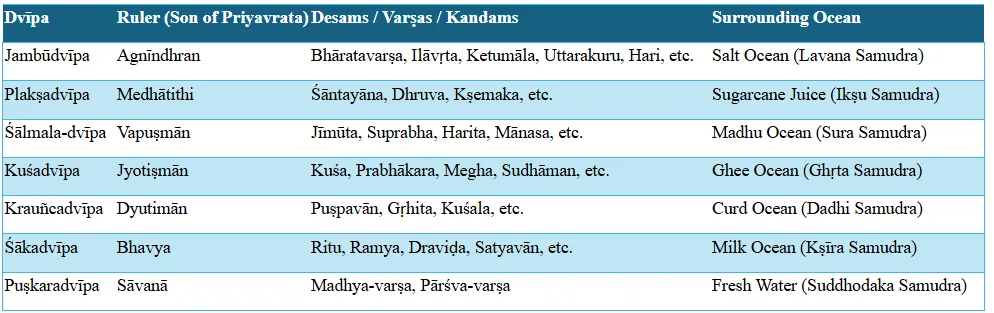
Kurma Purāṇa 45.2: enumerates these seven islands:
jambudvīpaḥ pradhāno’yaṁ plakṣaḥ śālmali reva ca |
kuśaḥ krauñcaś ca śākaś ca puṣkaraś caiva saptamaḥ ||
Jambūdvīpa is primary; next come Plakṣa, Śālmali, Kuśa, Krauñca, Śāka, and Puṣkara—these collectively are the Seven Islands.
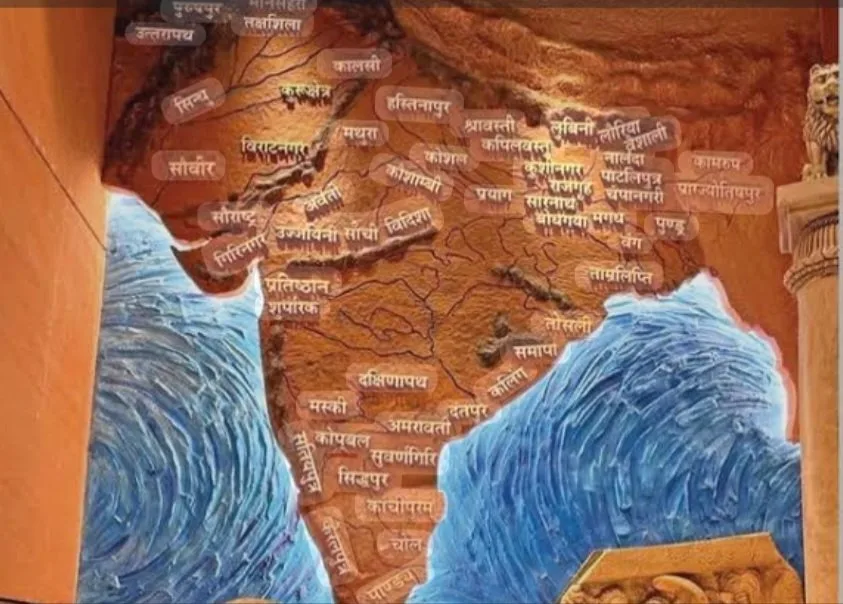
Then, Agnīndhran, the descendant of Priyavrata, ruled Jambūdvīpa, passing the domain to his son Nābhi, who governed from the Himalayas to the south. Nābhi was succeeded by his son Ṛṣabha, followed by Bharata. Bharata’s rule bestowed the region with the name Bharata or Bhāratavarṣa.
Viṣhṇu Purāṇa 2.1.31:
ṛṣabho marudevyāś ca ṛṣabhāt bharato bhavet|
bharatāt bhāratam varṣaṃ bharatāt sumatistv abhūt ||
Ṛṣabha, born of Marudevī, had a son named Bharata. From Bharata came the land Bhāratavarṣa, and later his son Sumati was born.
Based on the naming of dvipas, The Jambudvīpa Prakaraṇam, issued by Marudhu Brothers on June 16, 1801, was a historic call for Swarajya (self-rule) against British oppression — making it one of the prominent known declarations of Indian independence. Though named after the cosmological island Jambūdvīpa, the title was chosen with deep meaning: according to Hindu cosmology, Bhāratavarṣa (Bharath) is part of Jambūdvīpa, the sacred central landmass of the world. By calling it the “Jambudvīpa Proclamation”, the Marudhu Brothers declared not just political resistance, but a spiritual awakening — asserting that the entire land of Bhārat was sacred and sovereign. The proclamation was posted publicly at Trichy Fort and the Sri Ranganātha Swami Temple in Srirangam, urging all dharmic people of the subcontinent to unite against colonial rule.
Viṣhṇu Purāṇa 2.3.1:
uttaraṃ yat samudrasya himādreś caiva dakṣiṇam |
varṣaṃ tat bhāratam nāma bhāratī yatra santatiḥ ||
The land stretching north of the ocean and south of the Himalayas is known as Bhāratavarṣa, where Bharata’s descendants live.
Viṣhṇu Purāṇa 2.1.32:
tataś ca bhāratam varṣaṃ etallokeṣu gīyate |
bharatāya yataḥ pitrā dattaṃ pratiṣṭhitam vanam ||
That land, known globally as Bhāratavarṣa, was granted and established by Bharata’s father in his name.
Bhāgavata Purāṇa 5.4.9:
Etad dvīpa-varṣaṁ bhārataṁ nāma yat etat bhagavān rāmacandraḥ svayam avātīrya…
This division of the land is known as Bhārata-varṣa, because it was ruled by King Bharata, the son of Ṛṣabha. This is also the very land where Bhagavān Rāmacandra Himself descended (incarnated).
Thus, the reason why it is called Bharatvarsha in the Puranas is primarily stated to be that it was ruled by Bharata (the son of Rishabha).
Thus, the Bhāgavata and Viṣhṇu Purāṇas clearly explain why our land bears the name Bhāratavarṣa. Let us honour and stand proud of our sacred heritage. Henceforth, let us reject those who try to create division among us using the name of our motherland’s, and let us make our pride known to the world.
As Bharathiyar’s verse declares: “Let us tap our shoulders and proclaim: ‘This is our Bharathadesham!” Let us say with pride, “We are Bharatiyas, and our country is Bharat.”