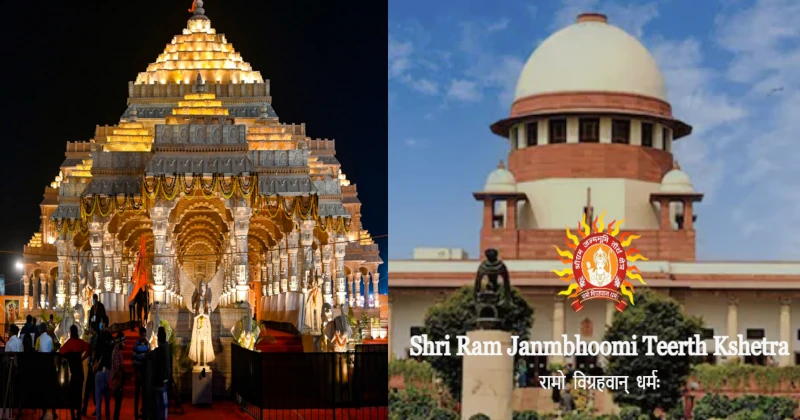
AYODHYA: The Shri Ram Janmabhoomi Teerth Kshetra Trust has announced that it will formally approach the Supreme Court of India seeking the release of all historical evidence and documents on the basis of which the apex court ruled in favour of the Ram mandir in Ayodhya.
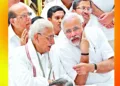
The announcement was made by Nripendra Mishra, President of the Ram Mandir Construction Committee, who said the Trust would write to the Supreme Court requesting that the documents currently in the court’s custody be handed over for public preservation and display.
Mishra stated that the evidence includes material recovered during excavations conducted by the Archaeological Survey of India (ASI), which formed a key part of the proceedings in the Ram Janmabhoomi–Babri Masjid title dispute. These documents and artefacts, he said, remain secure with the Supreme Court.
“It was on the basis of this historical and archaeological evidence that the Supreme Court delivered its verdict in favour of the Ram mandir,” Mishra said. “Now that there is no one left to challenge the decision, the Trust will request the court to hand over the documents so they can be preserved properly.”
According to the Trust, all retrieved material will be housed in a dedicated museum being built within the Ram Mandir complex. The museum is intended to preserve the evidence not merely as legal records, but as part of India’s civilisational and cultural history.
Special galleries focusing on themes from the Ramayana period are also under construction. Mishra revealed that an agreement is being finalised with IIT Chennai for the design, construction, and modern presentation of these galleries, which are expected to be completed by March 2026.
The Trust also plans to showcase the murti of Hanuman located within the mandir complex using modern digital and visual technology, enhancing the experience for devotees and visitors.
In another significant initiative, the Ram Mandir Trust is working to assemble a collection of ancient Ramayana texts from across India and overseas. Mishra said discussions are underway with Varanasi Sanskrit University to place an ancient manuscript of the Valmiki Ramayana in the sanctum sanctorum of the mandir complex.
Once completed, devotees visiting Ram Lalla will also be able to offer prayers at other mandirs within the sprawling complex, further expanding its religious and cultural footprint. Mishra underlined that the Trust’s move comes from a position of legal finality. “There is no longer any challenge to the Supreme Court’s decision,” he said, adding that transparency and preservation were now the primary goals.
Reacting to the development, Zia Jilani, advocate and former member of the Babri Masjid legal team, welcomed the possibility of the evidence entering the public domain but offered a sharply different interpretation of the verdict.
“The Supreme Court delivered the judgment under Article 142, based on balance of convenience and larger public interest,” Jilani said. “The verdict clearly states that no mosque was built after demolishing a mandir and that the demolition of the mosque was a criminal act.”
Jilani added that no report conclusively proved the existence of a mandir beneath the demolished structure and argued that public access to the evidence would not harm the mosque’s position. “If the documents are released, we would be very happy,” he said.