New NCERT textbooks correct historical wrongs: Exposes forgotten brutality of invasions by Ghazni
July 13, 2026
  • Read Ecopy
  • Circulation
  • Advertise
  • Careers
  • About Us
  • Contact Us
Android AppiPhone AppArattai
Organiser
  • ‌
  • Bharat
    • Assam
    • Bihar
    • Chhattisgarh
    • Jharkhand
    • Maharashtra
    • View All States
  • World
    • Asia
    • Europe
    • North America
    • South America
    • Africa
    • Australia
  • Editorial
  • International
  • Opinion
  • RSS @ 100
  • More
    • Op Sindoor
    • Analysis
    • Sports
    • Defence
    • Politics
    • Business
    • Economy
    • Culture
    • Special Report
    • Sci & Tech
    • Entertainment
    • G20
    • Azadi Ka Amrit Mahotsav
    • Vocal4Local
    • Web Stories
    • Education
    • Employment
    • Books
    • Interviews
    • Travel
    • Law
    • Health
    • Obituary
  • Subscribe
    • Subscribe Print Edition
    • Subscribe Ecopy
    • Read Ecopy
  • ‌
  • Bharat
    • Assam
    • Bihar
    • Chhattisgarh
    • Jharkhand
    • Maharashtra
    • View All States
  • World
    • Asia
    • Europe
    • North America
    • South America
    • Africa
    • Australia
  • Editorial
  • International
  • Opinion
  • RSS @ 100
  • More
    • Op Sindoor
    • Analysis
    • Sports
    • Defence
    • Politics
    • Business
    • Economy
    • Culture
    • Special Report
    • Sci & Tech
    • Entertainment
    • G20
    • Azadi Ka Amrit Mahotsav
    • Vocal4Local
    • Web Stories
    • Education
    • Employment
    • Books
    • Interviews
    • Travel
    • Law
    • Health
    • Obituary
  • Subscribe
    • Subscribe Print Edition
    • Subscribe Ecopy
    • Read Ecopy
Organiser
  • Home
  • Bharat
  • World
  • Operation Sindoor
  • Editorial
  • Analysis
  • Opinion
  • Culture
  • Defence
  • International Edition
  • RSS @ 100
  • Magazine
  • Read Ecopy
Home Bharat

New NCERT textbooks correct historical wrongs: Exposes forgotten brutality of invasions by Ghazni

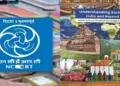
NCERT’s new Class 7 history textbook offers a detailed and factual account of Mahmud of Ghazni’s invasions, temple destruction, and the decline of ancient centers. Class 7 students will now study two integrated social science textbooks instead of three separate ones for history, civics, and geography

WEBDESKWEBDESK
Dec 13, 2025, 04:30 pm IST
in Bharat, Education
Follow on Google News
FacebookTwitterWhatsAppTelegramEmail

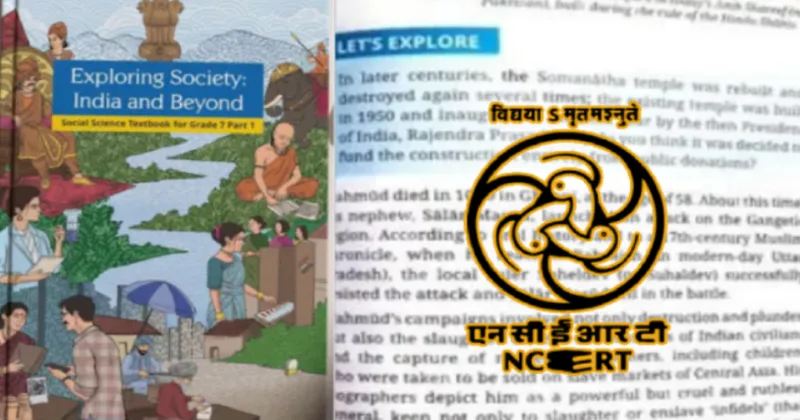
NEW DELHI: The National Council of Educational Research and Training (NCERT) has revised its Class 7 history textbook to include detailed accounts of Mahmud of Ghazni’s invasions, his large-scale massacres, enslavement campaigns, and the destruction of sacred cities such as Mathura, Kannauj, and Somnath. The new content is based on medieval Persian and Indian chronicles. It represents a conscious effort to present history in fuller detail, acknowledging both cultural achievements and the violence that shaped India’s medieval past.

For decades, the portrayal of medieval India in school textbooks was often filtered through a selective lens that highlighted political expansion and cultural synthesis while minimizing the brutality of invasions. The new NCERT revision breaks from this tradition. It aims to provide students with a more balanced narrative, one that does not shy away from describing the devastation that accompanied the rise of early Islamic rulers in the subcontinent.

The new six-page section titled “The Ghaznavid Invasions” chronicles Mahmud’s 17 expeditions into the Indian subcontinent with striking specificity. It narrates how the ruler’s armies stormed the temples of Mathura and Kannauj, and later demolished the grand Somnath temple in Gujarat. The book goes further to connect past and present by mentioning that the Somnath temple was rebuilt in 1950 and inaugurated the next year by President Rajendra Prasad. It was financed entirely through public donations, a reminder of India’s enduring spirit of cultural reclamation.

🚨 HUGE! NCERT’s new Class 7 textbook now details Mahmud of Ghazni’s massacres, enslavement, temple destruction and the plunder of Mathura, Kannauj & Somnath, based on medieval sources.

It also covers Ghuri, Aibak & Bakhtiyar Khilji, including Nalanda’s destruction. pic.twitter.com/8yePZQfIIZ

— Megh Updates 🚨™ (@MeghUpdates) December 8, 2025

For the first time, students will also learn about the scale of devastation caused by these invasions. The chapter describes the slaughter of tens of thousands of civilians and the enslavement of prisoners, including children, who were transported to Central Asian slave markets. Drawing from the works of medieval chroniclers such as Al-Utbi and Al-Biruni, the textbook paints Mahmud as a formidable yet ruthless commander who targeted not only Hindu, Buddhist, and Jain “infidels” but even rival Islamic sects. These records emphasize both his religious zeal and his political ambition to spread his version of Islam through force and fear.

Such explicit details were absent in the previous Class 7 history textbook, which reduced Mahmud’s actions to a single paragraph about temple raids for wealth and religious motives. The inclusion of original historical references will now allow the students to explore the complexity of medieval power struggles rather than merely skimming over them.

Before diving into the invasions, the book also includes a “Word of Caution”, a thoughtful pedagogical note urging readers to understand that history often records wars and conflicts more vividly than peace and progress. It acknowledges that historians worldwide have sometimes hesitated to confront violent episodes, and encourages students to interpret such events critically and contextually.

The broader chapter, “Turning Tides: 11th and 12th Centuries,” expands the lens to include later conquerors such as Muhammad Ghuri, his general Qutb-ud-din Aibak, and Aibak’s commander Bakhtiyar Khilji. In a major addition, the book recounts Khilji’s destruction of the ancient universities of Nalanda and Vikramashila, two of the world’s greatest centres of Buddhist learning. It states that Khilji’s forces looted these institutions, killed hundreds of monks, and set fire to their libraries, which reportedly burned for months. Scholars of Buddhism, it notes, widely agree that these attacks hastened the decline of Buddhism in India. The chapter concludes on a reflective note, highlighting that despite these invasions, large parts of northern and almost all of southern India remained outside Turkic control. It reminds readers that several Indian rulers united periodically to resist the foreign forces.

Earlier portions of the book have also been enriched with sections on other foreign incursions from the Hunas to the Arabs. For instance, it now mentions Muhammad bin Qasim’s 8th-century campaign in Sindh, quoting a 13th-century Persian chronicle that described his expedition as a religious duty. The book also explains that the Arab conquest of Sindh did not bring major political or cultural changes and had less impact than later invasions.

Beyond content, NCERT has restructured the learning format as well. Class 7 students will now study two integrated social science textbooks instead of three separate ones for history, civics, and geography. This shift shows a holistic approach to understanding past societies and their interconnections rather than treating disciplines as isolated subjects.

With these comprehensive updates, NCERT’s new Class 7 textbook signals a decisive move toward presenting a fuller, more balanced picture of India’s past, neither glorifying nor sanitizing it. By grounding lessons in primary sources and evidence, it encourages students to think critically about how history is written, remembered, and sometimes forgotten.

Ultimately, this revision is not about rewriting history: it is about restoring it. By shedding light on the invasions, devastations, and the unyielding spirit of survival that defined medieval India, the new textbook empowers young minds to understand their heritage with honesty, empathy, and pride.
Topics: NCERTSomnath TempleNational Council of Educational Research and TrainingMahmud of GhazniThe Ghaznavid Invasions
ShareTweetSendShareSend
✮ Subscribe Organiser YouTube Channel. ✮
✮ Join Organiser's WhatsApp channel for Nationalist views beyond the news. ✮
Previous News

Kerala actress rape case verdict: Dileep acquitted, Pulsar Suni gets 20 years rigorous imprisonment

Next News

J&K: Grappling with a prolonged dry spell nowadays after flash floods of August, September disrupted road, rail traffic

Related News

For the first time, NCERT adds Emergency to class 9 curriculum, highlights suspension of rights and democratic struggles

NCERT refutes claims of dropping preamble from class 9 textbook, says reports are misleading

For the first time, NCERT adds Emergency to class 9 curriculum, highlights suspension of rights and democratic struggles

NCERT includes Emergency chapter in class 9 textbook, describes 1975-77 period as a major challenge to Indian democracy

NCERT orders replacing correct image of Mohenjo-Daro dancing girl

NCERT orders immediate correction of modified Mohenjo-Daro ‘Dancing Girl’ illustration

Why Nehru didn't want anything to do with Somnath temple rebuilding

When Nehru opposed reconstruction of Somnath Mandir and K.M. Munshi refused to back down

Somnath Mandir's Journey Through Bloodshed and Rebirth (This image is generated from AI)

Somnath Stands Tall: How Hindu civilisation survived repeated Islamic attacks

Prime Minister Narendra Modi at Somnath Mandir

“From ruin to renewal”: PM Modi pens op-ed ahead of May 11 visit to Somnath Mandir; Announces special pujas

Load More

Latest News

Great Nicobar is emerging as a strategic gateway that strengthens India's maritime reach while increasing pressure on China's Malacca Dilemma

Great Nicobar Project to boost India’s Indo-Pacific leverage, deepen China’s Malacca Dilemma: Report

PM POSHAN

PM POSHAN Scheme: Yogi government launches massive drive to recruit 3.53 lakh cooks in Uttar Pradesh

Uttar Pradesh: US national claiming special forces past held near Indo-Nepal border without passport

Rajaprasad Bije Ritual: Servitors Convey Mahaprabhu's Recovery Message to Gajapati Maharaja Divya Singh Dev

Odisha: Rajaprasad Bije ritual held at Puri Jagannath Temple; Gajapati Maharaja informed of Mahaprabhu’s recovery

Mukhyamantri Majhi Ladki Bahin Yojana

Maharashtra: Kirit Somaiya exposes 92 lakh ‘Bogus’ Ladki Bahin beneficiaries after verification

KPSC Chief Shivashankarappa Sahukar suspended as Governor orders inquiry

Karnataka Governor suspends KPSC Chief Shivashankarappa Sahukar over recruitment scam allegations, seeks SC probe

Rs 100 Crore Palani Temple land registered in private names, probe demanded

Tamil Nadu: Palani temple land worth Rs 100 crore illegally registered in names of two individuals, sparks outrage

UP CM Yogi Adityanath inaugurates 'Vriksharopan Mahayagya-2026' in Gorakhpur

‘Ek Ped Maa Ke Naam’: Uttar Pradesh creates green history by planting 40 crore saplings, CM Yogi hails achievement

Uttarakhand govt ends grants for 456 madrasas after abolishing Madrasa board

Uttarakhand govt ends grants to 456 Madrasas after abolishing Madrasa board; U-DISE benefits stay

Supreme Court (Left), Ayodhya Ram Mandir (Right)

Ayodhya Ram Mandir Donation Row: Union, UP, Temple trust get notice as SC seeks SIT status report

Load More
  • Privacy
  • Terms
  • Cookie Policy
  • Refund and Cancellation
  • Delivery and Shipping

© Bharat Prakashan (Delhi) Limited.
Tech-enabled by Ananthapuri Technologies

  • Home
  • Search Organiser
  • Bharat
    • Assam
    • Bihar
    • Chhattisgarh
    • Jharkhand
    • Maharashtra
    • View All States
  • World
    • Asia
    • Africa
    • North America
    • South America
    • Europe
    • Australia
  • Editorial
  • Operation Sindoor
  • Opinion
  • Analysis
  • Defence
  • Culture
  • Sports
  • Business
  • RSS @ 100
  • Entertainment
  • More ..
    • Sci & Tech
    • Vocal4Local
    • Special Report
    • Education
    • Employment
    • Books
    • Interviews
    • Travel
    • Health
    • Politics
    • Law
    • Economy
    • Obituary
  • Subscribe Magazine
  • Read Ecopy
  • Advertise
  • Circulation
  • Careers
  • About Us
  • Contact Us
  • Policies & Terms
    • Privacy Policy
    • Cookie Policy
    • Refund and Cancellation
    • Terms of Use

© Bharat Prakashan (Delhi) Limited.
Tech-enabled by Ananthapuri Technologies