Union Home Minister Amit Shah invoked the Andaman Islands’ profound historical legacy, asserting that the archipelago stands today not merely as a reminder of British colonial oppression but as sacred ground shaped by the heroic endurance of India’s freedom fighters.
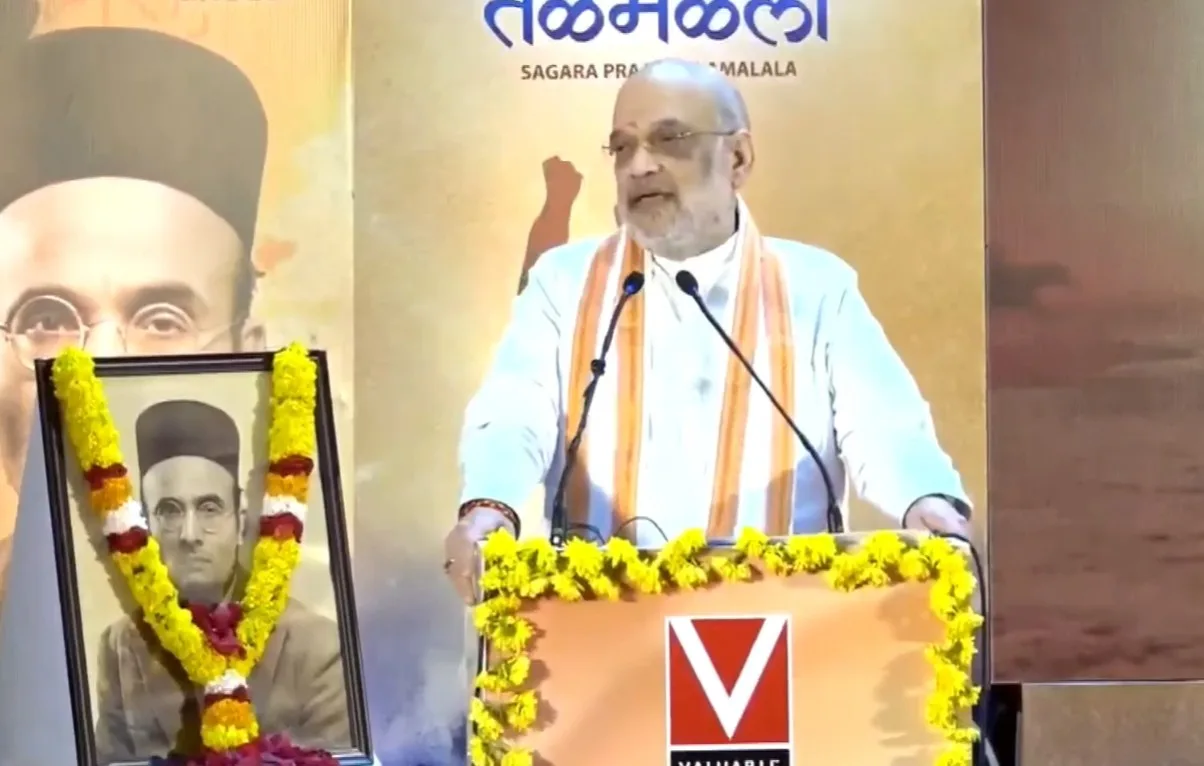
Speaking at the “Sagara Pran Talmalala” commemorative programme, organised to mark 115 years of Vinayak Damodar Savarkar’s iconic patriotic poem, on December 12, Amit Shah underlined how the once-feared Cellular Jail has transformed into a national site of pilgrimage and inspiration due to Savarkar’s extraordinary sacrifice.
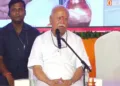
The event, held at the site of a newly unveiled Savarkar statue, brought together senior dignitaries including Union Home Minister Amit Shah, RSS Sarsanghchalak Mohan Bhagwat and Lieutenant Governor Andaman & Nicobar Islands Admiral D K Joshi, Pt. Hridaynath Mangeshka, joined thousands of attendees in honouring the revolutionary’s legacy during the special series of programmes dedicated to the anniversary.
स्वातंत्र्यवीर सावरकर जी का ‘सागरा प्राण तळमळला’ गीत आज भी रोम-रोम में माँ भारती के प्रति कर्त्तव्य की भावना भर देता है। इस अमर कृति के 115 वर्ष पूर्ण होने पर श्री विजयपुरम (अंडमान और निकोबार) में आयोजित कार्यक्रम से लाइव… https://t.co/jFGJAeTcKV
— Amit Shah (@AmitShah) December 12, 2025
Reflecting on the British colonial era, Shah said that those sent to the islands before independence were virtually abandoned by their families, as returning from the infamous “Kala Pani” was considered nearly impossible. “Those who did return came back mentally and physically shattered,” he remarked. “Yet this land is revered today because Savarkar spent the most difficult years of his life here.”
वीर सावरकर जी का जीवन मातृभूमि के प्रति अथाह प्रेम और राष्ट्र के लिए प्राण न्योछावर करने की प्रेरणा देता है। अंडमान और निकोबार की भूमि वीर सावरकर जी सहित अनेक स्वतंत्रता सेनानियों के त्याग, समर्पण एवं साहस की साक्षी रही है।
आज इस पावन भूमि पर राष्ट्रीय स्वयंसेवक संघ के… pic.twitter.com/Y1M8zp85Id
— Amit Shah (@AmitShah) December 12, 2025
Shah also highlighted Andaman’s deep association with Netaji Subhas Chandra Bose, noting that it was the first patch of Indian territory liberated by the INA. He recalled that Bose had proposed naming the islands “Shaheed” and “Swaraj,” a vision realised decades later under Prime Minister Narendra Modi. This, he said, was a step toward freeing India from the remnants of colonial-era thinking.
Praising Savarkar’s multi-dimensional contributions, HM Amit Shah described him as both “a writer and a fighter,” a revolutionary who enriched Indian literature, history and language. Savarkar, he said, introduced over 600 new words to Hindi-Marathi vocabulary and demonstrated literary brilliance from a young age—writing a devotional hymn at 11 and later composing the emotionally stirring patriotic poem “Sagar Pran Talmalala” while in England.
Amit Shah emphasised that Savarkar’s work extended beyond nationalism into social reform. His efforts against untouchability, he said, remained insufficiently acknowledged by the nation. “He made it his mission to remove social evils, yet his contribution in this field has not received the respect it deserves,” he added.
Recounting Savarkar’s fearless ideological stance, the Home Minister quoted him: “Heroism is not the absence of fear, but victory over it.” Such ideals, he said, continue to inspire generations.
Shah also criticised how British colonial narratives undermined India’s freedom struggle, citing Savarkar’s insistence on calling the 1857 uprising the “First War of Independence” instead of a mere revolt. He linked this reinterpretation with Prime Minister Modi’s call during the 75th anniversary of independence to remove the “Mindset of Slavery” from national consciousness.
Concluding his address, Shah said Savarkar’s title of “Veer” was never granted by any government but bestowed organically by the people, reflecting the unmatched reverence he commands across generations.