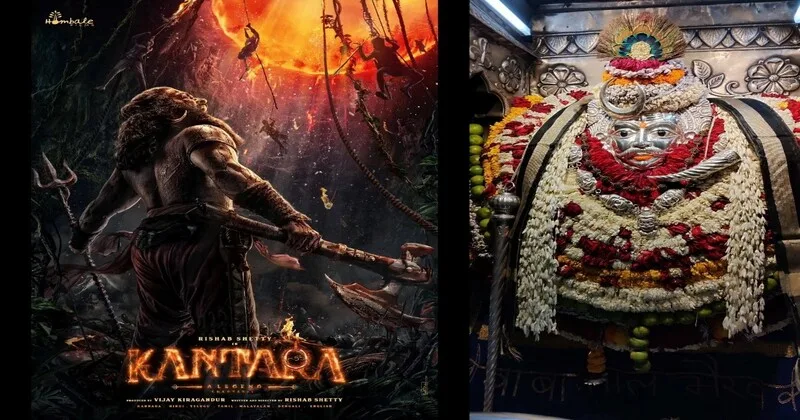
India a country of ancient metaphysical ideas, which has travelled across world in centuries, again its returning to public consciousness through literature, music and cinema. Among these, the Aṣṭa Bhairava tradition rooted in Śaiva philosophy and embodied prominently in Kashi has seen a renewed cultural and artistic presence. In recent South Indian film such as Kantara has a composition Brahmakalasha, which have drawn motivation from the reservoir of Indic thought with authenticity. This revival coincides with a larger transformation within India’s film ecosystem, where southern industries demonstrate cultural confidence and narrative depth, while mainstream Bollywood confronts a growing crisis of relevance. Understanding the Aṣṭa Bhairava concept within this broader shift, reveals how sacred ideas, creative expression and cultural identity converge in contemporary India.
Brahmakalasha Song and the Reinvocation of Aṣṭa Bhairava
The song Brahmakalasha has attracted attention for its powerful invocation of the Aṣṭa Bhairava, blending choreography, musical structure and symbolic visuals has communicated the concepts of cosmic protection, discipline, dissolution and renewal. In classical Śaiva traditions, each of the eight Bhairavas governs a direction of time-space and represents a dimension of human and cosmic experience. By invoking these concepts deliberately, the song does more than create a dramatic spectacle, where it reconnects the audience with a civilisational vocabulary that has lasted for millennia. The use of ancient forms is the center point of its cultural significance than the seriousness and precision with which they are deployed.
Brahmakalasha song is moving away from trends in earlier Indian cinema, which has diluted Indic concepts or framed them through Westernised forms. Bhairava is positioned as an active principle of spiritual power, fearlessness and moral vigilance has an effect to deepen the resonance with viewers across linguistic and regional divides.
Aṣṭa Bhairavas of Kashi: Sacred Geography and Cultural Continuity
“Kashi one of the world’s oldest continuously inhabited city, houses the most sacred configuration of the Aṣṭa Bhairavas. These eight guardian deities create a protective mandala for the sacred city, each positioned at important junctures across Kashi’s ritual landscape. Their positioning reflects a civilizational logic where the cosmos is not abstract but spatially encoded within the geography of the city”, as explained by Dr. Shashi Dhar a Kathavachak and Śaiva follower.
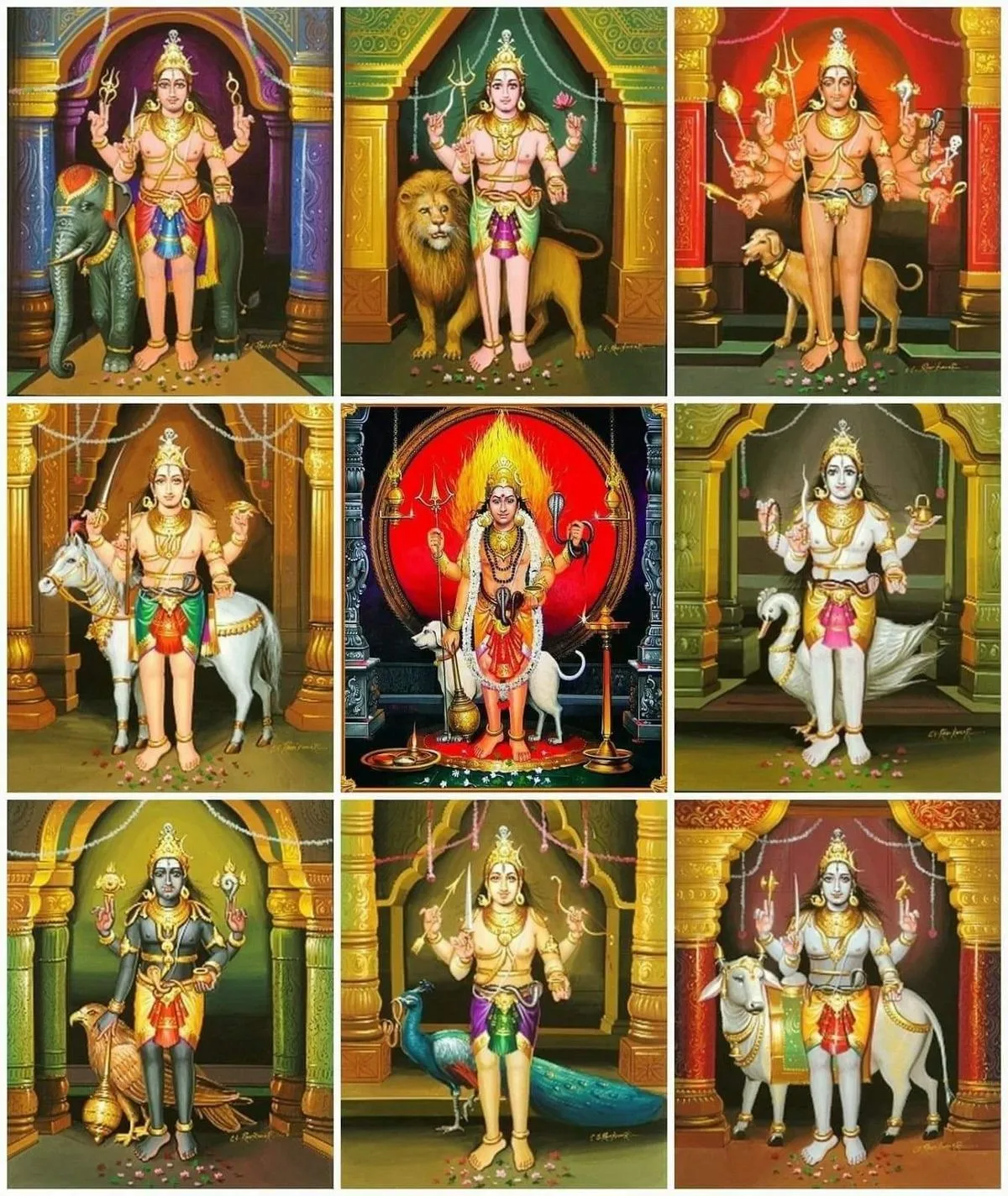
Eight different Bhairavas with two main Bhaieavas across Kashi has been described below with geographical location.
Kaal Bhairav: The Kotwal of Kashi located in Visheshwarganj, Kaal Bhairav is believed to be the Kotwal or police chief of the city. No spiritual journey in Kashi is complete without his darshan. He embodies the moral and metaphysical authority that governs the sacred city.
Batuk Bhairav: The benevolent child Form situated in Kamachha, Batuk Bhairav represents innocence infused with extraordinary protective power. Devotees worship him for obstacle removal and household peace.
Chanda Bhairav: Chanda Bhairav is revered for his fierce, obstacle-clearing energy that protects devotees from sudden threats and adversities. His presence symbolizes decisive strength and shielding power. It is situated near Naya Mahadev locality.
Ruru Bhairav: Ruru Bhairav embodies healing, harmony and compassionate protection, that is sought for relief from illnesses and emotional disturbances. He represents refined knowledge and balanced strength. Located behind Durga Mandir, Durga Kund.
Krodhan Bhairav: Located near the Kamakhya Mandir, Krodhan Bhairav controls the conversion of anger into useful energy. His presence reinforces discipline and controlled strength.
Unmatta Bhairav: Within the Batuk Bhairav complex, Unmatta Bhairav represents transcendence over social conditioning. His state is not one of chaos but one of freedom from normative limits.
Bheeshan Bhairav: Located near the Jyeshteshwar Mandir, Bheeshan Bhairav is the fearsome guardian who guards the cosmic order and the territorial sanctity of Kashi.
Asitanga Bhairav: Situated in the Mahamritunjaya Mandir complex, the Asitanga Bhairav is related to purity, austerities, and inner cleansing.
Kapal Bhairav (Lat Bhairav): At Alaipur, Kapal Bhairav signifies the inevitability of time, dissolution and karmic reckoning. Worship of him depicts acceptance of the human journey through mortality.
Samhara Bhairav: Located at Gai Ghat, Samhara Bhairav is the force that dissolves the old so that renewal can take place. His presence thus completes the cosmic cycle.
These eight forms maintain a spiritual perimeter around Kashi that has historically shaped the city’s identity. Pilgrims undertaking the Aṣṭa Bhairava yatra acknowledge that civilisation sustains itself through vigilance, discipline and the recognition of sacred boundaries or ideas deeply relevant even today.
Cultural Resonance and South Indian Cinema’s Rise
South Indian cinema has emerged as a transformative force in the national cultural landscape because of its ability to align storytelling with deeply rooted civilisational themes. These industries Telugu, Tamil, Malayalam and Kannada have demonstrated an intuitive grasp of audience expectations by blending contemporary cinematic craft with indigenous philosophies, Mandir traditions and regional histories. This has cultivated an aesthetic of authenticity and research-based narration.
Brahmakalasha songs carries this shift in the portrayal of the Aṣṭa Bhairava concept. Filmmakers use ancient motifs but interpret them as dynamic thinking systems through which the world can make sense even today. The elemental alignment with cultural consciousness has helped South Indian films gain trust among viewers and expand their reach across India and globally. Success has revealed that culturally grounded cinema is turning out to be the defining standard of artistic excellence in place of formulaic spectacle.
Bollywood Slipping Edge: A Crisis of Cultural Authenticity
While Bollywood has become less influential because of its growing detachment from Indian cultural and philosophical depth, it has also been unable to rise above repetition of themes, celebrity-driven stories and urban-centric plots that no longer appeal to a society in the throes of strong cultural reorientation.
Most Hindi films of recent times frame tradition superficially or import narratorial sensibilities which show down the Indic worldview. The less filmmakers engage with Indian civilisational heritage, having a greater the divide between them and their audiences. Heavy corporatisation of production structures instills risk aversion, represses experimentation and promulgates pat story arcs with weakened emotional investment. Audiences in search of genuineness, intellectual involvement and cultural aspects increasingly turn to South Indian cinema, which regularly offers these elements with seriousness and conviction. Bollywood thus fails not only commercially but culturally, by not being attuned to the changing identity of the country.
The re-emergence of the Aṣṭa Bhairava concept in songs by contemporary creative expression in South Indian cinema, reflects the profound cultural realignment in India. The concept of protection, discipline, transformation and cosmic order encoded into the eight Bhairavas is continuously conveyed through the sacred geography of Kashi.
When these themes show up in art, music and film by their resonance comes not as relics of the past but as principles that shape the present. It speaks to the confidence of South Indian cinema in employing such a framework within which it can always bank upon drawing from India’s civilisational archive while providing compelling modern narratives. But Bollywood contrastingly, suffers from the consequences of slowly distancing itself from these root