Reform for maritime sector of Bharat
June 18, 2026
  • Read Ecopy
  • Circulation
  • Advertise
  • Careers
  • About Us
  • Contact Us
Android AppiPhone AppArattai
Organiser
  • ‌
  • Bharat
    • Assam
    • Bihar
    • Chhattisgarh
    • Jharkhand
    • Maharashtra
    • View All States
  • World
    • Asia
    • Europe
    • North America
    • South America
    • Africa
    • Australia
  • Editorial
  • International
  • Opinion
  • RSS @ 100
  • More
    • Op Sindoor
    • Analysis
    • Sports
    • Defence
    • Politics
    • Business
    • Economy
    • Culture
    • Special Report
    • Sci & Tech
    • Entertainment
    • G20
    • Azadi Ka Amrit Mahotsav
    • Vocal4Local
    • Web Stories
    • Education
    • Employment
    • Books
    • Interviews
    • Travel
    • Law
    • Health
    • Obituary
  • Subscribe
    • Subscribe Print Edition
    • Subscribe Ecopy
    • Read Ecopy
  • ‌
  • Bharat
    • Assam
    • Bihar
    • Chhattisgarh
    • Jharkhand
    • Maharashtra
    • View All States
  • World
    • Asia
    • Europe
    • North America
    • South America
    • Africa
    • Australia
  • Editorial
  • International
  • Opinion
  • RSS @ 100
  • More
    • Op Sindoor
    • Analysis
    • Sports
    • Defence
    • Politics
    • Business
    • Economy
    • Culture
    • Special Report
    • Sci & Tech
    • Entertainment
    • G20
    • Azadi Ka Amrit Mahotsav
    • Vocal4Local
    • Web Stories
    • Education
    • Employment
    • Books
    • Interviews
    • Travel
    • Law
    • Health
    • Obituary
  • Subscribe
    • Subscribe Print Edition
    • Subscribe Ecopy
    • Read Ecopy
Organiser
  • Home
  • Bharat
  • World
  • Operation Sindoor
  • Editorial
  • Analysis
  • Opinion
  • Culture
  • Defence
  • International Edition
  • RSS @ 100
  • Magazine
  • Read Ecopy
Home Bharat

Streamlining coastal shipping rules: A reform for maritime sector of Bharat

India’s coastal vessels long operated under procedures meant for international voyages, creating avoidable delays for seafarers. The recent policy shift simplifies these requirements, offering a practical balance between operational ease and regulatory oversight within the country’s evolving maritime governance framework

Vivek KumarVivek Kumar
Nov 22, 2025, 10:00 am IST
in Bharat
Follow on Google News
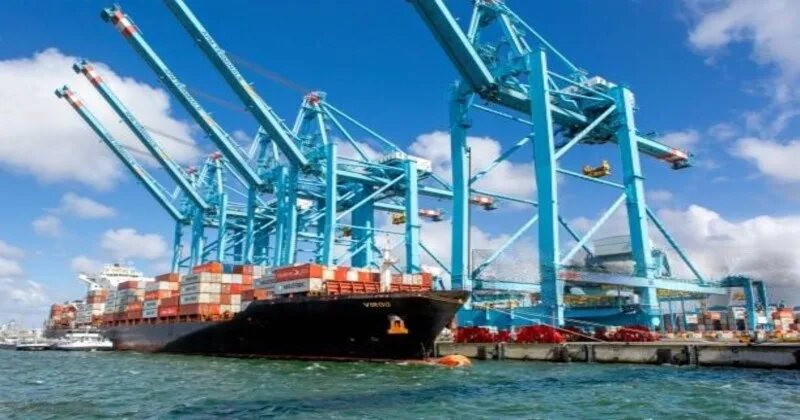
Representative Image

Representative Image

FacebookTwitterWhatsAppTelegramEmail

Coastal shipping has been a reliable pillar of India’s maritime economy, linking ports, fueling coastal trade, supporting research activities and sustaining the daily work of thousands of seafarers. Those who work within Indian waters often work with more paperwork than sea routes. Procedural requirements originally meant for international voyages gradually became routine even for coastal vessels, creating inefficiencies without improving security. By easing these outdated formalities, the government has taken a pragmatic step toward strengthening maritime governance and improving the working conditions for Indian seafarers.

Why Change Was Necessary

Indian flagged coastal vessels like dredgers, barges, research crafts and other port-limit operations work in a tightly coordinated environment. Their schedule is dependent on tides, port traffic, cargo timings and engineering tasks. Till date the crew members were supposed to be undertaking sign-on/sign-off immigration procedures and obtaining Shore Leave Passes, entailing physical visits to the immigration offices every few days.

Such requirements were not only time consuming but also ill-suited for vessels which never left Indian territorial waters. Administrative roles fell on crew members along with their technical responsibilities and operations at the ports were occasionally delayed by personnel compliance with the procedures.

Also Read: From Swadeshi spirit to smart factories, India is redefining global manufacturing of $1 trillion dream

Recognizing the above mismatch between policy intent and on-ground realities, the government initiated a targeted reform by simplifying procedures where risks are minimal and operations are domestic, with oversight where necessary.

What the New Framework Changes

Under the new regulation, coastal vessels that operate exclusively within port limits are exempt from immigration sign-on/sign-off formalities. The related requirements for SLPs have also been done away with. This covers crew and supernumerary staff on board Indian flag vessels undertaking coastal runs, dredging operations and research assignments.

The responsibility for the regulation of shore access now lies with the respective port authorities only. They will keep records of crew working on these vessels and ensure that entry and exit remain structured and traceable. It will be oversight by the Bureau of Immigration continues through periodic inspections and verification of crew lists.

This shift does not eliminate regulation, but instead transfers it to the agency that is equipped to handle it, the port authorities have to deal with such vessels on a daily basis.

Benefits for Seafarers and Maritime Operations

· Reduced Administrative Burden

The most significant relief comes in terms of reduced compulsory visits to immigration offices. Seafarers can now focus on their duties on board the vessel without being disrupted by routine procedural demands. This improves workflow and reduces operational stress.

· Increased Efficiency for Coastal Projects

Dredging, the movement of cargo along the coasts and missions of research all require timely execution. Elimination of formalities that are considered unnecessary improves efficiency in terms of reduced delays, hence better turnaround time and overall port operations efficiency. This change is seen to be more beneficial to India’s busier ports, where even minor improvements in crew movement can mean much in terms of increased productivity.

· Sharper Institutional Responsibility

Port authorities are now the nodal point for managing crew access. This is international best practice and a global maritime, where domestic vessel movements are managed by local port administrations. It also allows immigration authorities to focus on higher-risk international traffic, thereby optimising national security efforts.

· Balanced Oversight

When procedures are simplified, the checks remain solid. Surprise inspections and record-keeping are mandatory to ensure complete transparency. The goal is not deregulation but proportional regulation where the risks are low and firm where needed.

Supporting India’s Maritime Growth Agenda and implementation

The reform is part of the broader national strategy of strengthening coastal shipping and improving the “Ease of Doing Business” in the maritime domain. Coastal transportation is more energy-efficient compared to road transport, reduces congestion on highways and lowers logistics costs. Encouraging coastal shipping is central to India’s aspiration to build a modern and globally competitive port ecosystem.

The simplified procedures make Indian-flagged vessels more attractive to operators, encouraging fleet expansion and supporting jobs for Indian seafarers. While India works to increase its maritime throughput and put more infrastructure on its coastline, procedural clarity becomes as important as the physical investments.

The reform will be effective on the ground, requiring updated internal protocols in the ports, proper training of personnel and clear communication with vessel operators. Regular monitoring can demonstrate the existence of any gaps where ease of access must not come at the cost of accountability.

Discontinuing the sign-on/sign-off and SLP related requirements for Indian-flagged coastal vessels marks a carefully calibrated adjustment in maritime regulation. It takes into account on-ground realities, respects the time and responsibilities of seafarers, also empowers port authorities to handle what comes naturally within their mandate. The reform retains essential elements of strong oversight mechanisms and thus reflects a governance approach that is practical, balanced and in tune with the goals of India’s maritime development. It was a timely step toward smarter management of coastal shipping and a more efficient ecosystem in general.

Topics: maritimePortsIndia’s maritime economyMaritime EconomyCoastal Economy
ShareTweetSendShareSend
✮ Subscribe Organiser YouTube Channel. ✮
✮ Join Organiser's WhatsApp channel for Nationalist views beyond the news. ✮
Previous News

Odisha: Crackdown on Bangladeshi infiltrators intensifies; Multi-district raids, demolitions, high-level probe underway

Next News

Chinese move against Japanese seafood, opening big gains for Indian exporters

Related News

India's Great Nicobar Project is set to transform India’s southernmost island into a strategic port-led hub, boosting maritime security and connectivity in the Indo-Pacific

India’s Great Nicobar Project: A strategic hub for trade, maritime security and sustainable growth in the Indo-Pacific

Representative Image

Sagarmanthan: Charting a new course for India’s Maritime Future

Representative Image of the ports

Under PM Modi’s leadership India’s ports undergo transformational changes without being noticed

Pakistan releases 198 Indian fishermen from jail, plans further releases in coming months

Load More

Latest News

The coronation of Chhatrapati Shivaji Maharaj took place on June 6, 1674, at Raigad Fort. This historic event marked the realisation of Hindavi Swarajya

Hindu Samrajya Diwas: The Coronation – Timeless inspiration for swarajya

Security forces recover huge cache of arms

Manipur: COBRA battalion starts action in the state; security forces gun down suspected militant

Kandhamal Police Recover Large Cache of Maoist Arms and Explosives

Odisha: Kandhamal police recover large cache of Maoist arms and explosives in major anti-naxal operation

India on the path to becoming an Atmanirbhar (Self-Reliant) in defence sector

From Tejas to Vikrant: PM Modi showcases India’s rise as a global defence power

Purvanchal’s industrial rise under the double-engine government reflects growing investment, ODOP exports, factories, and jobs across eastern UP

How UP’s double-engine government transformed Purvanchal from an industrial backwater into a rising economic powerhouse

Years of ABVP-led advocacy and protests have resulted in Keralam moving ahead with the PM SHRI scheme

Keralam moves ahead with PM SHRI scheme; ABVP says long struggle for students has paid off

Karnataka: Dharmasthala defamation conspiracy alleged; Hindu organisations demand probe into Prakash Raj’s role

The unrest in Muzaffarabad highlighted growing demands for economic justice, accountable governance, and greater political representation in PoJK

Muzaffarabad’s Revolt Against Islamabad: How PoJK protests exposed the contradictions in Pakistan’s Kashmir narrative

CM announces free bus service for NEET-UG 2026 candidates

Assam: CM announces free bus service for NEET-UG 2026 candidates; Directs robust measures to conduct the examination

The Modi era is presented as a transformative phase in Indian politics, governance, and national identity, reflecting the aspirations of a rapidly evolving India

Modi Yug: How twelve years of governance reshaped India’s aspirations, identity & development trajectory

Load More
  • Privacy
  • Terms
  • Cookie Policy
  • Refund and Cancellation
  • Delivery and Shipping

© Bharat Prakashan (Delhi) Limited.
Tech-enabled by Ananthapuri Technologies

  • Home
  • Search Organiser
  • Bharat
    • Assam
    • Bihar
    • Chhattisgarh
    • Jharkhand
    • Maharashtra
    • View All States
  • World
    • Asia
    • Africa
    • North America
    • South America
    • Europe
    • Australia
  • Editorial
  • Operation Sindoor
  • Opinion
  • Analysis
  • Defence
  • Culture
  • Sports
  • Business
  • RSS @ 100
  • Entertainment
  • More ..
    • Sci & Tech
    • Vocal4Local
    • Special Report
    • Education
    • Employment
    • Books
    • Interviews
    • Travel
    • Health
    • Politics
    • Law
    • Economy
    • Obituary
  • Subscribe Magazine
  • Read Ecopy
  • Advertise
  • Circulation
  • Careers
  • About Us
  • Contact Us
  • Policies & Terms
    • Privacy Policy
    • Cookie Policy
    • Refund and Cancellation
    • Terms of Use

© Bharat Prakashan (Delhi) Limited.
Tech-enabled by Ananthapuri Technologies