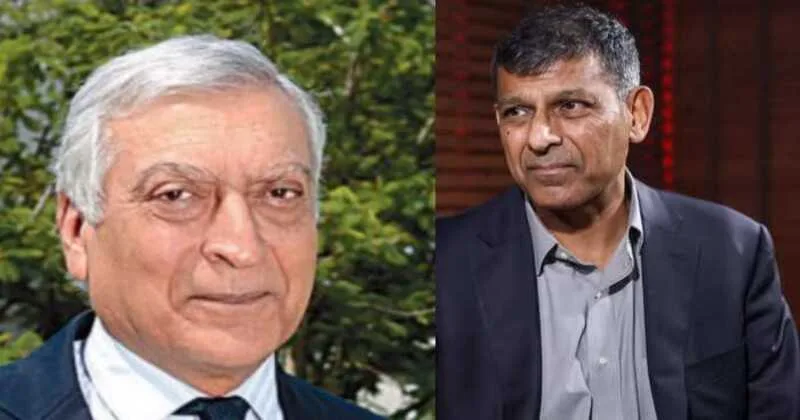
Former Foreign Secretary Kanwal Sibal has sharply criticised former Reserve Bank of India Governor Dr. Raghuram Rajan for his comments on Prime Minister Narendra Modi in the context of recent United States tariff decisions. Calling Rajan’s remarks a cheap political blunder, Sibal argued that India has not bowed down to external pressure under Modi’s leadership. In a strong response on social media, Sibal asserted that Modi has upheld India’s national dignity even as several other countries have yielded to Washington’s demands. According to him, while many nations have softened their positions to avoid confrontation in ongoing trade disputes with the United States, India has stood firm against what he described as an unfair trade war.
Rajan had earlier criticised the United States for imposing steep import duties on Indian products. He referred specifically to US President Donald Trump’s decision to levy a 50 per cent import duty on India, compared to a significantly lower 19 per cent duty announced for Pakistan. Rajan argued that such a move was a diplomatic embarrassment for Modi, who has often highlighted his personal rapport with the American leader. In response, Sibal countered that Trump’s tariff actions were driven by American domestic interests, not personal relations. He argued that Trump had imposed unilateral and heavy tariffs even on traditional allies of the US and that many of them had publicly complained of being humiliated. Sibal dismissed the idea that personal chemistry between leaders could override national trade considerations, and suggested that Rajan’s interpretation was politically motivated.
Why attempt such a cheap political blow? It is unworthy of the person resorting to it.
Trump’s tariff spree has nothing to do with friendship.
It is based on obsessive self- interest.Trump has not spared his close allies, leave aside his “ friends”. He has imposed… https://t.co/lZN9BEQuVL
— Kanwal Sibal (@KanwalSibal) November 10, 2025
Sibal further questioned Rajan’s comparison involving Pakistan. He asked whether Rajan was implying that India should seek closer proximity with the US in the manner Pakistan does. He further mocked the idea by rhetorically asking whether Washington should be nominated for a Nobel Peace Prize or be credited with resolving the longstanding India–Pakistan conflict simply because of its tariff decisions. The former foreign secretary also stated that being friendly with the United States did not amount to surrendering national interests. He asked whether Rajan expected India to open its agricultural and dairy markets to American companies, or if India should begin purchasing genetically modified agricultural products to satisfy US trade demands. He also raised concerns about whether India should allow Washington to dictate its energy policies. According to Sibal, the answer to all these questions was unequivocally no.
Rajan calls routine trade dispute a Govt failure, ignoring long US tariff history
Earlier, Rajan had launched an attack on Prime Minister Modi and the United States, accusing Washington of being unreliable in its approach towards India. He highlighted that Trump imposed a 19% duty on Pakistan but a 50% duty on India, even higher than what China faced. Rajan tried to portray this as an “embarrassment” for Modi, questioning the value of the Modi–Trump friendship, a line of argument eagerly repeated by opposition parties. Rajan made these remarks at an event of the Chicago Council on Global Affairs, choosing once again to criticise India on an international forum rather than strengthening its negotiating position.
He also claimed that the 50% duty had severely impacted various Indian industrial sectors, especially small and medium enterprises. Conveniently ignoring global economic realities and America’s long record of unilateral trade decisions, Rajan attempted to paint the situation as a failure of the current government. He alleged that while the US was harming India through tariffs, it was still seeking deeper defence cooperation, presenting this as a contradiction, even though such parallel tracks are routine in international diplomacy. Rajan also drew historical parallels. He noted that in the 1970s, the United States sought closer strategic ties with Pakistan. During the 1971 war, Washington openly supported Islamabad, while it was the Soviet Union that extended diplomatic backing to India. As a result, India remained aligned with the Soviet bloc for nearly 25 years, and it took a long time for New Delhi to gradually move out of that camp.
He went on to claim that India does not have many close international partnerships, presenting a routine and well-known geopolitical reality as if it were a failure of the current government. Rajan observed that India views China with suspicion because of past conflicts, and although it allows Chinese investment, it refuses to become dependent on Beijing. Instead of acknowledging this as a sensible and strategic approach, he framed it as a limitation. Rajan also stated that India has good relations with the Quad countries, including Japan and Australia, and has consistently tried to maintain a constructive partnership with the United States. Yet, he insisted that India has only received disappointment in return. He concluded by arguing that once relations deteriorate, rebuilding trust is extremely difficult, a pessimistic narrative that ignores India’s growing global influence and comes across as an attempt to undermine the government’s diplomatic achievements rather than offer objective analysis.
The sharp exchange has also drawn attention to Rajan’s frequent criticism of the government, which many see as politically motivated. Rajan has repeatedly chosen international platforms to question India’s economic and foreign policy decisions, instead of acknowledging the complex realities of global trade. Critics point out that Rajan, who once headed India’s central bank, should be aware that every nation acts in its own interest, yet continues to frame routine diplomatic disagreements as failures of the Indian government.