Women in Bharatiya Dristi- More than mere 'equality'
October 3, 2026
  • Read Ecopy
  • Circulation
  • Advertise
  • Careers
  • About Us
  • Contact Us
Android AppiPhone AppArattai
Organiser
  • ‌
  • Bharat
    • Assam
    • Bihar
    • Chhattisgarh
    • Jharkhand
    • Maharashtra
    • View All States
  • World
    • Asia
    • Europe
    • North America
    • South America
    • Africa
    • Australia
  • Editorial
  • International
  • Opinion
  • RSS @ 100
  • More
    • World Hindu Congress 2026
    • Op Sindoor
    • Analysis
    • Sports
    • Defence
    • Politics
    • Business
    • Economy
    • Culture
    • Special Report
    • Sci & Tech
    • Entertainment
    • G20
    • Azadi Ka Amrit Mahotsav
    • Vocal4Local
    • Web Stories
    • Education
    • Employment
    • Books
    • Interviews
    • Travel
    • Law
    • Health
    • Obituary
  • Subscribe
    • Subscribe Print Edition
    • Subscribe Ecopy
    • Read Ecopy
  • ‌
  • Bharat
    • Assam
    • Bihar
    • Chhattisgarh
    • Jharkhand
    • Maharashtra
    • View All States
  • World
    • Asia
    • Europe
    • North America
    • South America
    • Africa
    • Australia
  • Editorial
  • International
  • Opinion
  • RSS @ 100
  • More
    • World Hindu Congress 2026
    • Op Sindoor
    • Analysis
    • Sports
    • Defence
    • Politics
    • Business
    • Economy
    • Culture
    • Special Report
    • Sci & Tech
    • Entertainment
    • G20
    • Azadi Ka Amrit Mahotsav
    • Vocal4Local
    • Web Stories
    • Education
    • Employment
    • Books
    • Interviews
    • Travel
    • Law
    • Health
    • Obituary
  • Subscribe
    • Subscribe Print Edition
    • Subscribe Ecopy
    • Read Ecopy
Organiser
  • Home
  • Bharat
  • World
  • Operation Sindoor
  • Editorial
  • Analysis
  • Opinion
  • Culture
  • Defence
  • International Edition
  • RSS @ 100
  • Magazine
  • Read Ecopy
Home Bharat

Women in Bharatiya Dristi- More than mere ‘equality’

In Bharat, woman was Shakti, the living force of creation; The one who nurtured, preserved and guided. She was not seen as separate from man, nor as his competitor or subordinate. Because in the Bharatiya drishti, woman was not a secondary creation. She is Prakriti — the creative energy of the universe, without which even Purush remains incomplete. This complementarity defines the Indian idea of Shrishti (creation)

Mita Nath BoraMita Nath Bora
Nov 10, 2025, 07:00 pm IST
inBharat, Analysis, Culture
Follow on Google News
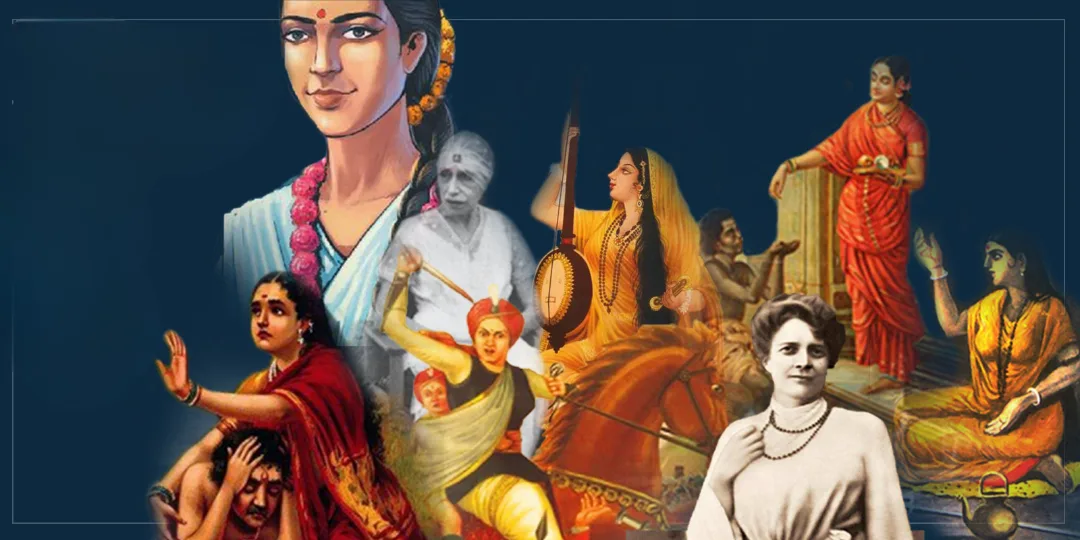
In Bharat, woman was never “made from man". She was Devi — divine in herself, the embodiment of creation, compassion and wisdom

In Bharat, woman was never “made from man". She was Devi — divine in herself, the embodiment of creation, compassion and wisdom

Facebook
Twitter
WhatsAppTelegramEmail

There was a time when Bharat was not merely a landmass but a living civilization — a pulsating consciousness built on harmony, reverence and interconnectedness. In that Bharat, woman was Shakti, the living force of creation; the one who nurtured, preserved and guided. She was not seen as separate from man, nor as his competitor or subordinate. Because in the Bharatiya drishti, woman was not a secondary creation. She is Prakriti — the creative energy of the universe, without which even Purush remains incomplete. This complementarity defines the Indian idea of Shrishti (creation). Compare this with the Western or Abrahamic traditions, where womanhood was seen differently.

  • In the Biblical story, Eve was created from Adam’s rib, for his companionship.
  • In medieval Islamic practice, women were often confined to roles of servitude or reproduction and slavery.
  • Even in modern Western thought, womanhood became a political question of equality, not a spiritual question of reverence.

But in Bharat, woman was never “made from man”. She was Devi — divine in herself, the embodiment of creation, compassion and wisdom.

The woman as the axis of creation

Hence, the term equality never existed in Bharat. While modern discourse often seeks “equality” for women, Bharat’s civilizational wisdom goes deeper — it speaks of respect, which is higher than equality. Equality places two individuals’ side by side; respect places the other above, in reverence. In the Bharatiya ethos, the mother is not “equal” to anyone; she is revered. she is respected. Thus, women were never viewed merely through the prism of social status, but as bearers of Shakti — the power that sustains life and order.

When Bharat respected women as mothers, teachers and goddesses — Sita, Savitri, Gargi, Maitreyi — the civilization flourished. But over the centuries, through waves of invasion, colonization and cultural distortion, this vision — this drishti — first faded and then eroded. As that drishti eroded our cultural foundation weakened. Centuries of colonization and imitation have made us see womanhood through foreign categories — feminist or patriarchal, empowered or oppressed.

The shift in Drishti

Today, as India walks into the twenty-first century with renewed confidence, there is an urgent need to revisit how we view “women’s issues”. For too long, they have been understood through a western lens — a mindset that emphasizes difference rather than oneness. And in this borrowed view, the essence of the Bharatiya woman has been lost.

In western thought, everything begins with difference — how one is distinct, separate or superior. The Western gaze asks, “How different are we?” But the Bharatiya mind asks a different question altogether: “How are we connected?” This contrast in vision is not merely intellectual — it shapes how we live and how we organize society. The western model is built on fragmentation, on the individual standing apart from the whole. But Bharat’s worldview is built on samanvay — harmony and integration. Here, even the smallest act, thought or word carries consequence. Every effort has an impact that ripples across the web of relationships — from self to family, to society, to nation. Therefore, thinking only from one’s own or individual point of view is considered incomplete, even harmful in the long run. Individualism in itself cannot be central to our civilization — because Bharat never separated the “self” from the “whole”.

Drishti: The unchanging core

Human behaviour adapts to time and circumstance, but drishti — the way we see the world — must remain anchored. The Bharatiya drishti sees life as an interconnected continuum, where every being has a role in maintaining cosmic balance. Swami Vivekananda once said, “There is no chance for the welfare of the world unless the condition of women is improved”. His words were not about social reform in a narrow sense — they were about restoring the cosmic balance.

As the Bharatiya Nari reclaims her drishti, she must look inward — not merely demanding space in the system, but redefining the system itself in the image of dharma and harmony. This is what leaders like Param Pujya Sarsanghchalak Shri Mohan Bhagwat ji remind us of — that rebuilding Bharat is not about politics, but about conduct, consciousness and community. His guidance emphasizes that every citizen, especially women, should understand their role in protecting and nurturing the Parivar and the Samaj.

Also Read: Ghar Wapsi: 240 families revert to Sanatan Dharma in Chhattisgarh

Women reclaiming the Kutumbh

The rebuilding of Bharat must begin where it all began — within the family. The Kutumbh is not a private arrangement; it is the basic samajik unit(social unit) of our civilization. A woman’s role in nurturing this unit is not merely domestic; it is nation-building. When she imbues her family with parampara (tradition) and sanskar (values), she strengthens the moral fabric of society. When she preserves harmony amidst diversity, she mirrors the very soul of Bharat. The woman’s role, therefore, is not confined to home; it is expansive — touching the spheres of culture, education, governance and thought. In every domain, she becomes the silent architect of a value-driven society.

When the Kutumbh (family) is strong, the nation remains unshaken. Throughout history, when invasions came to destroy our temples, our texts and our systems of knowledge, they could not destroy the soul of Bharat — because the Parivar, the family, remained intact. Within that unit, the woman stood as the moola-stambha — the central pillar of strength, continuity and value. It was through her — as mother, teacher and nurturer — that sanskaras (values) were transmitted from one generation to the next.

To build Bharat, women must see not only things but even themselves through the Bharatiya drishti — a vision that connects, integrates and uplifts. From this vision flows Shrishti (creation), Samskara (values), and Samarasya (harmony). In that awakening lies the resurgence of Bharat as Vishwa Guru — guided by the eternal strength of her women, the true builders of civilization. The story of Bharat’s future now shall be the story of her women because when they rise — rooted in tradition yet forward-looking — they do not merely participate in nation-building; they define it.

As for man, Bharat’s framework is distinct: here, women empowerment is not in opposition to man, but in alignment with the whole.


Topics: BharatequalityWomen EmpowermentCreationPrakritiBharatiya Civilization
Share
Tweet
SendShareSend
✮ Subscribe Organiser YouTube Channel. ✮
✮ Join Organiser's WhatsApp channel for Nationalist views beyond the news. ✮
Previous News

Kerala LSGI Elections: BJP launches campaign with high-profile lineup including R Sreelekha, retd DGP of state

Next News

Kerala: Congress, CPM call patriotic ‘Ganageetham’ sung at Vande Bharat event ‘protestable’, balmes RSS and railways

Related News

Chinmaya Amrit Yatra meets Param Vir Chakra awardee Captain Bana Singh, highlighting his courage, simplicity and love for Bharat

Chinmaya Amrit Yatra: Captain Bana Singh recalls Siachen battle, his love for Jammu and message to youth

President Droupadi Murmu has given assent to the Gujarat UCC Bill, 2026, paving the way for its implementation in the state

Gujarat UCC Bill 2026 gets President Droupadi Murmu’s assent, legislation comes into effect across the state

International media’s portrayal of Bharat often overlooks its economic and strategic transformation while relying on familiar stereotypes

Beyond the Bylines: Why International media’s coverage of Bharat demands a critical reappraisal

India’s falling fertility rate and changing Gen Z priorities are reshaping family structures and the country’s demographic future

India’s Demographic Paradox: How falling fertility rates and changing Gen Z priorities are reshaping family life

Bhakti Movement

Torches of Unity : The role of spiritual leaders in shaping the nation

Nileema Mishra’s grassroots work empowered women and helped transform more than 200 villages across Maharashtra

Nileema Mishra: The woman who transformed more than 200 villages across rural Maharashtra

Load More

Latest News

Kumkum Mohod scripted history by winning India’s first women’s individual recurve gold at the Asian Games

Asian Games 2026: 17-year-old Kumkum Mohod creates history, wins India’s first women’s individual recurve gold

Captain Smit Machchhar

Flydubai Attack: RSS praises Captain Smit Machchhar for courage, timely action in protecting 170 lives

Tamil Nadu: Madras HC forms 7-member Interim Board after Sowriraja Perumal Temple went without Board since 2004

Chinmaya Amrit Yatra meets Param Vir Chakra awardee Captain Bana Singh, highlighting his courage, simplicity and love for Bharat

Chinmaya Amrit Yatra: Captain Bana Singh recalls Siachen battle, his love for Jammu and message to youth

Hindu Mandir Vandalised in Ohio

US: Hindu mandir vandalised in Ohio; Community groups flag rising targeted attack, demand swift action from govt

Assam CM Himanta Biswa Sarma formally launched bamboo-made bicycles in Guwahati, marking a step towards sustainable transportation

Assam: CM Himanta Biswa Sarma launches bamboo-made bicycles, pushing sustainable transportation in the state

Hamam Al-Hammami’s extremist past and reported security concerns at Oman Air now under scrutiny after Flydubai cockpit attack

Omani-Syrian Hamam Al-Hammami identified as Flydubai co-pilot who attacked captain and tried to crash Tel Aviv flight

President Droupadi Murmu has given assent to the Gujarat UCC Bill, 2026, paving the way for its implementation in the state

Gujarat UCC Bill 2026 gets President Droupadi Murmu’s assent, legislation comes into effect across the state

SJTA plans dedicated darshan assistance for elderly and divyang devotees and restoration of 1.5 acres of temple land

Odisha: Shri Jagannath Mandir plans dedicated darshan assistance for elderly and divyang devotees

Representative image

Weekly Love Jihad Report: From fake names to fake social media accounts – Here’s how Islamists targeted Hindu women

Load More
  • Privacy
  • Terms
  • Cookie Policy
  • Refund and Cancellation
  • Delivery and Shipping

© Bharat Prakashan (Delhi) Limited.
Tech-enabled by Ananthapuri Technologies

  • Home
  • Search Organiser
  • Bharat
    • Assam
    • Bihar
    • Chhattisgarh
    • Jharkhand
    • Maharashtra
    • View All States
  • World
    • Asia
    • Africa
    • North America
    • South America
    • Europe
    • Australia
  • Editorial
  • Operation Sindoor
  • Opinion
  • Analysis
  • Defence
  • Culture
  • Sports
  • Business
  • RSS @ 100
  • Entertainment
  • More ..
    • Sci & Tech
    • Vocal4Local
    • Special Report
    • Education
    • Employment
    • Books
    • Interviews
    • Travel
    • Health
    • Politics
    • Law
    • Economy
    • Obituary
  • Subscribe Magazine
  • Read Ecopy
  • Advertise
  • Circulation
  • Careers
  • About Us
  • Contact Us
  • Policies & Terms
    • Privacy Policy
    • Cookie Policy
    • Refund and Cancellation
    • Terms of Use

© Bharat Prakashan (Delhi) Limited.
Tech-enabled by Ananthapuri Technologies