EV industry zooms ahead in Bharat: Record 2.34 lakh sales in October signal 2 million milestone by year end
August 15, 2026
  • Read Ecopy
  • Circulation
  • Advertise
  • Careers
  • About Us
  • Contact Us
Android AppiPhone AppArattai
Organiser
  • ‌
  • Bharat
    • Assam
    • Bihar
    • Chhattisgarh
    • Jharkhand
    • Maharashtra
    • View All States
  • World
    • Asia
    • Europe
    • North America
    • South America
    • Africa
    • Australia
  • Editorial
  • International
  • Opinion
  • RSS @ 100
  • More
    • Op Sindoor
    • Analysis
    • Sports
    • Defence
    • Politics
    • Business
    • Economy
    • Culture
    • Special Report
    • Sci & Tech
    • Entertainment
    • G20
    • Azadi Ka Amrit Mahotsav
    • Vocal4Local
    • Web Stories
    • Education
    • Employment
    • Books
    • Interviews
    • Travel
    • Law
    • Health
    • Obituary
  • Subscribe
    • Subscribe Print Edition
    • Subscribe Ecopy
    • Read Ecopy
  • ‌
  • Bharat
    • Assam
    • Bihar
    • Chhattisgarh
    • Jharkhand
    • Maharashtra
    • View All States
  • World
    • Asia
    • Europe
    • North America
    • South America
    • Africa
    • Australia
  • Editorial
  • International
  • Opinion
  • RSS @ 100
  • More
    • Op Sindoor
    • Analysis
    • Sports
    • Defence
    • Politics
    • Business
    • Economy
    • Culture
    • Special Report
    • Sci & Tech
    • Entertainment
    • G20
    • Azadi Ka Amrit Mahotsav
    • Vocal4Local
    • Web Stories
    • Education
    • Employment
    • Books
    • Interviews
    • Travel
    • Law
    • Health
    • Obituary
  • Subscribe
    • Subscribe Print Edition
    • Subscribe Ecopy
    • Read Ecopy
Organiser
  • Home
  • Bharat
  • World
  • Operation Sindoor
  • Editorial
  • Analysis
  • Opinion
  • Culture
  • Defence
  • International Edition
  • RSS @ 100
  • Magazine
  • Read Ecopy
Home Bharat

EV industry zooms ahead in Bharat: Record 2.34 lakh sales in October signal 2 million milestone by year end

Boosting India’s green mobility mission, the country’s electric vehicle (EV) industry achieved record sales of 2.34 lakh units in October 2025, a 7 percent year-on-year jump. The surge, led by electric two- and three-wheelers, underscores India’s accelerating transition toward sustainable transport, supported by the government’s proactive policy push and strong private participation

Shashank Kumar DwivediShashank Kumar Dwivedi
Nov 9, 2025, 03:30 pm IST
inBharat
Follow on Google News
A representative image

A representative image

Facebook
Twitter
WhatsAppTelegramEmail

India’s electric vehicle (EV) revolution continues to gather pace. According to data from the Vahan portal, the EV industry clocked its highest-ever monthly sales in October 2025 with 2,34,274 units, surpassing the previous record of 2,19,722 units in October 2024.

This remarkable performance comes despite market headwinds such as the revised GST 2.0 framework, which reduced prices of petrol and diesel vehicles but kept EVs under a 5 percent GST slab. The fact that electric mobility sales surged even under these conditions highlights the sector’s growing strength, public trust, and the effectiveness of the government’s clean energy transition initiatives.

On average, 7,557 electric vehicles were sold daily across India in October, a figure that positions the country among the world’s fastest-growing EV markets.

Government’s green vision fuelling the surge

Many attribute this growth to the central government’s sustained policy support, including fiscal incentives, infrastructure expansion, and a focus on self-reliance under “Make in India” and “Atmanirbhar Bharat” initiatives.

Schemes such as FAME-II (Faster Adoption and Manufacturing of Hybrid & Electric Vehicles), Production Linked Incentives (PLI) for advanced chemistry cell batteries, and investments in charging infrastructure have provided the backbone for this transformation.

Prime Minister Narendra Modi’s commitment to achieving net-zero emissions by 2070 has led to a comprehensive approach, one that not only promotes alternative fuels and electric mobility but also empowers Indian manufacturers to innovate and compete globally.

The government’s supportive stance is reflected in the growing participation of both legacy automakers and new-age EV startups, signalling a mature and resilient market ecosystem.

Two-wheelers continue to dominate

Electric two-wheelers remained the driving force of India’s EV story, contributing 61 percent of total sales in October. The segment sold 1.43 lakh units, a 3 percent increase over the same month last year.

This marks the third time in history that monthly e-two-wheeler sales have crossed the 1.4 lakh mark, solidifying their dominance as the most accessible and affordable segment of electric mobility.

From Bajaj Auto and TVS Motor to Ather Energy, Hero MotoCorp, Ola Electric, and Greaves Electric Mobility, the top six players together controlled 89% of the market share, a sign of healthy competition and brand trust.

Between January and October 2025, India sold 1.06 million e-two-wheelers, 11% higher year-on-year. Many expect the industry to surpass 1.25 million units by December 2025, setting a new record.

Three-wheelers achieve best-ever month

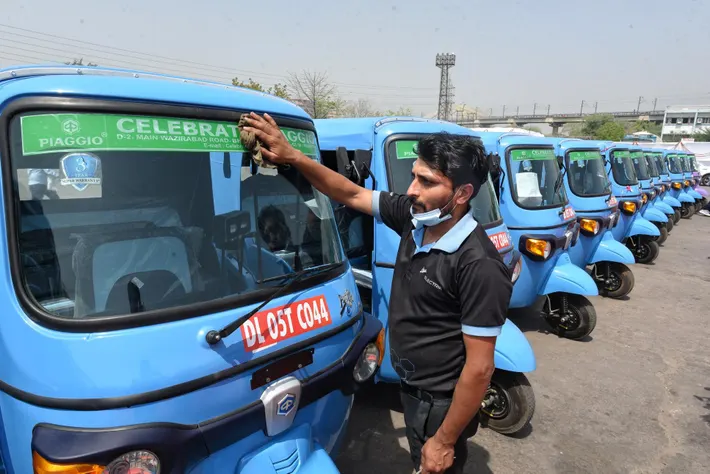
Electric three-wheelers (e-3Ws), a key pillar of India’s urban mobility and logistics ecosystem, also posted their best performance yet. The segment sold 70,604 units in October, growing 5 percent year-on-year.

Representing 30 percent of all EV sales, e-3Ws continue to empower small entrepreneurs and last-mile delivery networks with affordable, clean, and efficient alternatives to diesel autos.

Between January and October 2025, e-3W sales reached 6.26 lakh units, up 10 percent over last year. Projections suggest that the segment could cross 7.5 lakh units by year-end.

Major contributors include Mahindra Last Mile Mobility, YC Electric, Bajaj Auto, and TVS Motor, each playing a vital role in electrifying India’s mobility chain.

The passenger EV segment showed impressive recovery with 17,942 units sold in October, a 57 percent year-on-year increase. The festive season, coupled with improving infrastructure and consumer confidence, drove this rebound.

Market leader Tata Motors maintained a commanding 40 percent share, followed by JSW MG Motor India, Mahindra & Mahindra, and Kia India, which reported robust demand for the Carens Clavis EV.

The entry of international brands like Tesla and VinFast has further energised the market, enhancing consumer choice and pushing domestic manufacturers to innovate faster.

Commercial EVs record triple-digit growth

The most striking surge came from the electric commercial vehicle (e-CV) category, which witnessed a 121 percent year-on-year growth, reaching 1,902 units in October.

The demand for light goods carriers skyrocketed by 239 percent, driven by India’s booming e-commerce sector and rising adoption of electric fleets for last-mile delivery.

Although electric bus sales dipped 28 percent due to fewer state transport orders, the government’s continued emphasis on electrifying public transport through schemes like PM-eBus Sewa is expected to revive this segment soon.

India nears the 2 million annual milestone

From January to October 2025, total EV sales reached 18.46 lakh units, reflecting a 14 percent year-on-year increase. With only about 1.53 lakh units needed to touch the 2-million milestone, the industry is expected to achieve it by November, a full month ahead of schedule.

By the end of 2025, India’s total EV sales are projected to touch 2.15 million units, setting an unprecedented benchmark in the country’s clean mobility journey.

What makes this growth particularly noteworthy is that it comes in the wake of GST 2.0, which reduced taxes on internal combustion engine (ICE) vehicles, making them temporarily more price-competitive.

Yet, EVs have retained and even expanded their market share, reflecting rising consumer awareness, growing charging networks, and confidence in the technology.

Industry leaders credit the government’s holistic approach, which combines fiscal support, R&D investment, and sustainability targets, for keeping the sector on track despite short-term disruptions.

The EV revolution is a critical component of India’s larger energy transition strategy, complementing renewable energy generation, hydrogen fuel innovation, and green industrialisation.

The government’s continued investments in battery recycling, green hydrogen production, and EV manufacturing clusters are positioning India as a global hub for clean mobility solutions.

With the right mix of incentives, infrastructure, and public awareness, India could soon emerge as the third-largest EV market globally, after China and the United States.

Decade of transformation in motion

India’s record-breaking EV sales in October 2025 underscore a clear message, the nation’s shift towards cleaner, smarter, and self-reliant mobility is irreversible.

With supportive policies, ambitious industrial participation, and rising public adoption, the government’s vision of “Green Growth for Viksit Bharat” is steadily taking shape.

The year 2025 may well be remembered as the turning point when India’s EV ecosystem moved from being a niche to a national movement driving not just vehicles, but the nation itself toward a sustainable future.

Topics: Electric Three-wheelersSustainable TransportGST 2.0EV sales India 2025Green MobilityElectric Two-wheelers
Share
Tweet
SendShareSend
✮ Subscribe Organiser YouTube Channel. ✮
✮ Join Organiser's WhatsApp channel for Nationalist views beyond the news. ✮
Previous News

The 21st century paradox: Arming for war, Starving for peace

Next News

A Century of Service: Uttarakhand Government’s historic recognition of the Rashtriya Swayamsevak Sangh

Related News

E20 fuel offers cleaner emissions, better performance and supports India's sustainable mobility goals

Why E20 Ethanol Fuel Is Future of Indian Mobility: Safer, better engine performance & greener tomorrow

Railway Minister Ashwini Vaishnaw

How India achieved a global first by running double-stack container trains under an electrified railway network

Odisha CM Mohan Charan Majhi

Odisha: State govt reduces convoys, promotes EVs & public transport following PM Modi’s fuel conservation appeal

A representative image

GST 2.0 fuels festive auto boom: Passenger vehicle sales touch 3.72 lakh, two-wheelers surge 7 percent

Prime Minister Narendra Modi

GST 2.0 Rollout Today: Seven key highlights from PM Modi address to nation ahead of landmark tax overhaul

GST 2.0 is not just a tax reform but a milestone in India’s economic transformation under Prime Minister Modi’s vision of building an inclusive and Aatmanirbhar Bharat

GST 2.0: Simplifying taxes, Empowering growth

Load More

Latest News

Kerala: Halal Fayida Islamic Banking Cooperative Society depositors stranded as crores remain unaccounted for

Abusive language used during recent protest in Delhi cannot be the language of Bharatiya youth. It is time to introspect yourself where are we making mistakes in guiding our future generation

80th Independence Day: Youth and Nation – Change begins with responsibility

The Tiranga embodies India’s freedom, unity and values, inspiring us to turn patriotism into responsible action

From Tiranga in Every Home to Tiranga in Every Heart: Turning national pride into everyday patriotism

Atul Limaye, Sah Sarkaryavah, RSS, while addressing at an Akhil Bharatiya Vidyarthi Parishad (ABVP), the student wing of the RSS, event held in Chhatrapati Sambhajinagar in Maharashtra, on August 2

Independence Day 2026: Youth and Nation – The Anarchic alternative

Keralam: CM Satheeshan omits Vande Mataram on Independence Day at govt offices; BJP events render full version

Decolonisation saw nations across Africa and Southeast Asia reclaim their cultures, languages and identities after independence (This image is generated by AI)

From Colonial Rule to Cultural Revival: How African and Southeast Asian nations shed their colonial legacies

Rashtriya Swayamsevak Sangh (RSS) Sarsanghchalak Dr Mohan Bhagwat went viral by adopting the Gen Z slang phrase "clock it" and making the corresponding hand gesture during a youth conference in Mumbai on August 6

Independence Day 2026: Anarchy vs Freedom – Revisiting Ambedkar on protest in democracy

The Pakistan-Saudi Arabia-Türkiye defence pact faces an early test amid rising regional tensions and security challenges

Pakistan-Saudi Arabia-Turkiye Defence Pact: A shaky beginning and growing questions over its strategic credibility

India’s journey from Swadhinta to Swatantrata begins with decolonising minds and embracing Bharatiya values (This image is generated by AI)

Decolonising the Mind: How citizens can embrace Bharatiya languages, traditions & values to realise absolute freedom

Two Asian Democracies, One Date: Why 15 August Belongs to India and Korea

Two Asian Democracies, One Date: Why 15 August Belongs to India and Korea

Load More
  • Privacy
  • Terms
  • Cookie Policy
  • Refund and Cancellation
  • Delivery and Shipping

© Bharat Prakashan (Delhi) Limited.
Tech-enabled by Ananthapuri Technologies

  • Home
  • Search Organiser
  • Bharat
    • Assam
    • Bihar
    • Chhattisgarh
    • Jharkhand
    • Maharashtra
    • View All States
  • World
    • Asia
    • Africa
    • North America
    • South America
    • Europe
    • Australia
  • Editorial
  • Operation Sindoor
  • Opinion
  • Analysis
  • Defence
  • Culture
  • Sports
  • Business
  • RSS @ 100
  • Entertainment
  • More ..
    • Sci & Tech
    • Vocal4Local
    • Special Report
    • Education
    • Employment
    • Books
    • Interviews
    • Travel
    • Health
    • Politics
    • Law
    • Economy
    • Obituary
  • Subscribe Magazine
  • Read Ecopy
  • Advertise
  • Circulation
  • Careers
  • About Us
  • Contact Us
  • Policies & Terms
    • Privacy Policy
    • Cookie Policy
    • Refund and Cancellation
    • Terms of Use

© Bharat Prakashan (Delhi) Limited.
Tech-enabled by Ananthapuri Technologies