Bhubaneswar: In a significant socio-cultural development, 110 men, women, and children from Mahalibasa village in the Khunta block of Mayurbhanj district in Odisha have returned to Sanatan Dharma, marking a large-scale “ghar wapsi” event in the tribal heartland of the state.
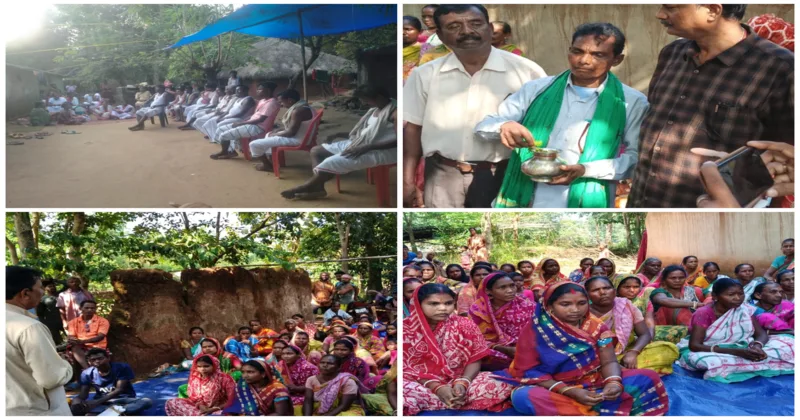
The ceremony, organised on November 2, saw the participation of 21 families from five major tribal communities — Santhal, Mankadia, Lodha, Barang, and Bhumij. The event was attended by Janjati chiefs from 18 nearby villages, who performed traditional rituals to welcome the families back to their original faith.
The homecoming ceremony began with customary prayers and purification rituals conducted by local Janjati leaders. The participants, dressed in traditional attire, symbolically reaffirmed their connection to their ancestral beliefs and culture.
“Deceived by Missionaries,” Say Returning Families
Speaking about their decision, several families revealed that they had converted to Christianity a few years ago after being misled by Christian missionaries. The missionaries, they claimed, used false promises and inducements such as assurances of better living conditions and medical aid to convince them to abandon their traditional practices.
“After conversion, we gradually became disconnected from our festivals, customs, and the way of worship passed down by our forefathers,” said one of the returning villagers. “That created a deep void in our lives. We realised that leaving our ancestral path was a big mistake, and we wanted to return to our roots,” they added.
According to locals, discussions about ghar wapsi had been ongoing for several months among village elders and tribal leaders. “Our chiefs wanted us to reconnect with our heritage and live as our ancestors did. This event is a result of that collective decision,” said another villager.
Community Leaders and Organisations Participate
The Ghar Wapsi programme was organised with the support of Janajati Suraksha Manch and Vanvasi Kalyan Ashram, two organisations dedicated to preserving Vanvasi identity and culture.
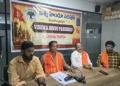
Prominent attendees included Bhim Charan Majhi, district vice-president of Janajati Suraksha Manch and a retired senior administrative officer of the Defence Research and Development Organisation (DRDO), along with Kailash Murmu, Baishakhu Sardar, Ghanashyam Mahant, Ramchandra Saha, and Ramay Besra. They welcomed the families and praised their resolve to uphold their traditional values.
“The return of these families to their faith is not just a personal choice but a step towards reclaiming cultural dignity and identity,” said Majhi, addressing the gathering.
The event concluded with traditional dances and songs, symbolising the community’s joy and unity. Villagers celebrated late into the evening, expressing happiness and relief over returning to their original belief system.
Local activists alleged that foreign-funded Christian missionaries have been targeting the tribal population of Mayurbhanj, luring them into conversion through various incentives disguised as social and medical assistance.
“Mayurbhanj, being a tribal-dominated district, has long been on the radar of missionary groups,” said an activist from the Janajati Suraksha Manch. “These conversions are happening despite the existence of the Odisha Freedom of Religion Act, which prohibits religious conversion through coercion or inducement.”
They urged the state government to strictly enforce the law to prevent further exploitation of poor and uneducated tribal communities.
With the recent mass homecoming, community leaders assert that the message is clear — tribal people are asserting their identity and choosing to reconnect with their roots rather than succumb to external religious influences.