Trump-Xi meeting: What it means for India in the G-2 world
June 23, 2026
  • Read Ecopy
  • Circulation
  • Advertise
  • Careers
  • About Us
  • Contact Us
Android AppiPhone AppArattai
Organiser
  • ‌
  • Bharat
    • Assam
    • Bihar
    • Chhattisgarh
    • Jharkhand
    • Maharashtra
    • View All States
  • World
    • Asia
    • Europe
    • North America
    • South America
    • Africa
    • Australia
  • Editorial
  • International
  • Opinion
  • RSS @ 100
  • More
    • Op Sindoor
    • Analysis
    • Sports
    • Defence
    • Politics
    • Business
    • Economy
    • Culture
    • Special Report
    • Sci & Tech
    • Entertainment
    • G20
    • Azadi Ka Amrit Mahotsav
    • Vocal4Local
    • Web Stories
    • Education
    • Employment
    • Books
    • Interviews
    • Travel
    • Law
    • Health
    • Obituary
  • Subscribe
    • Subscribe Print Edition
    • Subscribe Ecopy
    • Read Ecopy
  • ‌
  • Bharat
    • Assam
    • Bihar
    • Chhattisgarh
    • Jharkhand
    • Maharashtra
    • View All States
  • World
    • Asia
    • Europe
    • North America
    • South America
    • Africa
    • Australia
  • Editorial
  • International
  • Opinion
  • RSS @ 100
  • More
    • Op Sindoor
    • Analysis
    • Sports
    • Defence
    • Politics
    • Business
    • Economy
    • Culture
    • Special Report
    • Sci & Tech
    • Entertainment
    • G20
    • Azadi Ka Amrit Mahotsav
    • Vocal4Local
    • Web Stories
    • Education
    • Employment
    • Books
    • Interviews
    • Travel
    • Law
    • Health
    • Obituary
  • Subscribe
    • Subscribe Print Edition
    • Subscribe Ecopy
    • Read Ecopy
Organiser
  • Home
  • Bharat
  • World
  • Operation Sindoor
  • Editorial
  • Analysis
  • Opinion
  • Culture
  • Defence
  • International Edition
  • RSS @ 100
  • Magazine
  • Read Ecopy
Home World North America USA

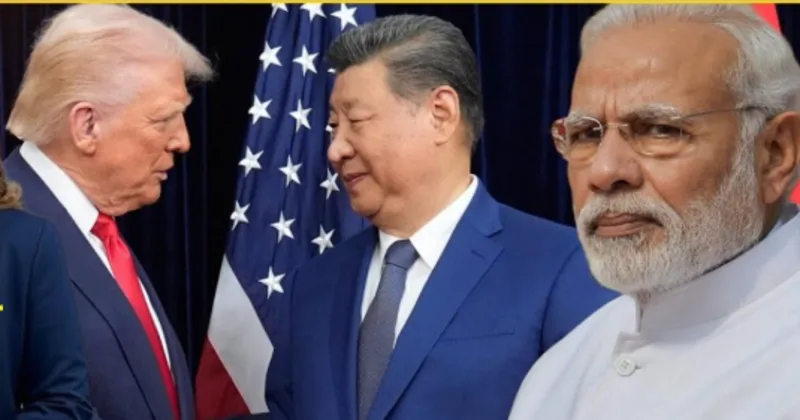
Trump-Xi meeting: What it means for India in the G-2 world

The encounter between the two leaders — representing the world’s largest economies — signals a possible recalibration of global geopolitics, reviving discussions about a “G-2 world” dominated by Washington and Beijing. For India, this development carries both opportunities and challenges

Ameya KulkarniAmeya Kulkarni
Nov 2, 2025, 06:00 pm IST
in USA, World, China, Opinion, Asia
Follow on Google News
FacebookTwitterWhatsAppTelegramEmail

After a whirlwind swing through Asia, US President Donald Trump leaves the region with greater uncertainty than ever about the future of America’s relationship with China — the central axis of global politics today. Trump’s own description of his summit with Xi Jinping as a “G-2” encounter will heighten anxiety among America’s allies and partners that Washington is drifting toward a “China-first” and “business-foremost” policy in Asia.

India, like the rest of the region, will now have to adapt to a new phase in US-China relations — a dynamic equilibrium between competition and cooperation between the world’s foremost economic and military powers. As Trump’s trade-driven strategy begins to reorder the region, Delhi must re-examine long-held assumptions about American purpose, Chinese ambition, and the strategic space available to middle powers such as India. Thinking through this evolving dynamic will demand a far more agile Indian discourse on foreign policy and national security.

Eight years ago, during his first presidential term, Trump’s 2017 Asian tour set the tone for a sharp balancing of China. He broke with four decades of bipartisan consensus at home on engagement with Beijing and launched an overt policy of confrontation — framing China, along with Russia, as a strategic rival.

Also Read: India turns Indus from lifeline to leverage after Pahalgam attack, warns Pakistan of harsh water pressure ahead

In Asia, he sought to rally regional states into deeper bilateral alliances and promoted new coalitions such as the Quad to constrain Beijing’s assertiveness. Trump also articulated the Indo-Pacific framework that explicitly highlighted India’s role in stabilising Asia and its waters. That in fact had set the context for expanding India-US partnership in recent years.

This time, Trump’s focus was unmistakably commercial. His second-term agenda put trade at the centre of America’s foreign policy and aims to reset economic relations not only with China but also with allies that had good access to US markets.

Trump’s “business-first” approach has also been coupled with an extortonist impulse towards long-standing allies like Japan and South Korea–which have been compelled to promise investments worth $900 billion in the US. Despite the widespread determination in Asia to appease Trump for the moment, there is no denying the seething resentment among the allies at this coercion.

Yet over the past week, Trump declared his commitment to partnerships with ASEAN, Japan and South Korea. He appeared intent on walking a delicate tightrope — rebooting ties with Beijing without alienating America’s traditional partners. Whether that balancing act will hold remains to be seen. At home, Trump faces critics who accuse him of conceding too much to Xi, while allies abroad question the credibility and durability of US economic and security commitments under his leadership.

In his trademark hyperbole, Trump described his meeting with Xi as “amazing” and rated it “twelve out of ten.” Trump’s exuberance about the China ties summit contrasts with the measured coolth of Xi.

Trump highlighted an interim, one-year understanding: China would defer export controls on rare earth minerals, increase agricultural purchases from the United States, and curb the movement of precursor chemicals for the opioid fentanyl into America. In exchange, Washington would roll back part of the tariff wall imposed on Chinese imports since 2018.

While confirming a new consensus, Beijing urged the US side to “refine and finalise follow-up work as soon as possible” and to “deliver tangible results to reassure the economies of China, the US, and the world.”

At the opening of the summit, Xi told Trump that it was “natural for the world’s two leading economies not to always see eye to eye” and described occasional frictions as “normal.” He stressed the importance of “staying the right course and ensuring the steady forward movement of China-US relations.”

For Asia—and for India in particular—the fine print of this emerging arrangement will matter enormously. Asian governments will closely scrutinise the actual tariff rates and the extent of market access that follow, since these will shape export prospects to the US and the reconfiguration of industrial supply chains across the Indo-Pacific.

Trump’s assertion that Taiwan “did not figure” in his talks with Xi is unlikely to allay regional concerns that Washington may trade away its commitments to allies in pursuit of a G-2-style accommodation. While there is no mistaking Trump’s eagerness to stabilise relations with Beijing, he has also reaffirmed America’s enduring partnerships with Japan, South Korea, and ASEAN. What the region will now watch for are concrete expressions of those assurances — in sustained trade access, military cooperation, and credible deterrence in the contested Asian terrain.

For India, the task is to navigate this unstable US-China dynamic shaped by both rivalry and rapprochement. Delhi’s challenge is to remain nimble — engaging Washington where interests align, probing economic opportunities with Beijing where feasible, and strengthening partnerships across Asia and Europe to accelerate its own rise in the regional and global system–the best guarantee for India’s freedom of action in a world of few certitudes.

Topics: Chinese President Xi JinpingUS President Donald TrumpIndiaTaiwan
ShareTweetSendShareSend
✮ Subscribe Organiser YouTube Channel. ✮
✮ Join Organiser's WhatsApp channel for Nationalist views beyond the news. ✮
Previous News

Between Autonomy and Security: The delicate debate on Ladakh’s statehood and sixth schedule status

Next News

Ayushman Bharat becomes largest healthcare scheme in world, covering 12 Cr families and saving 1.52 lakh Cr in costs

Related News

UAE President Sheikh Mohamed bin Zayed Al Nahyan and Prime Minister Narendra Modi(File Photo)

UAE to buy BrahMos & Akashteer: Big win for India’s defence ecosystem to seal regional security amid West Asia crisis

United States Trade Representative Jamieson Greer and Union Commerce and Industry Minister Piyush Goyal

India-US Trade Agreement: Historic deal enters final stretch as USTR Jamieson Greer heads to New Delhi

Universities Adopt ‘Bharat’ on Degrees and Certificates

Madhya Pradesh: ‘Bharat’ replaces ‘India’ on degrees as academic institutions reclaim ancient identity

Representative Image

Europe’s Supremacy: A manufactured narrative imposed via colonial power is counterd by India’s civilizational memory

Yoga Day celebrations in Shanghai, China

International Yoga Day: Global celebrations echo the message of health, well-being and timeless ancient Indian wisdom

The Alchemy of Autarky: How India rewrote its economic destiny

Load More

Latest News

Bareilly Cantonment Emerges as Model for Sustainable Urban Development in India (Image Source X)

Uttar Pradesh: Bareilly Cantonment becomes India’s first carbon-negative cantonment

CM Yogi Adityanath making industry, investment and the connectivity revolution in Eastern Uttar Pradesh

The Purvanchal Growth Story: How industry, infrastructure, tourism & exports are fueling development in eastern UP

(Left) Fire at the coaching centre in Lucknow (Right) Members of ABVP extending all possible help

Lucknow Coaching Centre Fire tragedy is heartbreaking and deeply unfortunate: ABVP seeks action against culprits

Andhra Pradesh Minister and TDP National General Secretary Nara Lokesh

Nara Lokesh dismisses rumours of TDP sabotaging Modi government, reaffirms unconditional NDA support

With new military deployments, export opportunities and potential Russian production, BrahMos is entering a new era of strategic relevance

BrahMos enters high-volume production as military demand and global export orders surge

Dr Mahrang Baloch

Pakistan: Mahrang Baloch gets life sentence, Balochistan erupts in protest; BYC calls for shutdown

Prime Minister Narendra Modi

‘Maoism is breathing its last’: PM Modi highlights crackdown on red terror in last 12 years and growth in tribal areas

(Left) Dr Shyama Prasad Mookerjee (Right) West Bengal CM Suvendu Adhikari

Syama Prasad Mookerjee was instrumental in creation of West Bengal’: CM Suvendu Adhikari

Female recruitment in Jihadist networks emerges as major security concern

Khadija Terror Case: Female recruitment, online radicalisation in Jihadi networks poses major security concern

Outcry grows after Dalits in Theeyathur village carry deceased woman across paddy fields due to lack of burial access

Tamil Nadu: Dalits forced to carry deceased woman through paddy fields as Pudukkottai village lacks road access

Load More
  • Privacy
  • Terms
  • Cookie Policy
  • Refund and Cancellation
  • Delivery and Shipping

© Bharat Prakashan (Delhi) Limited.
Tech-enabled by Ananthapuri Technologies

  • Home
  • Search Organiser
  • Bharat
    • Assam
    • Bihar
    • Chhattisgarh
    • Jharkhand
    • Maharashtra
    • View All States
  • World
    • Asia
    • Africa
    • North America
    • South America
    • Europe
    • Australia
  • Editorial
  • Operation Sindoor
  • Opinion
  • Analysis
  • Defence
  • Culture
  • Sports
  • Business
  • RSS @ 100
  • Entertainment
  • More ..
    • Sci & Tech
    • Vocal4Local
    • Special Report
    • Education
    • Employment
    • Books
    • Interviews
    • Travel
    • Health
    • Politics
    • Law
    • Economy
    • Obituary
  • Subscribe Magazine
  • Read Ecopy
  • Advertise
  • Circulation
  • Careers
  • About Us
  • Contact Us
  • Policies & Terms
    • Privacy Policy
    • Cookie Policy
    • Refund and Cancellation
    • Terms of Use

© Bharat Prakashan (Delhi) Limited.
Tech-enabled by Ananthapuri Technologies