India moves toward $500bn US trade pact
July 16, 2026
  • Read Ecopy
  • Circulation
  • Advertise
  • Careers
  • About Us
  • Contact Us
Android AppiPhone AppArattai
Organiser
  • ‌
  • Bharat
    • Assam
    • Bihar
    • Chhattisgarh
    • Jharkhand
    • Maharashtra
    • View All States
  • World
    • Asia
    • Europe
    • North America
    • South America
    • Africa
    • Australia
  • Editorial
  • International
  • Opinion
  • RSS @ 100
  • More
    • Op Sindoor
    • Analysis
    • Sports
    • Defence
    • Politics
    • Business
    • Economy
    • Culture
    • Special Report
    • Sci & Tech
    • Entertainment
    • G20
    • Azadi Ka Amrit Mahotsav
    • Vocal4Local
    • Web Stories
    • Education
    • Employment
    • Books
    • Interviews
    • Travel
    • Law
    • Health
    • Obituary
  • Subscribe
    • Subscribe Print Edition
    • Subscribe Ecopy
    • Read Ecopy
  • ‌
  • Bharat
    • Assam
    • Bihar
    • Chhattisgarh
    • Jharkhand
    • Maharashtra
    • View All States
  • World
    • Asia
    • Europe
    • North America
    • South America
    • Africa
    • Australia
  • Editorial
  • International
  • Opinion
  • RSS @ 100
  • More
    • Op Sindoor
    • Analysis
    • Sports
    • Defence
    • Politics
    • Business
    • Economy
    • Culture
    • Special Report
    • Sci & Tech
    • Entertainment
    • G20
    • Azadi Ka Amrit Mahotsav
    • Vocal4Local
    • Web Stories
    • Education
    • Employment
    • Books
    • Interviews
    • Travel
    • Law
    • Health
    • Obituary
  • Subscribe
    • Subscribe Print Edition
    • Subscribe Ecopy
    • Read Ecopy
Organiser
  • Home
  • Bharat
  • World
  • Operation Sindoor
  • Editorial
  • Analysis
  • Opinion
  • Culture
  • Defence
  • International Edition
  • RSS @ 100
  • Magazine
  • Read Ecopy
Home International Edition America USA

India moves toward $500bn US trade pact; Pakistan reels as Afghan conflict fuels crisis, tomato prices up 400 per cent

A landmark India–US trade deal aimed at boosting bilateral trade and easing tariffs is nearing completion, signalling a new phase in economic cooperation. Meanwhile, Pakistan grapples with soaring prices and trade paralysis after its border conflict with Afghanistan

Dr Vishnu AravindDr Vishnu Aravind
Oct 24, 2025, 05:00 pm IST
in USA, Bharat, World, Asia, International Edition
Follow on Google News
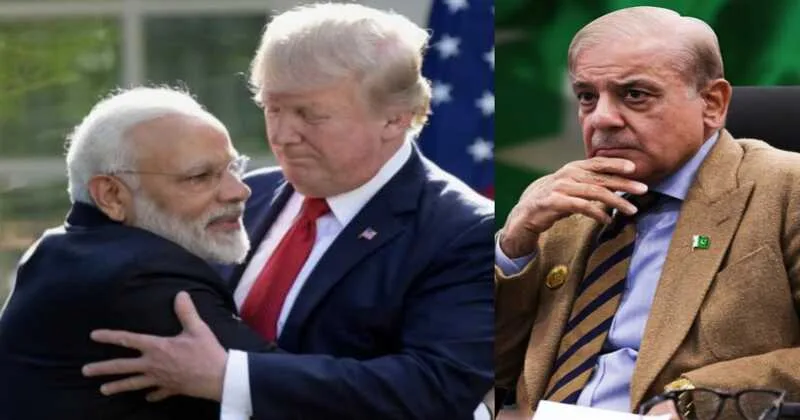
India's Prime Minister Narendra Modi, US President Donald Trump and Pakistan's Prime Minister Shehbaz Sharif

India's Prime Minister Narendra Modi, US President Donald Trump and Pakistan's Prime Minister Shehbaz Sharif

FacebookTwitterWhatsAppTelegramEmail

A long-awaited trade agreement between India and the United States is on the verge of completion, marking a potentially transformative moment in bilateral economic relations. The deal between the world’s largest democracy and the world’s largest economic power is seen as a crucial step toward ending the ongoing tariff war and strengthening the strategic and economic partnership between the two nations. The long-term objective of this pact is to raise bilateral trade from the current $191 billion to $500 billion by 2030. Once the agreement takes effect, it is expected to result in a significant reduction in tariffs, by as much as 50%, that were earlier imposed unilaterally by the United States. The new tariff rate is likely to hover around 15–16%, providing substantial relief to Indian exporters. The sectors set to benefit the most include textiles, gems and jewellery, engineering goods, and marine products, which have been key contributors to India’s export basket.

For Washington, the primary goal is to secure a greater foothold in the Indian market by negotiating lower tariffs on American agricultural products, medical equipment, and selected industrial goods. There are active discussions about granting market access in India for American corn and soybeans, which could provide a new boost to US farmers and agribusinesses. Beyond economics, the deal carries significant geopolitical weight. With US–China trade relations continuing to deteriorate, a stronger economic partnership with India, a trusted ally in the Indo-Pacific, is strategically vital for Washington. Strengthening trade with India will help the US diversify its global supply chains, reduce over dependence on China, and reinforce its presence in Asia’s rapidly growing markets.

However, the negotiations are not without friction. One of the key sticking points is the US demand for India to reduce its dependence on Russian oil. The US has indicated that the removal of high tariffs on Indian goods could depend on New Delhi’s willingness to cut back on energy imports from Moscow. In response, India is exploring the possibility of increasing oil imports from the US, which could help it diversify energy sources and secure competitive prices. However, India will follow a balancing approach, keeping strategic partnership with the US and its historical ties with Russia, particularly in the energy and defence sectors.

Also Read: Delhi advances anti-pollution drive with first cloud-seeding flight; Artificial rain planned for Oct 28-30

Other hurdles remain on the path to finalising the trade pact. India’s strict animal welfare laws and its opposition to genetically modified (GM) crops have become major obstacles for US agricultural exports. Moreover, India has taken a firm stand on intellectual property rights, particularly concerning pharmaceutical patents, and insists on protecting its micro, small, and medium enterprises (MSMEs) from market disruptions. Both sides are now seeking common ground to overcome these disagreements and create a mutually beneficial framework. The finalisation of this crucial deal will ultimately depend on the political will and flexibility of leadership in both countries.

Pakistan faces soaring prices and economic turmoil after Afghan clashes

Meanwhile, Pakistan is reeling under severe economic distress following its recent border conflict with Afghanistan. The closure of key border crossings after intense clashes has triggered a steep rise in the prices of essential commodities, deepening the crisis in an already fragile economy. The price of tomatoes in Pakistan has surged fivefold, reflecting the extent of disruption to cross-border trade. The hostilities, which broke out earlier this month, resulted in several casualties and prompted Islamabad to seal its 2,600-kilometre border with Afghanistan on October 11 following land skirmishes and air strikes. The decision effectively halted all commercial activity between the two countries, both of which depend heavily on each other for essential supplies.

According to Khan Jan Alokozay, head of the Pak-Afghan Chamber of Commerce, trade and transportation have come to a complete standstill. He estimated that both nations are losing about $1 million per day due to the shutdown. Annual bilateral trade between Pakistan and Afghanistan is valued at approximately $2.3 billion, with fruits, vegetables, minerals, medicines, wheat, rice, sugar, meat, and dairy products forming the bulk of traded goods. The price shock has hit Pakistani consumers hard. The cost of tomatoes, an essential cooking ingredient, has skyrocketed by over 400 per cent, reaching 600 Pakistani rupees ($2.13) per kilogram. Similarly, prices of apples imported from Afghanistan have risen sharply. Around 5,000 containers of goods are reportedly stranded at border points, worsening shortages in local markets. “There is already an acute shortage of tomatoes, apples, and grapes,” Alokozay noted, warning that the crisis could deepen if the impasse continues. The Pakistani Ministry of Commerce has yet to issue an official statement on the crisis.

Amid mounting economic losses, Pakistan and Afghanistan have signed a ceasefire agreement following talks held in Qatar, but cross-border trade remains suspended. The next round of negotiations is scheduled for October 25 in Istanbul, where both sides are expected to discuss reopening trade routes and easing tensions. The clashes were reportedly triggered by Islamabad’s demand that Kabul rein in militants allegedly operating from Afghan territory and launching attacks inside Pakistan. Pakistan claims that these groups are using safe havens across the border, a charge the Taliban administration has strongly denied. As diplomatic efforts continue, the border shutdown has become a major humanitarian and economic challenge, cutting off vital supplies of food and medicines and putting further strain on Pakistan’s struggling economy. The outcome of the Istanbul talks will be crucial in determining whether normalcy can be restored in the volatile region.

 

Topics: global economyBilateral relationsUS-China rivalryIndia-US trade dealPakistan-Afghanistan ConflictSouth Asia Economy
ShareTweetSendShareSend
✮ Subscribe Organiser YouTube Channel. ✮
✮ Join Organiser's WhatsApp channel for Nationalist views beyond the news. ✮
Previous News

Kurnool Bus Tragedy: At least 20 burnt alive as Kaveri Travels bus catches fire after collision with motorcycle in AP

Next News

Sree Narayana Guru’s message of unity reminds us that all human beings share same divine essence: Droupadi Murmu

Related News

Prime Minister Narendra Modi and Indonesia President Prabowo Subianto

PM Modi addresses Indonesia Parliament; Malacca Strait, critical minerals, cultural diplomacy power strategic ties

US Ambassador to India Sergio Gor(File Photo)

Sergio Gor hints India-US trade deal; Dismisses Indo-Pacific renaming row, Hails India’s global rise & strong ties

Prime Minister Narendra Modi addressed Seychelles National Assembly

PM Modi addresses Seychelles Parliament; Advocates climate justice, maritime security & Global South prosperity

PM Modi in Seychelles: Connectivity, climate action to UPI & Indian Ocean security; Bilateral ties gather momentum

PM Modi emplanes for Seychelles: Maritime security, tourism ties in focus; Island nation backs India’s UNSC seat

US Trade Representative Jamieson Greer meets Union Minister of Commerce and Industry Piyush Goyal, in New Delhi

India-US Trade Deal: New Delhi pushes for Sunset Clause amid Washington’s policy uncertainty

Load More

Latest News

Patiala House Court, remanded law students Prabal Pratap Singh and Chander Bhan to 14 days' judicial custody

Delhi Court sends two law students to 14-day judicial custody over Supreme Court disturbance case

Supreme Court of India

Supreme Court pulls up Patna High Court over ruling that attempting to remove woman’s salwar was not attempt to rape

Jagannath Rath Yatra

Jagannath Rath Yatra 2026: President Murmu, PM Modi extend greetings as Puri prepares for the grand chariot festival

West Bengal: TMC MLA Madan Mitra joins rebel camp

West Bengal: Fresh blow to Mamata Banerjee as senior TMC leader Madan Mitra joins Ritabrata Banerjee’s rebel camp

Weapons, explosives and Maoist-related materials recovered by security forces in Kanker

Chhattisgarh: Security forces unearth Maoist arms, explosives in major anti-insurgency operations in Kanker

Taslima Nasrin to Visit Kolkata After Nearly 20 Years

Taslima Nasreen set to return to Kolkata: A reminder of how liberals & Islamists united against an uncomfortable voice

UP Govt takes back Azam Khan's Jauhar University land

UP: Bulldozer action looms over Azam Khan’s Jauhar University as authority orders demolition of 38 ‘Illegal’ buildings

A representative image

IRCTC launches new website with faster ticket booking, easier checkout and improved user experience

Chenab Riverbank

J&K: Salal, Baglihar reservoirs to be de-silted in coming days, advisory issued for people living on banks

Representative Image

Tamil Nadu Police detain 73 illegal Bangladeshis in Hosur; Hindu Munnani calls for deportation

Load More
  • Privacy
  • Terms
  • Cookie Policy
  • Refund and Cancellation
  • Delivery and Shipping

© Bharat Prakashan (Delhi) Limited.
Tech-enabled by Ananthapuri Technologies

  • Home
  • Search Organiser
  • Bharat
    • Assam
    • Bihar
    • Chhattisgarh
    • Jharkhand
    • Maharashtra
    • View All States
  • World
    • Asia
    • Africa
    • North America
    • South America
    • Europe
    • Australia
  • Editorial
  • Operation Sindoor
  • Opinion
  • Analysis
  • Defence
  • Culture
  • Sports
  • Business
  • RSS @ 100
  • Entertainment
  • More ..
    • Sci & Tech
    • Vocal4Local
    • Special Report
    • Education
    • Employment
    • Books
    • Interviews
    • Travel
    • Health
    • Politics
    • Law
    • Economy
    • Obituary
  • Subscribe Magazine
  • Read Ecopy
  • Advertise
  • Circulation
  • Careers
  • About Us
  • Contact Us
  • Policies & Terms
    • Privacy Policy
    • Cookie Policy
    • Refund and Cancellation
    • Terms of Use

© Bharat Prakashan (Delhi) Limited.
Tech-enabled by Ananthapuri Technologies