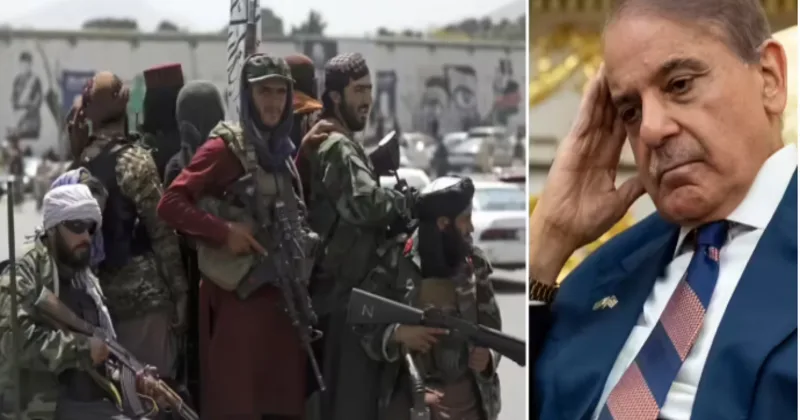
Recently, the deadly series of clashes occurred on the Durand Line between Taliban fighters and the Pakistani Army. The disputed 1,600-mile border between Afghanistan and Pakistan was the site of intense confrontations. Afghanistan initially accused Pakistan of conducting airstrikes in the capital, Kabul, and launched retaliatory attacks, sparking the conflict on October 10. Qatar facilitated negotiations in Doha, where both parties agreed to a ceasefire. Nonetheless, this truce does not guarantee that bilateral ties will revert to their prior state of normalcy in the imminent future, nor does it preclude the possibility of miscalculations. For an extended period now, the tension between Kabul and Islamabad has been increasing.
According to the Pakistani government, the present Afghan regime has already made a decision by declining to restrict the operations of the Tehreek-e-Taliban Pakistan (TTP), also known as the Pakistani Taliban. Conversely, the Taliban asserted that the tribal border regions of Pakistan offer a safe haven for terrorists affiliated with the Islamic State of Khorasan Province (ISKP), who are implicitly supported by the Pakistani military and ISI. ISKP is the Afghan Taliban’s primary adversary and frequently targets its leaders and battlefield commanders. The TTP has emerged as a significant security concern for Pakistan due to the shortsightedness of its policymakers.
Before the Afghan Taliban’s ascendance in Afghanistan, the Pakistani authorities propagated the notion that the Afghan and Pakistani Taliban were not linked. Additionally, they attributed the escalating threat from the TTP to foreign intelligence agencies backed by the former Afghan governments. Pakistani military officials, particularly from the ISI, asserted that the Taliban’s rise to power would compel the TTP to withdraw from Afghan territory, ultimately leading to its inevitable organisational demise. Indeed, such an outcome did not occur; rather, the Pakistani Taliban issue evolved into a reverse insurgency, tactically aided by the Afghan Taliban regime. This epiphenomenon has reversed the situation for Islamabad, presenting a terrible irony in which Pakistan’s stability is jeopardized by its important former allies. At present, the Tehreek-e-Taliban Pakistan (TTP) is the primary cause of conflict between Pakistan and Afghanistan; however, there are other factors that are also contributing to the declining state of bilateral relations.
Deep Mistrust: The Taliban are reluctant to be perceived as Pakistan’s proxies. In response to American pressure, the Pakistani state in the past swiftly became a foe, and it has even gone so far as to hand over Taliban leaders to the United States. Consequently, they have lost faith in the Pakistani state, particularly its military establishment. The Taliban consistently harboured resentment and recollection regarding Pakistan’s treachery. The Taliban maintained and reestablished relations with Pakistan during the US forces’ presence in Afghanistan as a result of the need for sanctuaries and political expediency. Nevertheless, the Taliban are no longer reliant on Pakistan for their survival, as the sanctuaries are no longer necessary.
Border Dispute: The Af-Pak border, also referred to as the Durand Line, is an additional source of conflict between Pakistan and the Afghan Taliban. The Taliban, like all previous Afghan administrations, continues to refuse to recognize the Durand Line as the border between the two countries. In actuality, the Pakistani military and Taliban forces have been involved in a series of skirmishes along the frontier over the past few years, a development that took many by surprise.
Exploitation of the Peace Talks by Pakistan- Initially, the Afghan Taliban sponsored the peace talks in Kabul and served as the mediator between the TTP and Pakistan at the behest of the Pakistani establishment. Nevertheless, the Afghan Taliban was enraged by Pakistan’s deceitful conduct during the negotiations with the TTP. Pakistan exploited the dialogue as a trap to entice senior TTP commanders from the woods to the negotiating table, only to target and assassinate several of them within Afghanistan’s territory.
Pakistani Economic Blackmail- Pakistan has consistently sought Afghanistan’s economic dependence on it. Due to its landlocked status, Pakistan’s Karachi port handles the majority of Afghanistan’s international commerce. Pakistan has employed these Afghans’ dependence as a means of coercion and pressure on numerous occasions. The Afghanistan Transit Trade (ATT) is currently suspended. To establish alternative international trade routes, the Taliban has made an effort to obtain access to Iran’s strategic Chabahar Port, which is located in the southeast of the country.
Strategic Diversification- The Taliban government intends to diversify its geopolitical portfolio by forging partnerships with all of the region’s significant main actors. The Taliban has been making a concerted effort to reestablish the historically cordial relationship between India and Afghanistan. This is the reason. Taliban officials have asked Indian companies to resume work on stalled infrastructure projects. New Delhi is currently considering this request. Additionally, in response to the Taliban’s outreach, New Delhi has elevated its technical mission in Kabul to the status of a High Commission. This outreach of the Taliban towards India is raising concerns among Pakistani policymakers.
Pakistan’s strategic approach to Afghanistan is utterly flawed. Pakistani policymakers perceived Afghanistan as a place to gain a strategic advantage over India. This military policy, referred to as “the strategic depth,” involves Pakistan’s utilization of Afghanistan as a “military asset.” Even some Pakistani policymakers previously referred to Afghanistan as their fifth province. In anticipation of a large-scale military offensive by India, Pakistan has made a concerted effort to establish Afghanistan as a strategic base and enhance its strategic depth over the years.
This policy has resulted in Pakistan’s extended involvement in Afghanistan’s domestic politics. Creating significant concerns that Pakistan’s solitary objective is to transform its neighbour into a client state, thereby aggravating the relationship. Pakistan’s pursuance of the strategic depth policy has facilitated the development of profound resentment among ordinary Afghans toward Pakistan, which has now erupted. Due to Pakistan’s widespread dislike in Afghan society, the Taliban are apprehensive about being perceived as Islamabad’s puppets. Islamabad must acknowledge that the current Taliban is distinct from the Taliban with whom they have previously dealt. Pakistan and Afghanistan are unable to maintain a patron-client relationship.
Islamabad’s long-standing objective of establishing a Kabul government heavily reliant on Pakistan has ultimately failed. To apply pressure on the Afghan Taliban, Pakistan is implementing unilateral measures, including the expulsion of Afghan refugees and the execution of airstrikes within Afghan territory. But these moves have eroded all the diplomatic goodwill Pakistan use to have in Afghanistan. Pakistan’s imprudent actions will further alienate the already hostile public opinion in Afghanistan toward Pakistan. It is essential that policymakers in Islamabad recognize the failure of their Afghan policy and the need for a complete overhaul.