Iran ends 2015 nuclear deal; New era of risk and diplomacy ahead
June 10, 2026
  • Read Ecopy
  • Circulation
  • Advertise
  • Careers
  • About Us
  • Contact Us
Android AppiPhone AppArattai
Organiser
  • ‌
  • Bharat
    • Assam
    • Bihar
    • Chhattisgarh
    • Jharkhand
    • Maharashtra
    • View All States
  • World
    • Asia
    • Europe
    • North America
    • South America
    • Africa
    • Australia
  • Editorial
  • International
  • Opinion
  • RSS @ 100
  • More
    • Op Sindoor
    • Analysis
    • Sports
    • Defence
    • Politics
    • Business
    • Economy
    • Culture
    • Special Report
    • Sci & Tech
    • Entertainment
    • G20
    • Azadi Ka Amrit Mahotsav
    • Vocal4Local
    • Web Stories
    • Education
    • Employment
    • Books
    • Interviews
    • Travel
    • Law
    • Health
    • Obituary
  • Subscribe
    • Subscribe Print Edition
    • Subscribe Ecopy
    • Read Ecopy
  • ‌
  • Bharat
    • Assam
    • Bihar
    • Chhattisgarh
    • Jharkhand
    • Maharashtra
    • View All States
  • World
    • Asia
    • Europe
    • North America
    • South America
    • Africa
    • Australia
  • Editorial
  • International
  • Opinion
  • RSS @ 100
  • More
    • Op Sindoor
    • Analysis
    • Sports
    • Defence
    • Politics
    • Business
    • Economy
    • Culture
    • Special Report
    • Sci & Tech
    • Entertainment
    • G20
    • Azadi Ka Amrit Mahotsav
    • Vocal4Local
    • Web Stories
    • Education
    • Employment
    • Books
    • Interviews
    • Travel
    • Law
    • Health
    • Obituary
  • Subscribe
    • Subscribe Print Edition
    • Subscribe Ecopy
    • Read Ecopy
Organiser
  • Home
  • Bharat
  • World
  • Operation Sindoor
  • Editorial
  • Analysis
  • Opinion
  • Culture
  • Defence
  • International Edition
  • RSS @ 100
  • Magazine
  • Read Ecopy
Home World

Iran declares formal end to the 2015 nuclear deal; A new era of risk and diplomacy ahead

Iran’s announcement signals a clear end of the 2015 nuclear deal. It does not automatically indicate a move toward weaponization, but it does remove the measures that aimed to restrict Tehran’s nuclear expansion and the openness of its program. The global community now faces a more challenging and constrained diplomatic landscape and increased risks of regional conflict. Whether diplomacy can rise to meet this challenge remains uncertain

Vedika ZnwarVedika Znwar
Oct 19, 2025, 10:30 pm IST
in World, West Asia, Asia
Follow on Google News
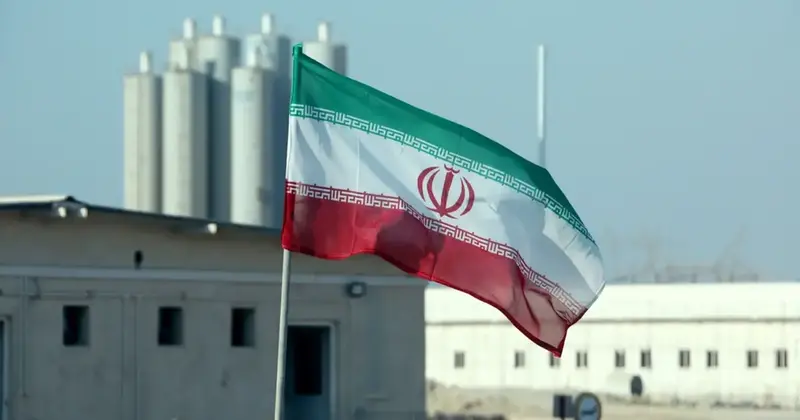
Iran ends 2015 nuclear deal. It removes measures to restrict Tehran’s nuclear expansion. World now faces a constrained diplomatic landscape

Iran ends 2015 nuclear deal. It removes measures to restrict Tehran’s nuclear expansion. World now faces a constrained diplomatic landscape

FacebookTwitterWhatsAppTelegramEmail

On October 18, 2025, Iran officially announced it is no longer bound by the 2015 nuclear deal, known as the Joint Comprehensive Plan of Action (JCPOA). The foreign ministry stated that “all of the provisions,  including the restrictions on the Iranian nuclear program and the related mechanisms are considered terminated”. With this statement, Tehran is asserting that it views the decade-old framework, backed by UN Security Council Resolution 2231 adopted in 2015, as finished and no longer legally binding.

Understanding the background is important. The JCPOA aimed to limit Iran’s nuclear program in exchange for relief from sanctions. It received endorsement from the UN Security Council under 2231 Resolution. However, the deal had been falling apart for years. In 2018, the Donald Trump administration withdrew the US from the deal and reinstated strict sanctions, leading Iran to gradually resume higher-grade uranium enrichment. In August 2025, the three European signatories—the UK, France and Germany—activated the “snapback” mechanism to restore UN sanctions, citing Iran’s significant non-compliance. Therefore, many observers see the JCPOA as already largely ineffective, with Iran’s formal declaration simply marking the end of what was essentially a dead agreement.

In its announcement, Tehran emphasized that it remains open to diplomacy. This may be a way to reassure others that this rejection does not have to result in immediate tension. Still, removing those constraints creates increased risks both regionally and globally. From a non-proliferation perspective, Iran’s action means that the restrictions on uranium enrichment levels, monitoring protocols by the International Atomic Energy Agency (IAEA) and limitations on nuclear-related activities under the JCPOA no longer apply as declared policy. This raises concerns about Iran enriching uranium at higher levels, expanding its production capabilities and lowering the transparency for outside inspectors. While Iran argues that its nuclear program is for peaceful uses, western countries and regional actors, particularly Israel perceive this as entering a risky area.

Practically, Tehran faces renewed and possibly harsher sanctions. The reactivation of UN sanctions means that many economic and military restrictions that had been lifted or suspended will be reinstated. This fresh pressure could worsen Iran’s economic struggles, limit its ability to engage internationally and lead the country to deepen ties with  non-Western nations. For instance, analysts expect China to gain more leverage by buying Iranian oil at significant discounts. The sanctions environment may push Iran to speed up certain strategic programs or stockpile fissile material while it still can, believing the international opportunity is closing.

Regionally, Iran’s declaration is likely to cause reactions throughout West Asia. Rival states like Saudi Arabia and the UAE may feel pressured to either speed up their own nuclear programs or seek tighter security alliances with the US and Israel. Additionally, Israel has already carried out strikes on Iranian-linked nuclear and military sites, notably in June 2025 and Tehran’s announcement adds urgency to its threat assessments. This raises the risk of miscalculation, escalation and proxy-driven conflict. Analysts warn that with fewer restrictions, Iran’s progress toward weapons-grade enrichment becomes quicker, shortening the so-called “break-out” timeline.

Diplomatically, the announcement might surprisingly lead to a new phase of negotiations, albeit with greater stakes. Iran may seek a new framework that recognizes its advancements, calls for the removal of sanctions and resets relations under different terms. However, this will require western powers willing to negotiate in good faith—a condition Iran insists must include guarantees against military action and recognition of its enrichment rights. On the other hand, the US and its allies will demand robust verification and strong inspection procedures. They may also link negotiations to Iran’s missile program and regional actions, areas Iran considers non-negotiable. The gap of mistrust is wide.

Also Read: GST 2.0 fuels festive auto boom: Passenger vehicle sales touch 3.72 lakh, two-wheelers surge 7 percent

Economically, Iran’s announcement might hinder its chances of rejoining global markets. Although Tehran claims it is ready for diplomacy, many companies and banks may find the environment too risky due to the renewed sanctions. This dynamic might limit foreign investment and access to technology, undermining Iran’s long-term goals in energy and industry.

From an international law perspective, Iran’s claim that the deal’s “termination day” has come ten years after the adoption of Resolution 2231 is disputed. While the JCPOA did plan for the ending of certain provisions on October 18, 2025, it also included long-term monitoring, safeguards and a path for future dialogue and verification. Western countries might argue that Iran remains obligated under non-proliferation commitments from the NPT and that unilateral withdrawals do not exempt it from those responsibilities. Nonetheless, Tehran’s position is clear: it sees any reimposition of restrictions as illegitimate and demands equal treatment as a non-nuclear weapons state.

Iran’s announcement marks a significant moment, signaling the clear end of the 2015 nuclear deal. It does not automatically indicate a move toward weaponization, but it does remove the measures that aimed to restrict Tehran’s nuclear expansion and the openness of its program. The global community now faces a more challenging negotiating situation, a constrained diplomatic landscape and increased risks of proliferation and regional conflict. Whether diplomacy can rise to meet this challenge remains uncertain. The coming months may determine if this represents a new stalemate or a dangerous escalation toward nuclear capabilities.

Topics: IranUSAUnited Nations Security Council (UNSC)2015 Nuclear DealJoint Comprehensive Plan of Action(JCPOA)
ShareTweetSendShareSend
✮ Subscribe Organiser YouTube Channel. ✮
✮ Join Organiser's WhatsApp channel for Nationalist views beyond the news. ✮
Previous News

Ujjain gears up for record-breaking 50,000 sq ft rangoli at Mahakaleshwar mandir this Deepawali 

Next News

Deepawali 2025: Ayodhya lights up with special drone show

Related News

New York anti-Hindu Bill fails to advance: How the bill fueled bias & espoused caste discrimination

US Court strikes down Trump’s $100,000 H-1B fee as executive overreach; Lawmakers & Republicans welcome the verdict

West Asia Conflict: India issues advisory to citizens in Iran & Israel; Urges to avoid tarvel & exercise utmost caution

India-flagged vessel attacked near Strait of Hormuz; Seafarers send distress signal; All crew members rescued safely

India & Israeli billionaires in the US: How immigrants from Asian countries are powering the growth of American economy

Editors of the HAF Wikipedia page run propaganda and disinformation campaign against the organisation, India and Hindu cultural ethos

Wikipedia fuels propaganda against Hindu American Foundation: How anonymous writers demonise Hindu rights group?

Load More

Latest News

POJK Burns (This is an AI generated image)

POJK Boils Over: Rs 1 crore bounty on JAAC leaders as anti-government protests intensify

NSE has announced that 10 per cent of its annual CSR corpus will be routed through the Social Stock Exchange

NSE to route 10 per cent of CSR corpus through Social Stock Exchange, sets new benchmark for impact funding

Organisational Secretary of Bharatiya Mazdoor Sangh (BMS), Bojji Surendran addressing the gathering at the 114th Session of the International Labour Conference (ILC) of the International Labour Organization (ILO) in Geneva

114th ILO Session | Innovation must serve humanity and create inclusive growth for all: BMS Org Secretary B Surendran

Mansoor Ahmed and daughter Shamshad Begum arrested for Rs 5.3 cr government job scam

Karnataka Job Scam Busted: Mansoor, daughter Shamshad Begum arrested for Rs 5.3 crore fraud; 40+ aspirants duped

Shamli Conversion Case: Delhi Nikahnama, Name Changes and Pakistan-Based Preacher Videos Under Scanner; Father Awaits Ayush Malik’s Return Home

Shamli Conversion Case: How a Delhi nikahnama, Pakistani cleric’s lectures and an affair changed Ayush Malik’s life

CM Suvendu Adhikari announces 125-ft Syama Prasad Mookerji statue in Kolkata on 125th birth anniversary

CM Suvendu Adhikari announces 125-foot Syama Prasad Mookerjee statue in Kolkata to mark his 125th birth anniversary

“They Took My Son Away”: Ayush Malik’s Father Accuses Chandni Qureshi of Conversion Plot and Property Grab in Shamli

“They ruined my family, took my son away”: Ayush Malik’s father accuses Chandni Qureshi of conversion & property grab

Back-to-Back Love Jihad Cases in Lucknow: PGI Woman Goes Missing, Another Alleges Conversion Pressure After Marriage Promise

Back to back Love Jihad in Lucknow: PGI woman missing after meeting Irshad, Another alleges conversion by Zubair Ansari

New update in Nashik TCS Coporate Jihad Case as accused were asked to read a book titled The Life of Muhammad

Nashik TCS Corporate Jihad: Investigators probe claims victims were asked to read book ‘The Life of Muhammad’

MEA hails 12 years of Modi government

MEA celebrates PM Modi’s 12 years in office, says India “witnessed remarkable transformation” in foreign policy

Load More
  • Privacy
  • Terms
  • Cookie Policy
  • Refund and Cancellation
  • Delivery and Shipping

© Bharat Prakashan (Delhi) Limited.
Tech-enabled by Ananthapuri Technologies

  • Home
  • Search Organiser
  • Bharat
    • Assam
    • Bihar
    • Chhattisgarh
    • Jharkhand
    • Maharashtra
    • View All States
  • World
    • Asia
    • Africa
    • North America
    • South America
    • Europe
    • Australia
  • Editorial
  • Operation Sindoor
  • Opinion
  • Analysis
  • Defence
  • Culture
  • Sports
  • Business
  • RSS @ 100
  • Entertainment
  • More ..
    • Sci & Tech
    • Vocal4Local
    • Special Report
    • Education
    • Employment
    • Books
    • Interviews
    • Travel
    • Health
    • Politics
    • Law
    • Economy
    • Obituary
  • Subscribe Magazine
  • Read Ecopy
  • Advertise
  • Circulation
  • Careers
  • About Us
  • Contact Us
  • Policies & Terms
    • Privacy Policy
    • Cookie Policy
    • Refund and Cancellation
    • Terms of Use

© Bharat Prakashan (Delhi) Limited.
Tech-enabled by Ananthapuri Technologies