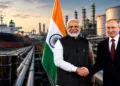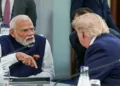
US President Donald Trump is turning up the heat on Russia, threatening tougher sanctions as the Ukraine war drags on. Frustrated that Russian President Vladimir Putin has ignored his mediation efforts, Trump now aims to cripple Moscow’s economy. But India’s refusal to bow to US pressure is complicating his plans, setting the stage for new trade tensions between Washington and New Delhi. In this context, there is growing speculation that Washington may hike tariffs against India. Media reports also suggest that India could be excluded from outsourcing opportunities in the American IT sector. However, India’s refusal to yield to such threats has surprised the United States. Meanwhile, Putin has intensified his attacks on Ukraine despite sustained international pressure. According to Russian claims, weapons depots and transportation systems used by the Ukrainian army have been destroyed through coordinated strikes involving drones, missiles, and warplanes. This development has been seen as another setback for Washington.
India and EU move closer to a landmark trade deal
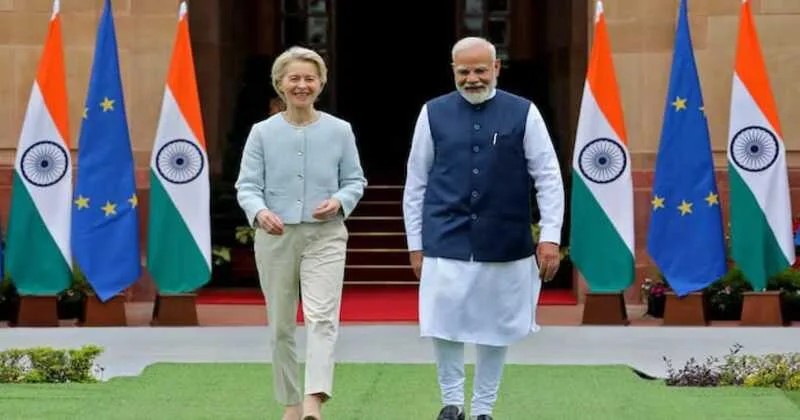
Amid these tensions, India is preparing an alternative plan by strengthening its partnership with the European Union. The next round of negotiations for a free trade agreement is set to take place in India, with the aim of resolving outstanding issues and finalizing the deal by the end of this year. Reports suggest that senior EU officials handling agriculture and trade are expected to visit India in the coming week to smoothen the process and avoid last-minute complications. European Trade Commissioner Maros Sefcovic and Agriculture Commissioner Christoph Hansen, both of whom hold ranks equivalent to cabinet ministers, are scheduled to lead the talks. They will be accompanied by a 30-member delegation from Brussels. On the Indian side, Commerce Minister Piyush Goyal is expected to meet Agriculture Minister Shivraj Singh Chouhan during the deliberations. According to the reports, earlier discussions covered critical areas such as goods, services, investment, and digital trade. If the agreement is concluded successfully, it will provide India access to the vast markets of all 27 European Union member states. Such an outcome would mark a significant setback for Trump, whose pressure campaign relies on isolating India from major global markets.
At the same time, the United States is reportedly moving to impose additional duties on countries that continue to import oil from Russia, including India. New Delhi’s outreach to the European Union is seen as a government’s calculated and pragmatic response to this anticipated escalation. Washington hopes that by tightening sanctions, Moscow will eventually be forced into negotiations over the Ukraine conflict. Trump has repeatedly stated that the United States shares a “special relationship” with India, often praising Prime Minister Narendra Modi as a great leader. Yet, despite this rhetoric, his administration is preparing to implement measures such as higher tariffs on countries that purchase Russian crude. In this context, the US is also considering actions against both India and China. These steps have already generated dissatisfaction in New Delhi. However, some analysts argue that the next phase of Trump’s strategy may focus primarily on China, currently the largest buyer of Russian oil. For Trump, the overriding objective is to cut off Moscow’s vital energy revenues and undermine Putin’s financial base. The sanctions have already placed serious strain on Russia’s export earnings and worsened the economic situation facing the Kremlin.