Dowry System not part of Sanatana Dharama
June 10, 2026
  • Read Ecopy
  • Circulation
  • Advertise
  • Careers
  • About Us
  • Contact Us
Android AppiPhone AppArattai
Organiser
  • ‌
  • Bharat
    • Assam
    • Bihar
    • Chhattisgarh
    • Jharkhand
    • Maharashtra
    • View All States
  • World
    • Asia
    • Europe
    • North America
    • South America
    • Africa
    • Australia
  • Editorial
  • International
  • Opinion
  • RSS @ 100
  • More
    • Op Sindoor
    • Analysis
    • Sports
    • Defence
    • Politics
    • Business
    • Economy
    • Culture
    • Special Report
    • Sci & Tech
    • Entertainment
    • G20
    • Azadi Ka Amrit Mahotsav
    • Vocal4Local
    • Web Stories
    • Education
    • Employment
    • Books
    • Interviews
    • Travel
    • Law
    • Health
    • Obituary
  • Subscribe
    • Subscribe Print Edition
    • Subscribe Ecopy
    • Read Ecopy
  • ‌
  • Bharat
    • Assam
    • Bihar
    • Chhattisgarh
    • Jharkhand
    • Maharashtra
    • View All States
  • World
    • Asia
    • Europe
    • North America
    • South America
    • Africa
    • Australia
  • Editorial
  • International
  • Opinion
  • RSS @ 100
  • More
    • Op Sindoor
    • Analysis
    • Sports
    • Defence
    • Politics
    • Business
    • Economy
    • Culture
    • Special Report
    • Sci & Tech
    • Entertainment
    • G20
    • Azadi Ka Amrit Mahotsav
    • Vocal4Local
    • Web Stories
    • Education
    • Employment
    • Books
    • Interviews
    • Travel
    • Law
    • Health
    • Obituary
  • Subscribe
    • Subscribe Print Edition
    • Subscribe Ecopy
    • Read Ecopy
Organiser
  • Home
  • Bharat
  • World
  • Operation Sindoor
  • Editorial
  • Analysis
  • Opinion
  • Culture
  • Defence
  • International Edition
  • RSS @ 100
  • Magazine
  • Read Ecopy
Home Bharat

From stridhana to dowry: How colonial distortions plundered the vision of Santana Dharma towards women

Dowry as practiced today is not a part of Sanātana Dharma. It is a colonial-era corruption that warped a system meant to empower women. Reclaiming Strīdhana thus, is not nostalgia—it is survival. It means creating a future where no woman fears marriage as a death sentence

Vrinda KhannaVrinda Khanna
Sep 7, 2025, 06:30 pm IST
in Bharat, Opinion, Culture
Follow on Google News
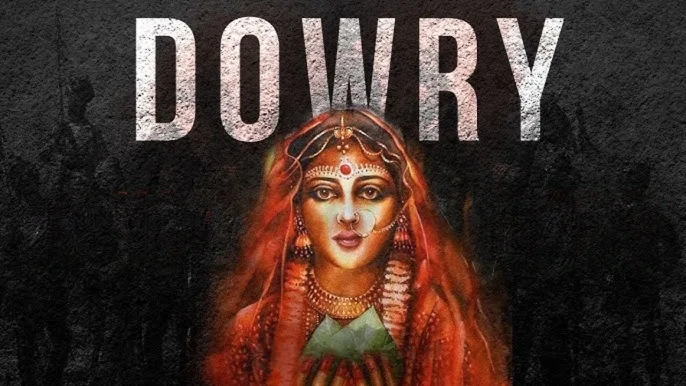
Dowry system is never a part of Sanatana Dharma, it is a colonial manifestation

Dowry system is never a part of Sanatana Dharma, it is a colonial manifestation

FacebookTwitterWhatsAppTelegramEmail

India is a land where women were once revered not only as mothers and nurturers, but also as sovereigns and warriors. From Rani Ahilya Bai of Malwa to Rani Abbakka, the first Tuluva Queen, our soil has given birth to women who shaped history and guarded Dharma. Against that backdrop, today’s headlines of dowry deaths sound not only tragic but shameful.

Take the recent case of Nikki Bhatti—a young bride who was burnt alive in front of her six-year-old child by her husband and in-laws. Her story is not an isolated crime; it is a blot on our collective conscience.

Despite our dream of being Vishwaguru—a beacon of spirituality and morality—such acts reveal how fragile our moral foundations still are. Over 70,000 dowry cases are reported every year in India, according to NCRB figures. Many end in brutal deaths. These numbers are not mere statistics; they are the silent cries of anguish. Behind each number lies a silenced story: a daughter who dreamed, a sister who loved, a mother who hoped. Nikki Bhatti’s case is not just her tragedy—it is a reminder that if it could happen to one daughter of Bharat, it could happen to any. And that truth should disturb us all.

When such horrors occur, critics seize the moment to question Sanātana Dharma itself: is this the culture you call sacred?

The honest answer is no. Dowry as we know it today is not Sanātana at all. It is a distortion to the principles of Sanatana Dharma. Our scriptures, and our cultural fabric were never built on practices that demeaned women, at the heart of Sanātana Dharma lies reverence for women. Far from sanctioning dowry demands, our scriptures recognized Strīdhana—a sacred wealth of her own, gifted to women to protect and empower them. The Manusmṛti eloquently defines Stridhan as :

“अयययावाहिनकं द ं च ीितकमिण । ातृमातृिपतृ ा ं षड् िवधं ीधनं मृतम्॥”

(Manusmṛti 9.194), translating to “Gifts given before the sacred fire, at the time of departure, tokens of affection, and gifts from brother, mother, and father—these six types are declared as Strīdhana.”

In other words, Strīdhana was hers—gold, ornaments, land, or money that remained under her control, untouchable even by her husband.

Alongside this was Śulka, or bride-price, where the groom’s side contributed wealth at the time of marriage. The practice of śulka—a contractual payment from groom to bride’s family—stands in stark contrast to today’s dowry demands, which invert the direction of wealth and burden the bride’s side. Both practices reinforced a simple principle: marriage should strengthen the bride, not impoverish her family.

The Vedas too envisioned the bride not as a dependent, but as a sovereign in her new home. The Atharvaveda (XI.5.18) blesses her:

सCाDी Eशुरे भव सCाDी Eèवां भव । नना%दLर सCाDी भव सCाDी अद्िह देवरान् ॥

“Be the empress over your father-in-law, be the empress over your mother-in-law. Be the empress over your husband’s sisters, and be the empress over his brothers.” This is the language of dignity, not subjugation. The bride entered her household not as a burden but as a queen.

This balance began to shatter under British colonial rule. The world often projects the West as a land of women’s liberation, but history tells another story: the feminist movement itself was born out of Western women’s long struggle against entrenched patriarchy. It is therefore no surprise that under British rule, women in Bharat too faced a systematic stripping away of rights they once held.

Also Read: 100 years of Sangh Yatra: Matter of conviction, not conversion

With the Permanent Settlement of 1793, land became locked into male hands, and women were systematically stripped of their inheritance and property rights. What was once Strīdhana—voluntary, protective wealth—was hollowed out. The colonial legal system ignored dharmic traditions, severed women’s property rights, and reduced them to dependents. In time, the safeguard meant for women twisted into an exploitative demand from them. As historian Veena Talwar Oldenburg argues in Dowry Murder: “The Imperial Origins of a Cultural Crime, it was colonial interference in property and inheritance laws that turned gifts into compulsory extractions. Dowry became a transaction of greed—an inversion of Dharma itself”.

Dowry violence is not just a crime under law. It is adharma. Our scriptures bless brides with long life, prosperity, and strength—not with the burden of satisfying greed. The Atharvaveda (XIV.2.64) prays:

शरदः शतम् हेम%तान् शतम् वस%तान् शतम् जीव शरदः शतम् ।

“May you live a hundred autumns, a hundred winters, a hundred springs; may a long life be granted to you.” This is the Sanātana vision—marriage as protection, not persecution.

Even today, some communities in India have stuck to their roots. Among the Khasi and Garo community of Meghalaya, property passes through women, and the youngest daughter becomes custodian of the family’s wealth. The Nairs of Kerala also followed marumakkathayam, a matrilineal system where men moved into the wife’s household. Many tribal communities of the Northeast are matrilocal, with men joining their wives’ families instead of the reverse. These living traditions remind us that dowry is not intrinsic to Indian culture. Rejecting it is not rebellion—it is continuity with our own heritage.

Dowry as practiced today is not Sanātana. It is a colonial-era corruption that warped a system meant to empower women. Reclaiming Strīdhana is not nostalgia—it is survival. It means creating a future where no woman fears marriage as a death sentence. Let us remember:

“?ीणां िह भषूणं धैय4म्।” —“Courage is the true ornament of women.”

And let us make a pledge together: our daughters will never be sold, our brides will never be burdened. That is the true Sanātana vow. If we act with courage and clarity, we can cleanse our society of this evil and return to a Dharma that honors, protects, and uplifts the women lineage.

Topics: Dowry culture not part of Sanatana DharamaSay No to DowrySanatana DharmaBharatColonial agendaVeda Parampara
ShareTweetSendShareSend
✮ Subscribe Organiser YouTube Channel. ✮
✮ Join Organiser's WhatsApp channel for Nationalist views beyond the news. ✮
Previous News

Salwa Judam: Supreme Court ban was a setback to the fight against Maoism; Know what Bastar lost due to red terror

Next News

GST masterstroke by PM Modi: Relief for middle class, growth for India

Related News

External Affairs Ministry spokesperson Randhir Jaiswal, slams Pakistan over the recent killings in POJK

‘Hope Pakistan is held accountable’: India reacts after 20 killed in Pakistan Occupied Jammu & Kashmir

Prime Minister Narendra Modi

BJP’s Victory with Vision: An idea of India that is Indian

How Ramrajya and Kautilya’s Saptang model can build a prospering civilisation

Why invading empires hated them?

As fuel shortages rippled across Asia, New Delhi expanded supplies to its neighbours while Beijing sought to turn energy security into strategic influence.

The Hormuz Test: How India’s energy assistance outshines China’s conditional approach

Demographic changes in Bharat’s border districts have raised concerns about migration, security, and social cohesion

Demographic Shift in Border Areas of Bharat: The dangerous design

Load More

Latest News

(Left) PM Narendra Modi (Right) Former PM Jawaharlal Nehru (This is an AI generated image)

Nehru’s 72-Year Record Falls: Narendra Modi becomes India’s longest-serving elected Prime Minister

West Bengal government drops ‘Dham’ from Digha Jagannath Temple name, upholds Puri’s unique sacred status

PIB debunks viral claim that Kiren Rijiju, Arjun Ram Meghwal and Judges attended Badminton event in London

Fact Check: PIB busts viral London claim, says Rijiju-Meghwal photos are from New Delhi Judges’ Badminton Championship

Now Islamists Eye Keralam’s Ancient Kottiyoor Temple: How Congress, Muslim Family Built Fake ‘Bavalikkettu’ Narrative

Amaravati Gets Major Boost: Andhra Pradesh Cabinet Clears Rs1,299 Crore Central Government Office Complex

PM Narendra Modi and French President Emmanuel Macron

PM Modi’s six-day Europe tour to focus on G7, AI, innovation and strategic partnerships

POJK Burns (This is an AI generated image)

POJK Boils Over: Rs 1 crore bounty on JAAC leaders as anti-government protests intensify

NSE has announced that 10 per cent of its annual CSR corpus will be routed through the Social Stock Exchange

NSE to route 10 per cent of CSR corpus through Social Stock Exchange, sets new benchmark for impact funding

Organisational Secretary of Bharatiya Mazdoor Sangh (BMS), Bojji Surendran addressing the gathering at the 114th Session of the International Labour Conference (ILC) of the International Labour Organization (ILO) in Geneva

114th ILO Session | Innovation must serve humanity and create inclusive growth for all: BMS Org Secretary B Surendran

Mansoor Ahmed and daughter Shamshad Begum arrested for Rs 5.3 cr government job scam

Karnataka Job Scam Busted: Mansoor, daughter Shamshad Begum arrested for Rs 5.3 crore fraud; 40+ aspirants duped

Load More
  • Privacy
  • Terms
  • Cookie Policy
  • Refund and Cancellation
  • Delivery and Shipping

© Bharat Prakashan (Delhi) Limited.
Tech-enabled by Ananthapuri Technologies

  • Home
  • Search Organiser
  • Bharat
    • Assam
    • Bihar
    • Chhattisgarh
    • Jharkhand
    • Maharashtra
    • View All States
  • World
    • Asia
    • Africa
    • North America
    • South America
    • Europe
    • Australia
  • Editorial
  • Operation Sindoor
  • Opinion
  • Analysis
  • Defence
  • Culture
  • Sports
  • Business
  • RSS @ 100
  • Entertainment
  • More ..
    • Sci & Tech
    • Vocal4Local
    • Special Report
    • Education
    • Employment
    • Books
    • Interviews
    • Travel
    • Health
    • Politics
    • Law
    • Economy
    • Obituary
  • Subscribe Magazine
  • Read Ecopy
  • Advertise
  • Circulation
  • Careers
  • About Us
  • Contact Us
  • Policies & Terms
    • Privacy Policy
    • Cookie Policy
    • Refund and Cancellation
    • Terms of Use

© Bharat Prakashan (Delhi) Limited.
Tech-enabled by Ananthapuri Technologies