Bharat has been a prosperous land since ancient times, and our glorious history is a testament to this richness. At the core of our culture and traditions lies the consciousness rooted in the sentiment of “Mata Bhoomi Putroham Prithivya” — “The Earth is my mother, and I am her son.” Hence, we have revered and worshipped our nation as Bharat Mata (Mother India). Be it Mother Earth, the sacred cow, or our divine goddesses — all represent Matrishakti (mother power). The cultural consciousness of our nation is fundamentally shaped by Nari Shakti (women power), which embodies positivity and creativity, nurturing the essence of life.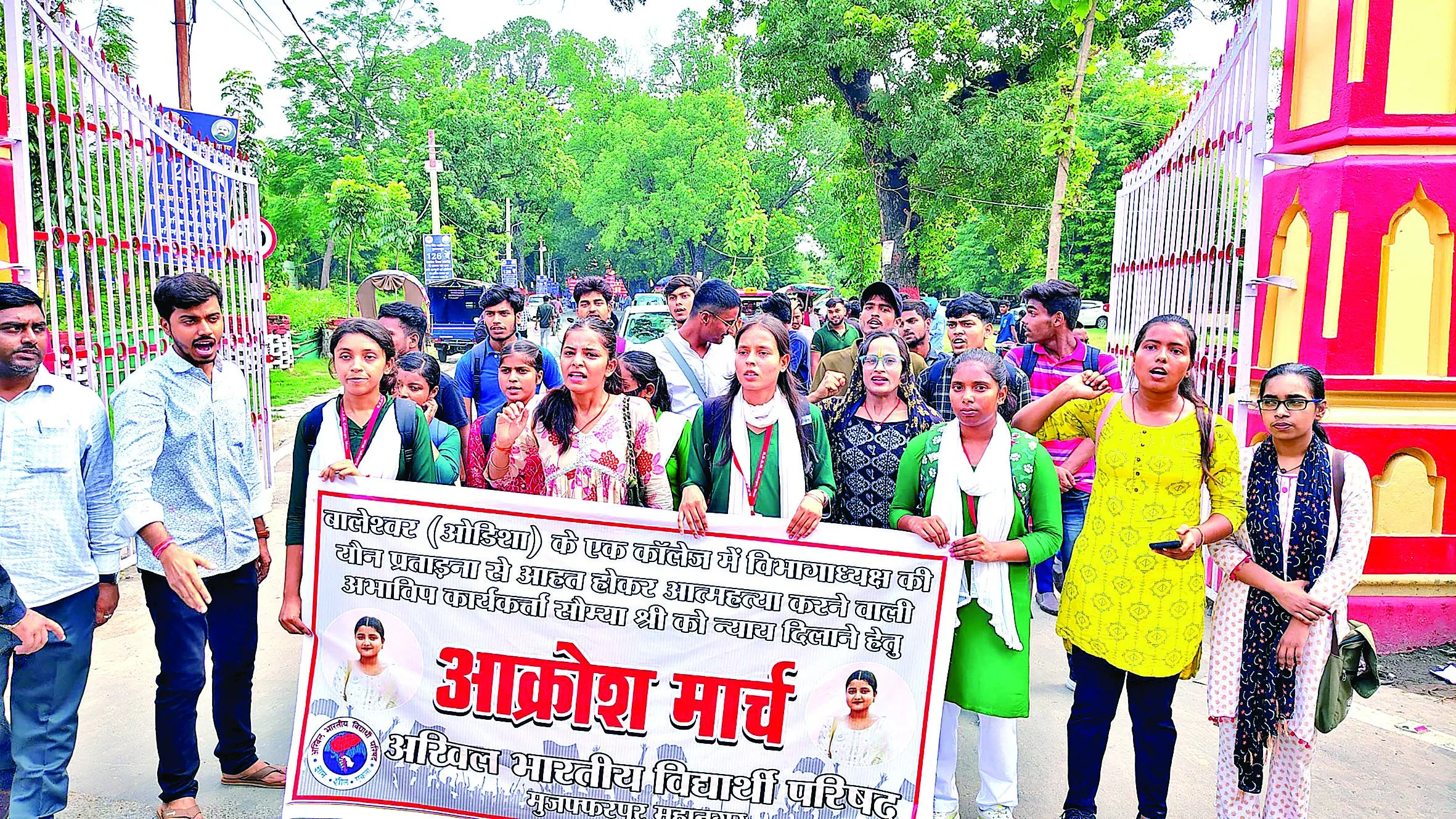
In ancient Bharatiya society, women held a highly respected place. They were active not only in household responsibilities but also participated meaningfully in social and religious activities. From the composition of Vedic hymns to roles in the Bhakti movement and the Indian freedom struggle, women played pivotal roles. Post-independence, women actively contributed to the making of our Constitution and various spheres like social reform, economy, politics, and administration — a continuation of our Bharatiya traditions. This awakening towards women’s rights was championed by sants and reformers who advocated for women’s education and empowerment.
First Female Leadership Milestones
With the foundation of the Akhil Bharatiya Vidyarthi Parishad (ABVP) on July 9th, 1949, the organisation began working for students’ welfare, adopting a structure where both male and female students had equal opportunities and responsibilities. From the 1960s onward, under the guidance of revered Prof Yashwantrao Kelkar and through the efforts of committed karyakartas, female students started participating actively in organisational work.
In 1961-62, Sulabha Deodhar became the first woman included in ABVP’s national executive. Between 1965-70, many female students held positions such as Ikayi Mantri (unit minister) in different locations. Over time, student activities expanded to Madhya Pradesh, Karnataka, Uttar Pradesh, and West Bengal. By the 1980s, states like Odisha, Delhi, Rajasthan, and Himachal Pradesh witnessed significant involvement of female students, strengthening the organisation. In this way, the role of female students in the organisational structure started inceasing.
In 1967, Anjali Parchure Deshpande became ABVP’s first full-time female karyakarta. Later, in 1984, Geeta Gundeka left her private sector job to serve ABVP full-time, eventually becoming National Vice President and Akhil Bharatiya Chhatra Pramukh. Her life-long dedication to nation-building remains an inspiration. Senior leaders recall that post Geeta Didi, the involvement of female students in the organisation saw a major rise.
Beyond Campuses, Into Society
Since the 1970s, female ABVP karyakartas have contested and won student union elections and taken up leadership roles. By the 1980s, married professors and former student karyakartas also began contributing in various ways. A significant milestone was the first Akhil Bharatiya Chhatra Abhyas Varg (All India Female Students’ Training Camp) held in Mumbai in 1988. Since 1989-90, female student-specific conferences, movements, and camps have ensured special participation of female students. Today, more than 50 full-time female karyakartas are serving across the country. I myself have worked as a full-time karyakarta and Vibhag Sangathan Mantri (Department Organising Secretary).
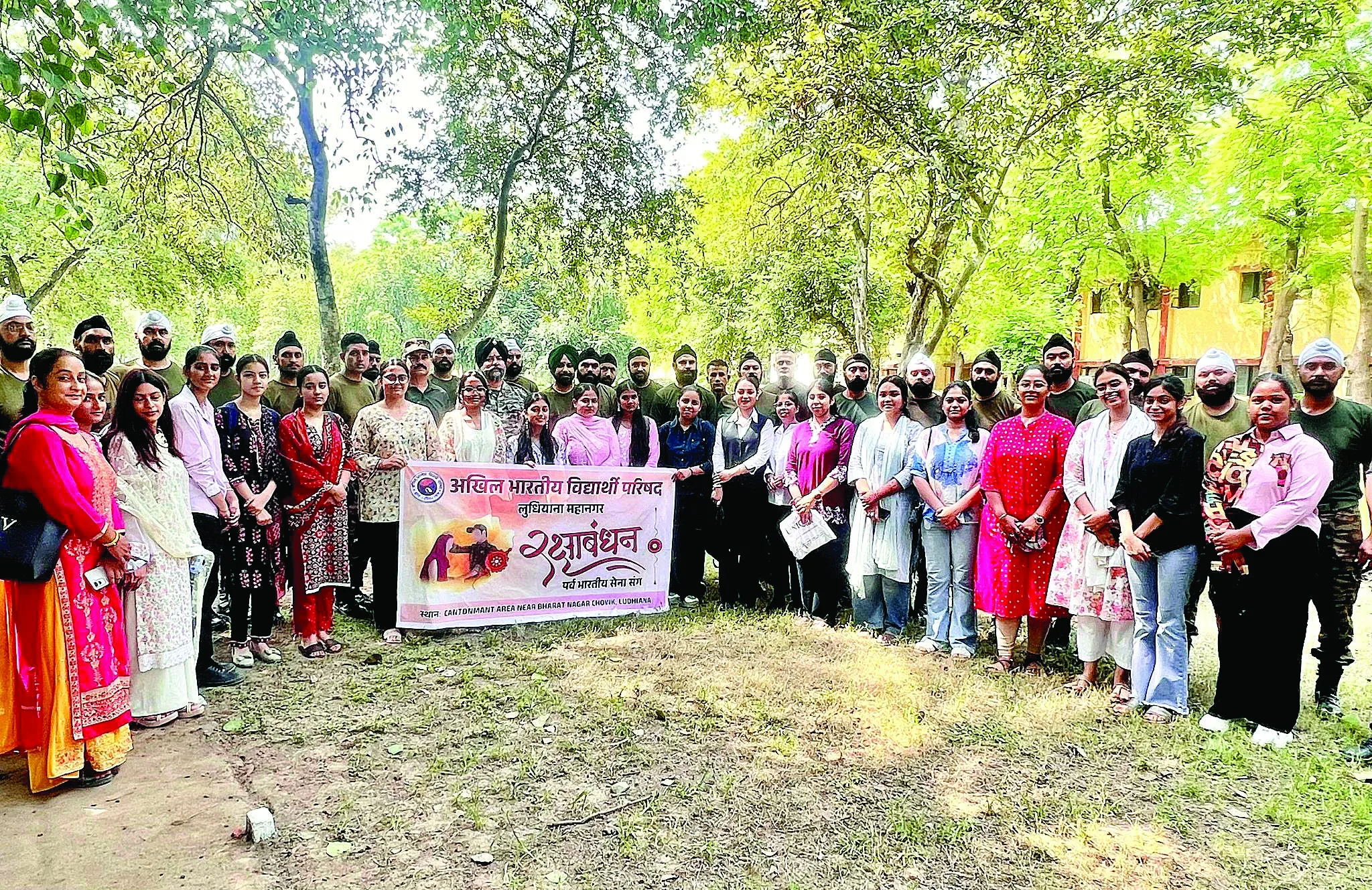
ABVP is active not only in schools, colleges, and universities, but also plays a key role in community life. From public awareness campaigns to driving positive change, ABVP karyakartas serve with complete dedication. Rooted in Bharatiya values, ABVP rejects all forms of discrimination and works with a spirit of harmony and inclusiveness.
ABVP firmly believes that the holistic development of women cannot be achieved by law alone, but through value-based education and awareness. Education strengthens women — not only by instilling self-respect but also by making them economically independent. This enables them to take informed decisions and participate actively in social, economic and political spheres of life.
(Dhyeya Yatra, Vol. 2, Page 317)
Women in Nation-Building
Moreover, ABVP believes that female participation must not be restricted to women’s issues alone, but should extend to the process of holistic nation-building. The women-centric programmes organised by ABVP aim not just to discuss problems, but to create a strong and solution-oriented participation. Women and men are integral parts of society. A just and strong nation can only be built when both genders share equal roles. ABVP is of the clear view that a relationship between man and woman based on mutual respect, complementarity, and cooperation, will lay the foundation for social transformation.
(Dhyeya Yatra, Vol. 1 – Introduction)
In line with these values, female students in ABVP are not limited to organisational roles. They are encouraged to contribute to various fields of public life using their multifaceted talents. My own journey — from working at the city-level unit to serving as Prant and Kshetriya Chhatra Pramukh, National Executive and Central Executive Committee Member — is a reflection of ABVP’s inclusive and merit-based system. The organisation gives equal opportunities and nurtures a vast network of dedicated karyakartas who contribute not just in student spaces but across society.
Key Movements and Milestones
ABVP has led several major movements for the welfare of female students — ensuring improvements in educational systems, scholarships, and better access to higher education. The Dhyeya Yatra book documents this journey in detail. A national seminar on ‘Women’s Higher Education: Problems and Solutions’ was held in 1999 in Vadodara, addressing issues like low enrollment, dropout rates, gender disparities, vocational opportunities, etc. Recommendations sent to the government included increasing the number of women’s colleges, providing scholarships, and offering better facilities.
Another significant event was the national-level conference for women organised under the aegis of Chhatra Sansad and Vimarsh in Hyderabad in 2008 on the theme “Globalisation and Women: Impacts, Challenges, and Opportunities.” The Chhatra Sansad organised in 2016 and 2025 in Delhi saw participation of around 300 students from across Bharat.
Importantly, ABVP never confined women’s education to mere discussions. It strived for on-ground solutions — like demanding hostel facilities for girls pursuing technical, management, and other professional courses — which was repeated several times leading to success. Noteworthy was the 2011 protest at Rani Durgavati University in Jabalpur against unjust financial demands from female BSc Medical students.
(Dhyeya Yatra, Vol. 1, Pages 236-237)
Upholding Women’s Dignity
ABVP has also fought for women’s dignity and safety and worked on creative solutions. Even today, during national and regional conventions, many such resolutions are passed to ensure women’s active involvement. A major resolution on “Women’s Dignity” was passed at the 72nd National Convention in Indore (2016), aiming to generate widespread awareness against rising insensitivity, inequality, and violence towards women. It focused on:
- Equal access to education and basic amenities
- Encouraging higher education for girls
- Equal rights and respect without discrimination of caste, religion, or class
- Raising awareness against dowry, child marriage, and female foeticide
- Ensuring safety in educational institutions, workplaces, and public spaces
- Effective utilisation of the
Nirbhaya Fund, including establishing training centers
- Collective student action against crimes on women
- Promoting safe working environment and equal opportunities for women to make them economically independent
(Dhyeya Yatra, Vol. 2, Page 220)
Female students in ABVP have played a proactive role in social issues. Some key examples include:
- In 2012, a historic pledge in Maharashtra against female foeticide, where more than 80,000 female students participated
- In 2013, ABVP held tribute marches and protests across 700 locations in response to the Nirbhaya case
- In 2014, district-level Chhatra Sammelans in Punjab, Haryana, and many other prantas
- On October 2nd, 2015, 300 female students participated in Delhi’s Akhil Bharatiya Chhatra Sansad discussing education, safety, and health etc
- A nationwide survey involving more than 50,000 female students was conducted in 2016 on ‘the state of female students in higher education’, and its findings were presented in 2018
(Dhyeya Yatra, Vol. 2, Page 321)
A Call To Action
Today, around 40 per cent of ABVP’s total membership consists of female students. For self-defence, ABVP runs the “Mission Sahasi” campaign across educational institutions. It has been widely praised in society. In addition, the “Ritumati Campaign” was launched to spread awareness on menstrual health and hygiene. Through this, ABVP karyakartas reached out to women in rural and underprivileged areas, encouraging the use of sanitary napkins and moving away from unhygienic practices. I have personally led teams for the campaign in villages, urban settlements, and various city locations — raising awareness and implementing this initiative in coordination with my regional and state teams.
As I reflect on my experiences, learn from my seniors, and study ABVP’s Dhyeya Yatra, one thing becomes clear — being a female ABVP karyakarta is an important responsibility — to build a conscious, value-driven generation committed to serving the nation. Female student karyakartas, former karyakartas are all working in various dimensions of the society after going through the penance of ABVP’s Tapasthali. ABVP has shaped women leaders who now excel in education, politics, administration, healthcare, and technology — all while carrying the torch of nation-building forward. This journey is the result of our collective efforts, resolutions and conviction.
Let us all continue fulfilling our responsibilities with utmost devotion. One day, the skies in every direction will resound with the chant of “Bharat Mata Ki Jai!”