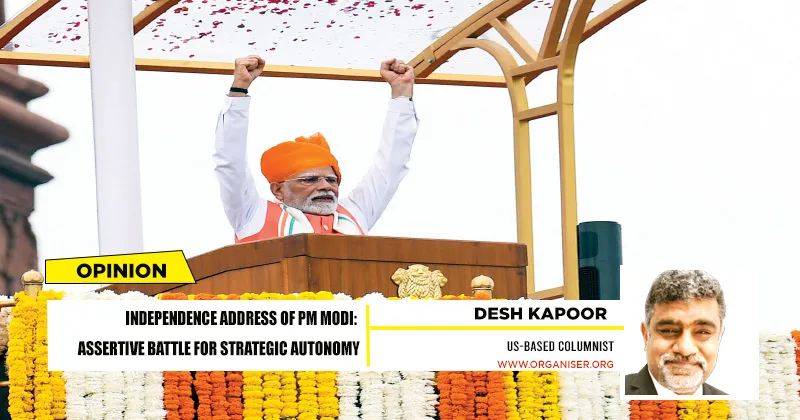
Ever since Narendra Modi became Prime Minister in 2014, India has shed past hesitations and adopted a far more assertive geopolitical posture. For the first time, major global decisions are being made by five key power centres – the United States, China, the European Union, India, and Russia – with India now widely regarded as an indispensable pole in a multipolar world. (The EU often aligns with U.S. policies, effectively making India’s independent stance even more significant.)
Cross-Border Strikes
One of the first and most evident signs of India’s new assertiveness came early in Modi’s tenure, with bold military action against insurgents outside India’s borders.
In June 2015, the Indian Army carried out a rare cross-border raid into Myanmar.
Surgical Strikes Against Pakistan
The best was, however, reserved for Pakistan. India’s tougher stance has been most evident in its dealings with Pakistan, especially after major terror attacks. In September 2016, following a deadly raid by terrorists on an Army base at Uri (Jammu and Kashmir) that killed 18 soldiers, India’s special forces conducted coordinated “surgical strikes” across the Line of Control (LoC) into Pakistan-administered Kashmir. Indian paratroopers hit multiple terrorist launch pads in Pakistan-occupied territory, a response unprecedented in recent history. The Indian Government announced it had “launched ‘surgical strikes’ across the LoC to target fighters” responsible for the Uri attack.
Swift Retaliation
In February 2019, a suicide bombing in Pulwama (Kashmir) killed 40 Indian paramilitary police. Jaish-e-Mohammad (JeM), a Pakistan-based terrorist group, claimed responsibility. In retaliation, India carried out an airstrike deep inside Pakistan’s territory. It was the first time since the 1971 war that the Indian Air Force crossed into Pakistan to hit a target. India’s assertiveness has not been confined to counterterrorism; it extends to defending territorial integrity against powerful adversaries like China during Doklam standoff and Galwan issue.
New Doctrine of Strategic Autonomy
Another pillar of India’s assertiveness under Modi has been the revival and reinvention of “strategic autonomy” in foreign policy. India was a founding leader of NAM during the Cold War, under the leadership of Nehru, and prided itself on not aligning with any superpower camp. However, in practice, India often leaned toward the Soviet Union during the latter part of the Cold War, and after 1991, it tilted toward the U.S. on many issues – all while still professing non-alignment.
PM Modi’s tenure has seen India articulate a clearer, bolder version of independence: engaging all major powers simultaneously for its benefit, “multi-alignment” as some call it. The audacity here is that India has pursued its own interests, even when they diverge sharply from those of the West or any single bloc, and has done so unabashedly!
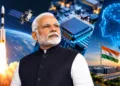
PM Modi’s tenure has seen accelerated investments in defense modernisation, new strategic programmes, and high-visibility technological missions that signal India’s arrival in the global big leagues
A prime example is India’s stance on the Russia-Ukraine war (2022–present). As the U.S. and EU led global sanctions against Russia, India refused to follow suit. Instead, New Delhi maintained a neutral stance – abstaining on UN resolutions condemning Russia, continuing diplomatic and defence engagements with Moscow, and massively increasing imports of discounted Russian oil to curb inflation at home. This policy is grounded not in approval of war, but in strategic calculus: Russia is a decades-old partner (and arms supplier), and India also needs affordable energy for its 1.4 billion people. Foreign Minister S. Jaishankar encapsulated India’s position in blunt terms: “Europe has to come out of the mindset that Europe’s problems are the world’s problems, but the world’s problems are not Europe’s problems”.
Refusing Unequal Trade Deals
India’s assertion of its economic sovereignty is another facet of its global posture. In 2019, India’s decision to withdraw from the Regional Comprehensive Economic Partnership (RCEP) was one such example.
RCEP was a massive proposed free trade agreement among 16 Asia-Pacific nations – touted as the world’s largest trading bloc, covering almost half the global population. Negotiations had been ongoing for seven years, and there was intense international expectation for India to sign. However, at the RCEP summit in Bangkok in November 2019, PM Modi announced that India would not join. Citing Mahatma Gandhi’s talisman of considering the poorest and invoking his own conscience, PM Modi declared he could not sign RCEP because “the present form of the agreement does not fully reflect the basic spirit and the agreed guiding principles” and failed to address India’s key concerns.
This was a bold move of economic assertiveness – saying no to a trade pact backed strongly by both China and many ASEAN neighbours. India had specific objections: a flood of imports (especially from China) without sufficient safeguards, fears for its vulnerable farmers and small manufacturers, and a lack of assured gains in services (where India is competitive). Other RCEP members were unwilling to accommodate India’s requests (such as an “auto-trigger” mechanism to curb import surges and better market access for Indian services). Rather than succumb to pressure to “be in the club”, India put its foot down.
Leading on Climate Action
Climate diplomacy is another arena where India’s assertiveness has been evident. India has evolved into a key player in global climate negotiations, often speaking on behalf of developing nations and ensuring that equity and “common but differentiated responsibilities” are respected. PM Modi surprised many by taking proactive green initiatives even as he defended India’s right to development.
One signature initiative was the International Solar Alliance (ISA), launched by Modi and France in 2015. This alliance of sunshine-rich countries aims to deploy solar energy massively and was the first international organisation headquartered in India. It positions India as a leader in renewable energy cooperation. PM Modi also announced ambitious domestic targets – 175 GW of renewables by 2022 (which India nearly reached) and 500 GW by 2030. Such moves won India considerable diplomatic capital; India is seen as “walking the talk” on clean energy, which bolsters its moral authority in climate talks.
However, India has also been uncompromising in defending the interests of developing economies. At the COP26 climate summit in Glasgow (2021), India played a high-profile role. In the final moments, India (with support from China) pushed for a crucial wording change in the coal section of the agreement – from “phase out” coal power to “phase down”.
Championing Global South
A critical aspect of India’s geopolitical rise under Modi is the conscious effort to become the leading voice of the Global South – that is, developing countries across Asia, Africa, Latin America, and the South Pacific.
This has meant speaking up on issues of equity in trade, finance, and technology, and providing tangible support to smaller nations, thereby asserting influence far beyond India’s immediate neighbourhood.
In recent years, India has consistently advocated for reforms in international institutions to increase representation for developing nations. Modi has raised the call for restructuring the UN, particularly the Security Council, to include India and other emerging powers as permanent members – arguing that global decision-making remains stuck in a mid-20th-century paradigm and needs to reflect 21st-century realities.
Building New Alliances and Coalitions
In the Modi era, India has also assertively reshaped its strategic alignments to safeguard its interests, particularly in the Indo-Pacific region, where China’s rise poses a complex challenge.
Traditionally, India has been averse to formal alliances and wary of being perceived as part of any “containment” of another country. A prime example is the Quadrilateral Security Dialogue (Quad) with the US, Japan and Australia. Modi Government shed past reluctance and fully embraced the Quad. By 2019–2021, the Quad graduated to leader-level summits, with Modi attending virtual and in-person summits.
Military Modernisation
Underpinning India’s assertive diplomacy is a steady enhancement of its military and technological capabilities – essentially, building hard power to back up the hard talk. PM Modi’s tenure has seen accelerated investments in defense modernisation, new strategic programmes, and high-visibility technological missions that signal India’s arrival in the global big leagues. By showcasing these capabilities, India asserts itself as a nation that must be taken seriously.