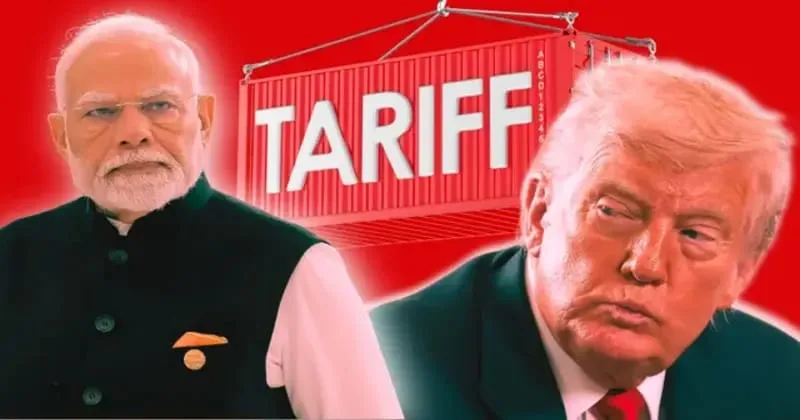
A major blowback came to India when Trump announced a 25 per cent tariff plus a penalty against India for trading with Russia. This occurred while trade negotiations with the US were ongoing and had nearly reached Trump’s deadline. Trump’s tariff salvo against India, breaking away from negotiations, was an attempt to address simmering tensions in the Indo-US relationship by leaning on Pakistan through an oil deal and tariff concessions. Is this sudden shift due to Trump’s ambitious economic policies, or is he masking strategic messaging and transactionalism in this trade affair with India? It would not be surprising if it is the latter, as the US has used deliberately exhaustive trade talks as a strategic tool to exert pressure on other nations, extract concessions, or advance broader strategic objectives.
The Deal
India was in the process of negotiating a Bilateral Trade Agreement (BTA) with the US, which began in February 2025. By April 2025, an outline was drawn for negotiations, emphasising US goals of reducing India’s trade barriers and addressing the $45.7 billion US goods trade deficit. The negotiations, which gradually gained momentum from February to July, intensified as India maintained its position of not liberalising or opening its agricultural and dairy sectors to US markets. Additionally, India adhered to its demands for tariff concessions, including lower US duties on steel (50%) and aluminium (25%), and preferential access for labour-intensive exports such as textiles, gems, jewellery, and IT services. In return, India was prepared to provide the US with greater access to its market. However, apart from these two sticking points, India also resisted US demands for reduced tariffs on auto components and acceptance of US Federal Motor Vehicle Safety Standards, prioritising its domestic industry and the Make in India campaign. Similarly, regarding non-tariff barriers, the US criticised India’s Quality Control Orders (QCOs) and import regulations, which it viewed as barriers to market access for US goods, but India defended them on the grounds of consumer and domestic industry safety. While this deal offered much for both countries, the costs were high, making negotiations intense and rigorous, which does not align with Trump’s negotiating style.
The US’s negotiating approach under Trump, specific to trade and tariff issues, has been unconventional and rushed. Recent trade deals with Australia and Vietnam suggest that the deals were concluded hastily under pressure. The US exploited Vietnam’s trade surplus and export reliance, using tariff threats and prolonged talks to secure concessions. While Vietnam negotiated for months and offered goodwill gestures (e.g., LNG deals), the final 20% tariff and transhipment penalties were less favourable than Vietnam’s proposed 0% reciprocal tariff. The situation is similar to Japan and Indonesia. Japan faced significant pressure from the US due to its trade surplus and alliance status. Tariff threats and geopolitical pressure secured partial concessions. For Indonesia, the US used tariff threats and BRICS-related pressure to obtain concessions.
These cases reflect the US’s tactics of achieving win-win trade deals, even with allies and partners, demonstrating transactional diplomacy in setting trade relations. However, a closer look suggests that these deals are not solely driven by economic or trade calculations. The US also uses trade deals as geopolitical tools—deliberately exhaustive negotiations to push countries toward aligning with its strategic objectives.
Economic Attrition Diplomacy
Economic attrition diplomacy involves leveraging prolonged trade negotiations to pressure a counterpart into aligning with geopolitical goals, often by creating economic uncertainty or exploiting asymmetric dependencies. The case of Vietnam exemplifies this: the US pushed Vietnam to reduce reliance on Chinese industrial goods and curb transshipments, aligning with its anti-China strategy. The negotiations were lengthy, with multiple rounds reflecting prolonged and exhaustive talks to force Vietnam to concur with the deal, leaving it little room to manoeuvre. The cases of Indonesia and Japan are also noteworthy. The US linked trade with Indonesia to its BRICS role and its $10 billion China investment deal (November 2024), pressuring Jakarta to align with US anti-China goals. Similarly, putting US-Japan relations at risk, the US threatened Japan with 25 per cent tariffs and, surprisingly, imposed a 25 per cent tariff on Japanese goods, including autos, announced on July 7, 2025, effective August 1—an unprecedented move against a US ally. Another case involves South Korea, where Trump imposed a 15 per cent “reciprocal” tariff on South Korean goods, effective August 1, 2025, after threatening 25% tariffs in July. Although no solid deal was finalised, South Korea offered increased access for US goods and defence commitments to avoid higher tariffs. With South Korea, the US sought geopolitical advantages by pressuring it to increase dependency on US purchases, specifically F-35s.
These pressure tactics show that, beyond trade alignment, the US aims to steer countries toward strengthening its anti-China strategy through economic attrition diplomacy, often disguised as trade negotiations and economic calculations. These deliberate attrition tactics echo past US actions, such as five years ago when the US directly engaged in economic attrition diplomacy with China to curb its technological rise (e.g., targeting Huawei), signal strength to allies, and pressure China on issues like intellectual property theft. During trade negotiations, the US repeatedly escalated tariffs and introduced complex demands, such as structural changes to China’s economy, prolonging uncertainty and pressuring China, which yielded partial concessions with limited success for the US.
Aggressive Attrition Driven by Frustration
Unlike other countries that faced standard coercion from the US with only tariff threats, India was hit with multiple salvos—tariffs, penalties, and an embrace of Pakistan. The reasons were clear: the Russia factor, trade with Iran, and India’s non-compromising posture during trade negotiations. This aggressive attrition behaviour is motivated by geopolitical frustration, a pattern not new to the US. In the 1930s and 1940s, US economic attrition against Japan, driven by frustration, culminated in the oil embargo of 1941, contributing to the escalation toward World War II. In that case, negotiations were prolonged with deadlocked demands: the US demanded Japan withdraw from China and Indochina, while Japan sought recognition of its territorial gains, creating a deadlock with no progress. A similar situation is unfolding between the US and India, where the US harbours geopolitical suspicion over India’s relationships with Iran and Russia, alongside deadlocked trade demands. These factors fueled frustration and drove the US to send a strong strategic message by escalating risks and attrition, perhaps setting an example on the global stage.
Unconventional Transactionalism: India Must Reassess Its Strategy
India must read the negotiating table more carefully and patiently, adopting measured and mixed negotiating styles instead of a confrontational approach, which at times frustrates the US. As India looks toward the prospect of a mini-deal by September-October, it should aim for strategic prolongation—progress with limited concessions—rather than dragging talks with no real progress. This will create more room for negotiations and reduce US frustration to some extent. India must also leverage its geopolitical value and diversify its trade relationships with Europe and other countries. This will strengthen India’s bargaining position, soften US demands, and deter extreme measures. A similar approach saved South Korea from higher tariffs despite having no deal with the US, as South Korea adopted strategic prolongation, used measured negotiation tactics offering room via concessions, and resisted hasty or pressured deals. India must remember that Trump is a master at playing unconventional transactional cards, where deals are more important than relations. India should demonstrate that a deal is in progress and that there is something on the table, rather than leaving it empty.