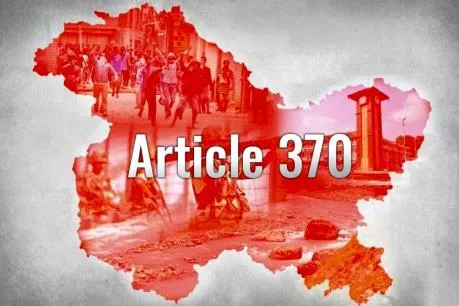
Pakistan is once again orchestrating a state‑sponsored disinformation campaign to mark the fifth anniversary of India’s August 5, 2019, abrogation of Articles 370 and 35A, widely observed in Pakistan as Youm‑e‑Istehsal (“Day of Exploitation”).
Internal government communications obtained by media outlets reveal that Islamabad has mobilised its ministries and diplomatic missions globally to propagate anti‑India messaging. The campaign is built on recycled falsehoods, staged events, manipulated visuals and coordinated online amplification, designed less for humanitarian advocacy and more for geopolitical signalling.
Internal circular directs global actions
According to a report by News18, an internal circular dated August 1, 2025, issued by Pakistan’s Ministry of Kashmir Affairs & Gilgit‑Baltistan, instructs all diplomatic missions to observe the anniversary under the banner of “Youm‑e‑Istehsal” IMSX (formerly Twitter).
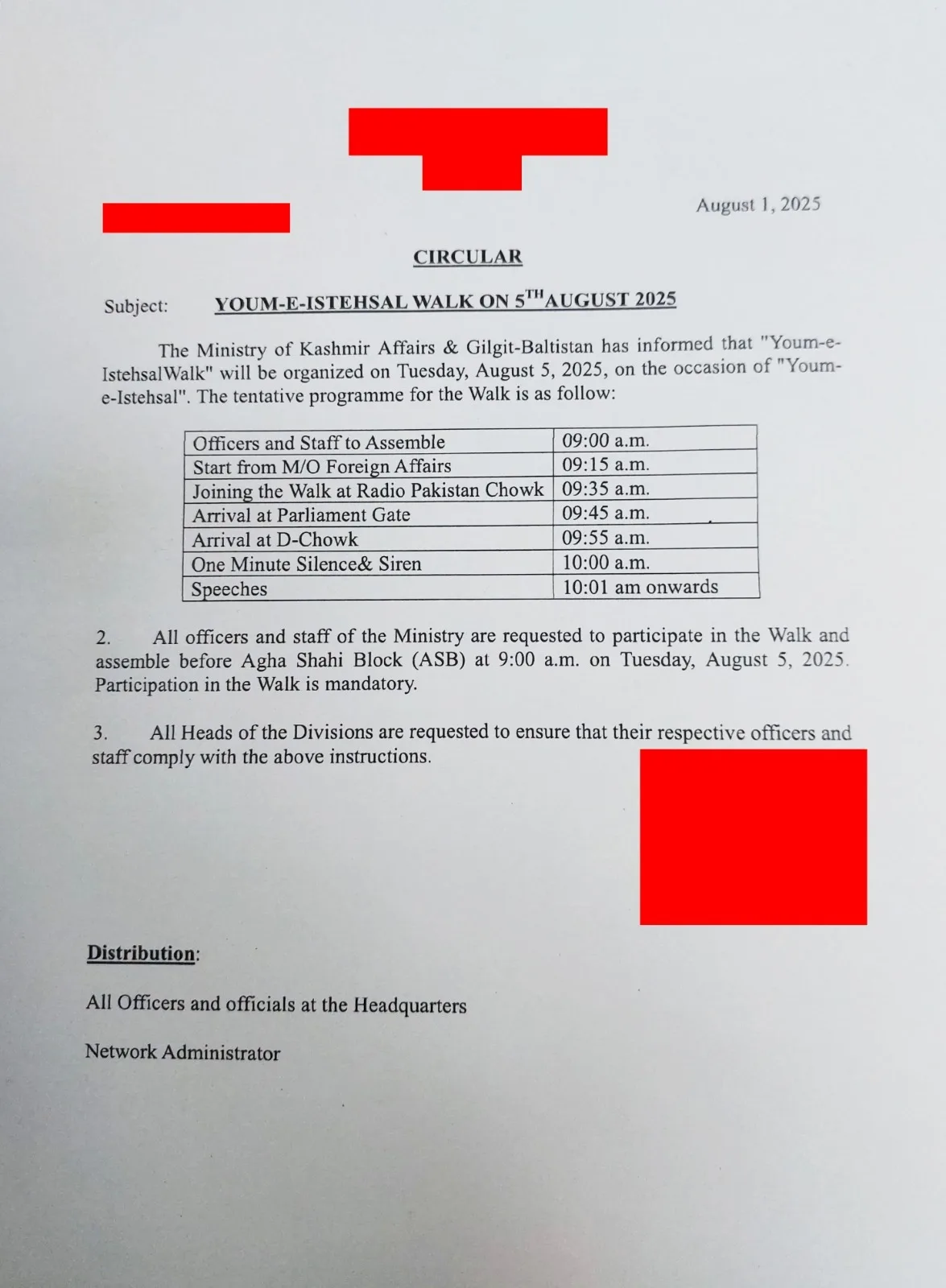
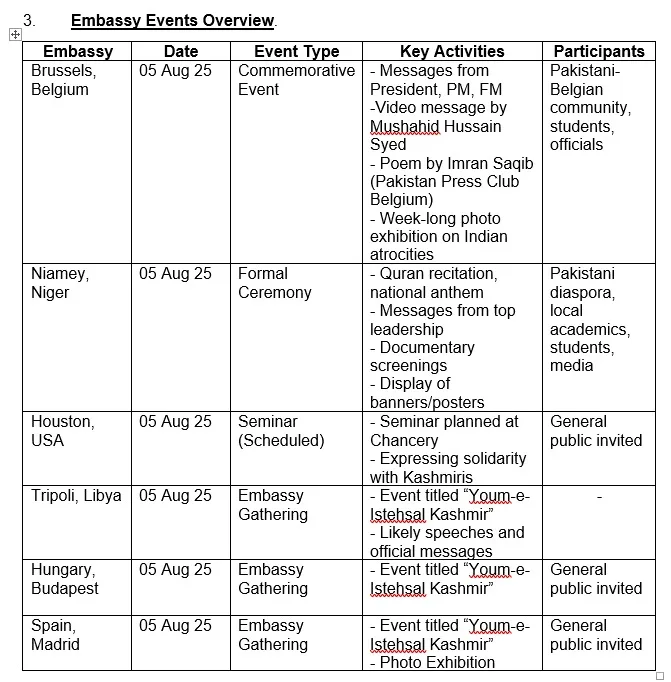
The directive names missions in Islamabad, Brussels, Niamey, Houston, Tripoli, Budapest, and Madrid as venues for orchestrated events, ranging from walkathons and seminars to media briefings and simulated protests.
A rehearsed annual playbook
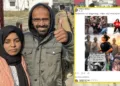
This year’s observance follows an established playbook: public demonstrations, multilateral media outreach, production of music videos or documentaries, hashtags, and the enlistment of separatist sympathisers. Pakistan routinely engages figures such as Mushaal Mullick, the wife of Kashmiri separatist leader Yasin Malik, to amplify narratives through sympathetic interviews and video messages.
Multiple embassies are set to carry out coordinated events to project the Kashmir issue internationally. Domestically, the government arranges marches, press conferences, and content drops tied to #Youm_E_Istehsal and #KashmiriLivesMatter to portray India as repressive and dismissive of Kashmiri aspirations.
Hashtags, bots & stale visuals
Digital amplification is central to the campaign. Pakistan deploys networks of social media bots and coordinated accounts to saturate platforms like X (formerly Twitter), Facebook, and Instagram with the Youm‑e‑Istehsal narrative. Research shows these networks repeatedly upload stale or unrelated images and videos, misattributing scenes from global conflict zones as incidents from Kashmir.
Fact-checkers have flagged numerous posts shared through these campaigns as either miscontextualized footage, sometimes years old, or entirely fabricated. Much of the material traces back to open‑source visuals from other conflicts, non‑Kashmir protests, or generic crowd scenes falsely CD labelled as happenings in the Valley.
Narrative vs. facts
Pakistan’s messaging claims widespread human rights violations, demographic engineering and suppression in Kashmir. However, independent observers and fact‑check organisations consistently find these narratives lack credible evidence. Instead, they rely on emotionally charged rhetoric and recycled incidents, often embellished or taken out of context.
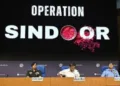
In fact, India’s Press Information Bureau and Fact‑Check Unit have repeatedly debunked waves of anti‑India content during earlier crises, such as the May 2025 escalation, code‑named Operation Sindoor, and blocked over 1,400 URLs tied to misinformation originating mostly from Pakistani sources under Section 69A of the IT Act.
Propaganda meets geopolitical strategy
Pakistan treats Youm‑e‑Istehsal as more than symbolic dissent, it is a tool of hybrid warfare. It as part of a broader digital propaganda ecosystem designed to shape international perception, influence policymakers, and pressurise India diplomatically. The annual anniversary is a recurring trigger to revive outdated narratives and perpetuate anti‑India sentiment abroad.
By mobilising diplomatic missions, tanks of disinformation, and separatist operatives, Islamabad aims to portray itself as the defender of Kashmiri rights, while deflecting critiques of its governance over Pakistan‑administered Kashmir and areas like Balochistan.
Independent oversight & fact‑check alerts
Independent fact‑checking agencies, including those operating from India and international platforms, have frequently debunked Pakistan’s misinformation campaigns. During the May conflict flare‑up, studies by organisations like CSOH and The London Story exposed recycled visual content, AI‑generated imagery, and unverifiable claims circulated extensively on X, Facebook, and YouTube, some with millions of views and minimal moderation intervention.
Public Information Bureau sources confirm that during Operation Sindoor, India’s fact‑check unit tracked, flagged and blocked disinformation narratives amplified via Pakistan‑linked accounts and media. Government briefings were held continuously to counter falsehoods, using satellite imagery, operational data, and verified testimonies to reaffirm transparency.
Media literacy & public vigilance
Misinformation thrives on emotional persuasion and repeated exposure. Studies from Pakistan indicate widespread reliance on platforms like WhatsApp, where rumour and fabricated content spread fast, especially among users with lower digital media literacy.
While there have been educational interventions directed at Pakistani journalists and communities, gaps persist in distinguishing disinformation from legitimate reporting. These vulnerabilities are exploited each August 5, when pre‑scripted content, graphics and hashtags are released with clockwork precision.
What to expect on August 5, 2025
Based on previous years and the internal circular obtained, this year’s observance is likely to include:
1) “Youm‑e‑Istehsal Walks” in Islamabad and other Pakistani cities, livestreamed and heavily promoted online.
2) Parallel demonstrations held at Pakistani embassies/consulates in Brussels, Niamey, Houston, Tripoli, Budapest, and Madrid, featuring press briefings, photo ops, and guest speakers.
3) Release of videos, songs or visuals produced by ISPR or government‑backed media wings, employing emotive narration to reinforce Pakistan’s stance of solidarity with Kashmiris.
4) Activation of hashtags #Youm_E_Istehsal and #KashmiriLivesMatter, pushing uniform messages via bot farms and coordinated influencer networks.
5) Engagement of separatist sympathisers and media personalities to conduct interviews and issue statements portraying India as forcibly occupying Jammu and Kashmir.
Impact and counter‑narratives
For international audiences and Indian policymakers, the disinformation campaign poses a dual challenge: distinguishing between genuine human rights concerns and manipulated propaganda and maintaining vigilance without legitimising distorted narratives.
India’s continuous rebuttals, through fact‑checks, blocking of harmful URLs, and official briefings aim to mitigate misinformation impact and preserve factual integrity.
Moreover, the May 2025 conflict highlighted how disinformation can escalate real-world tensions. People CSOH and other organisations warned that campaigns nearly fueled armed confrontation, prompting renewed emphasis on crisis communication and verified information-sharing channels.
What to do?
Media, social platforms, and civil society are urged to approach content linked to #Youm_E_Istehsal with skepticism:
- Verify visuals before sharing, in many cases images are either non-Kashmir or outdated.
- Question sources, whether claims originate from official Kashmiri institutions, international rights bodies, or unknown actors.
- Look out for repetition; campaigns rely on recycled visuals and hashtags to suggest scale.
- Flag misinformation, India’s Fact‑Check Unit encourages reporting dubious posts through official channels.
As Pakistan prepares its annual August 5 propaganda push, Youm‑e‑Istehsal is less a legitimate commemoration than an engineered attempt at international narrative control. With embassies, hashtags, botnets and provocateurs mobilised in unison, it remains a well-rehearsed exercise in disinformation, employing selective truths and recycled images to advance a geopolitical agenda. For informed viewers and policymakers, the day offers a reminder: not all calls for “solidarity” are rooted in credible concern. Many serve as strategic instruments in the evolving theatre of hybrid information warfare.