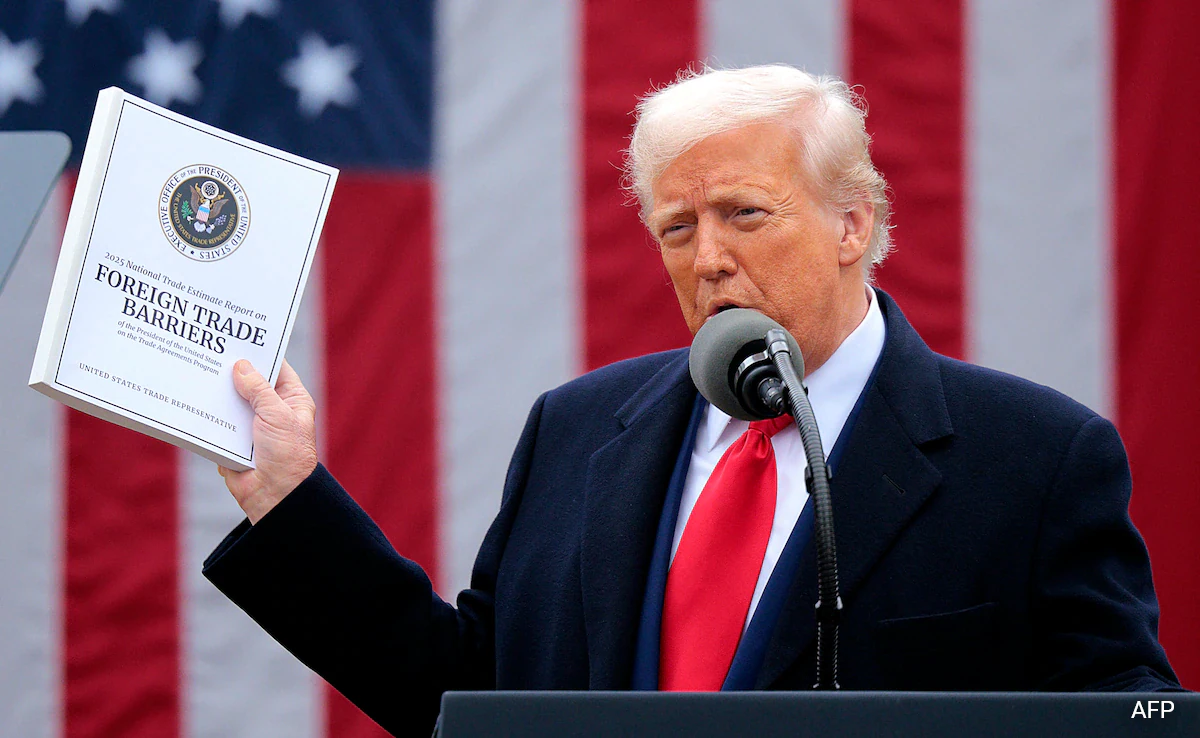
India has become the latest target in a new wave of American trade measures, as US President Donald Trump announced a 25 percent tariff on Indian imports, effective August 1. This move, accompanied by an additional unspecified penalty, has reignited global discourse on trade protectionism, economic diplomacy, and the use of tariffs as geopolitical tools.
Trump’s announcement and the fallout
In a statement posted on his platform, Truth Social, Trump declared, “India is our friend, but we have done relatively little business with them because their tariffs are far too high, and they have the most strenuous and obnoxious non-monetary trade barriers of any country.”
He also cited India’s military and energy ties with Russia, asserting, “They have always bought a vast majority of their military equipment from Russia and are Russia’s largest buyer of energy, along with China, at a time when everyone wants Russia to stop the killing in Ukraine.”
Trump concluded, “India will therefore be paying a tariff of 25 percent, plus a penalty for the above, starting on August 1.”
This development places India among several other countries, including China, Canada, Mexico, and the European Union, that have faced punitive tariffs during Trump’s previous and current terms
But what exactly are tariffs, and how do they work?
Tariffs are taxes imposed by a country on goods imported from other nations. They are usually paid by the importing businesses to the government when goods cross the national border. The primary types include:
- Ad Valorem Tariffs: Calculated as a percentage of the value of the imported goods.
- Specific Tariffs: A fixed fee per unit, regardless of the item’s value.
- Compound Tariffs: A combination of both ad valorem and specific tariffs.
For example, if a 10 percent ad valorem tariff is applied to a product worth Rs 1,000, the importer pays Rs 100 in tax.
How do they work?
When goods arrive at a port of entry, customs officials assess their classification, origin, and value. Based on this, the appropriate tariff is calculated and collected. In the U.S., this task is managed by Customs and Border Protection (CBP), while in India, it is handled by the Central Board of Indirect Taxes and Customs (CBIC).
The tariffs collected are added to the government’s general fund. Although importers technically pay these taxes, the costs are often passed along to consumers, driving up retail prices.
What are reciprocal tariffs and how are they used?
A reciprocal tariff occurs when one country imposes the same tariff rate that another country has placed on its goods. This principle aims to create fairness in international trade. Trump has previously advocated for such tariffs, arguing they are necessary to counter what he describes as one-sided trade relationships.
Governments employ tariffs for a range of strategic and economic reasons:
- To Protect Domestic Industries: Higher tariffs make foreign goods more expensive, giving local manufacturers a competitive edge.
- To Generate Revenue, especially in economies where other forms of taxation are limited, tariffs serve as a critical source of income.
- To Correct Trade Imbalances: By discouraging imports, tariffs can help reduce trade deficits.
- To Exert Political Pressure: As seen in Trump’s policy, tariffs are sometimes used to achieve geopolitical objectives.
Who actually pays the tarrifs?
Although importers pay the initial tax, they often transfer the burden to consumers and businesses. For example, the automobile industry can be significantly affected because car components frequently cross borders multiple times. Each crossing incurs costs, ultimately increasing the final price.
According to an estimate by JP Morgan, a 25% tariff could increase the cost of a new vehicle by as much as $4,000.
Tariffs can apply to raw materials and intermediate goods, which are essential to global supply chains. For instance, car parts may cross borders multiple times before final assembly, with each step subject to duties, thereby raising manufacturing costs.
Non-tariff barriers are regulatory measures that make importing goods more difficult or costly, without imposing direct taxes. These include:
- Import Quotas: Limits on the amount of certain goods that can be brought in.
- Licensing and Certification: Requirements that delay or restrict the entry of foreign goods.
- Safety Standards: Regulations demanding specific quality or safety criteria.
- Administrative Delays: Complex documentation and customs procedures.
Trump has accused India of using such barriers excessively, calling them “obnoxious” and one of the key reasons behind his tariff decision.
How are tariffs enforced in the U.S. and India?
In the United States, enforced by CBP at over 300 ports of entry. Importers must declare the value, classification, and origin of goods. Collected tariffs go to the U.S. Treasury. Misreporting may result in penalties, audits, or legal action.
In India, managed by CBIC under the Ministry of Finance. Importers must file a Bill of Entry and classify goods under the Harmonised System of Nomenclature (HSN). Duties include Basic Customs Duty (BCD), Countervailing Duty (CVD), Special Additional Duty (SAD), and Integrated GST. Systems like ICEGATE and Turant Customs enable digital documentation and faceless assessment.
What is Trump’s goal?
Trump argues that foreign nations have taken unfair advantage of the U.S. by maintaining low tariffs for their exports while imposing high tariffs on American products. He sees tariffs as a way to:
- Promote domestic manufacturing
- Reduce the U.S. trade deficit
- Protect American jobs
- Leverage negotiations with trade partners
In 2020, tariffs were instrumental in the renegotiation of the U.S.-Mexico-Canada Agreement (USMCA). Similarly, Trump has linked tariff relief with other geopolitical goals such as immigration control and drug trafficking reduction.
India hits back: Government prioritises national interests
The Indian government has firmly reaffirmed its commitment to safeguarding national interest, with a clear emphasis on protecting farmers, entrepreneurs, and Micro, Small, and Medium Enterprises (MSMEs).
Issuing a formal statement shortly after the tariff announcement, the Centre confirmed it had “taken note” of Trump’s declaration and is closely evaluating its implications. However, it made clear that India remains committed to pursuing a fair, balanced, and mutually beneficial trade relationship with the United States, a conversation that has been ongoing for several months through bilateral dialogue.
“The government attaches great importance to protecting and promoting the welfare of farmers, entrepreneurs and MSMEs,” the official statement read, underlining that local welfare will remain central to India’s international trade policies.
What comes next?
Despite the tough rhetoric, Trump has hinted at the possibility of negotiation with India. He stated, “We are talking to them now. It doesn’t matter too much whether we have a deal or we charge them a certain tariff. But you will know at the end of this week.”
He also cited India’s membership in BRICS, a group he labels “anti-U.S.” and “an attack on the dollar” as part of the rationale behind the new tariffs.
The global economic implications of Trump’s 25% tariff on Indian goods could be significant. Key sectors like pharmaceuticals, textiles, IT hardware, and auto parts are likely to be affected.
India has responded cautiously, with the government stating it will take “all necessary steps in the national interest.”
As the August 1 deadline approaches, the world will be watching closely. The outcome could redefine trade relations between the U.S. and India and set the tone for future global trade negotiations in an increasingly multipolar world.