On July 21, 2025, the Bombay High Court acquitted all 12 individuals previously convicted in the 2006 Mumbai train blasts case, overturning the 2015 verdict of a special Maharashtra Control of Organised Crime Act (MCOCA) Court. The 2006 attacks, which targeted Mumbai’s suburban railway network, resulted in 187 deaths and 829 injuries.
The High Court, presided over by Justices Anil Kilor and Shyam Chandak, ruled that the prosecution failed to provide credible evidence, heavily criticising the reliance on questionable confessional statements and the lack of corroborative material. This report provides a detailed examination of the events, the investigation, the trial, the appeals, and the High Court’s rationale for the acquittal, drawing from court documents and related sources.
The 2006 local blast
The 2006 Mumbai train blasts, occurring on July 11, 2006, were a series of seven coordinated explosions that struck Mumbai’s Western Railway line during peak evening hours. The attacks, executed within a span of four minutes, targeted first-class compartments of suburban trains, killing 187 people and injuring 829 others. In 2015, a special MCOCA Court convicted 12 individuals, sentencing five to death and seven to life imprisonment, for their alleged roles in the attacks.
The prosecution’s case rested on confessional statements, forensic evidence, and witness testimonies, alleging a conspiracy involving the banned Students Islamic Movement of India (SIMI) and Pakistan-based Lashkar-e-Taiba (LeT).
What the Bombay HC say?
On July 21, 2025, the Bombay High Court overturned these convictions, acquitting all 12 accused: Kamruddin S Ansari, Ehtesham K Siddiqui, Faisal M Shaikh, Zeeshan M Siddiqui, Sohail S Shaikh, Asif A Khan, Mohammad Sajid Ansari, Majid S Shafi, Muzammil S Shaikh, Tanvir R Ansari, Navin A Khan, and Sharif A Khan.
The court’s decision was based on the prosecution’s failure to meet the legal threshold of proof beyond a reasonable doubt, particularly questioning the reliability of confessional statements and the absence of conclusive forensic and corroborative evidence. This report aims to provide a comprehensive analysis of the 2006 Mumbai train blasts, the investigation, the trial proceedings, the appeals, and the High Court’s judgment, offering a clear timeline and critical insights into the judicial process.
The deadly attacks
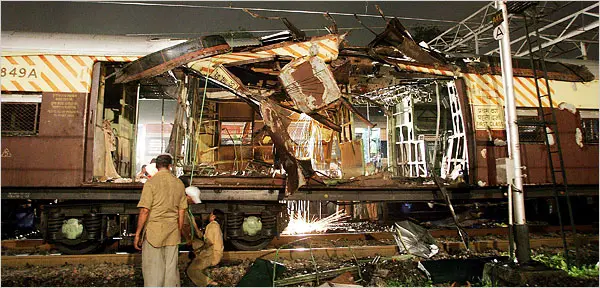
On July 11, 2006, between 6:24 PM and 6:28 PM, seven powerful explosions rocked Mumbai’s suburban railway network, specifically targeting first-class compartments of local trains on the Western Railway line.
The blasts occurred at or near the stations of Matunga Road, Mahim, Bandra, Khar, Jogeshwari, Borivali, and Mira Road, affecting trains bound for Churchgate and Virar. The timing, during peak evening hours, ensured maximum casualties, as thousands of commuters were travelling.
According to court documents, the bombs were placed in pressure cookers concealed within black Rexine bags and positioned on overhead luggage racks. The explosives, a combination of Research Department Explosive (RDX) and ammonium nitrate, were enhanced with ball bearings to maximise damage. Timer devices synchronised the blasts, indicating meticulous planning.
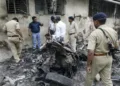
The explosions caused widespread devastation, destroying train compartments and scattering bodies across platforms and tracks. Official records report 187 fatalities and 829 injuries of varying severity.
The scale and precision of the attacks suggested a larger conspiracy, prompting swift action from authorities. First Information Reports (FIRs) were registered at multiple Railway Police Stations, including Borivali, Bandra, Mahim, Khar, Matunga Road, and Jogeshwari, under various sections of the Indian Penal Code (IPC), Indian Railways Act, Explosive Substances Act, and Prevention of Damage to Public Property Act.
What the ATS found?
The Maharashtra Anti-Terrorism Squad (ATS) assumed control of the investigation on July 12, 2006, consolidating the FIRs into a single case under the ATS Kalachowki Unit, Mumbai, to probe a coordinated conspiracy.
The ATS’s investigation focused on uncovering the conspiracy behind the attacks. The agency invoked the Maharashtra Control of Organised Crime Act (MCOCA) on September 30, 2006, following sanction from the competent authority. Additional laws, including the Unlawful Activities (Prevention) Act (UAPA) and the Prevention of Damage to Public Property Act, were applied on January 11, 2007. The ATS conducted forensic examinations of blast sites, recovered explosive residues, and analysed post-blast materials, confirming the use of RDX and ammonium nitrate. The investigation led to the arrest of 13 individuals, primarily from Maharashtra and neighbouring states, with several others reported absconding. The ATS alleged that the accused were members of SIMI, with purported links to LeT operatives in Pakistan.
The prosecution’s case hinged on multiple points: confessional statements recorded under Section 18 of MCOCA, which alleged that the accused underwent training in Pakistan-occupied Kashmir (PoK), conducted reconnaissance of train stations, and assembled bombs in Mumbai; forensic evidence, including the recovery of pressure cookers, timers, SIM cards, and explosive materials allegedly linked to the accused; witness testimonies from eyewitnesses, medical officers, forensic experts, and ATS officers; and circumstantial evidence, such as travel records, alleged procurement of materials, and logistical coordination.
The ATS claimed the conspiracy was orchestrated in Pakistan, with local operatives providing logistical support in Mumbai. A consolidated chargesheet was filed on November 30, 2006, forming the basis for the trial.
The trial commenced in the Special MCOCA Court following the filing of the chargesheet. Charges were framed against 13 accused under multiple laws, including various IPC sections for murder, attempt to murder, conspiracy, and damage; MCOCA for organised crime; UAPA for terrorist activities; and additional charges under the Explosive Substances Act, Railways Act, and Passport Act.
The trial spanned nearly a decade, concluding on September 11, 2015. The court examined 192 prosecution witnesses. Key evidence included confessional statements admitted under MCOCA despite retractions; forensic reports on blast residues and recovered items; material evidence from seizure panchanamas; and witness testimonies supporting the narrative of a cross-border conspiracy.
The prosecution argued that the accused underwent training in PoK, assembled bombs in a rented room in Govandi, Mumbai, and planted them on trains. The court accepted this narrative, concluding that the blasts were a deliberate act of terrorism aimed at causing mass casualties and undermining national sovereignty.
On September 11, 2015, the Special MCOCA Court convicted 12 of the 13 accused. Five, Kamruddin S Ansari, Ehtesham K Siddiqui, Faisal M Shaikh, Zeeshan M Siddiqui, and Sohail S Shaikh, were sentenced to death, while the remaining seven were given life imprisonment. Abdul Wahid Shaikh was acquitted due to insufficient admissible evidence. The court described the attacks as a meticulously planned operation, holding the accused directly responsible.
Accused challenged evidence
Following the 2015 verdict, the convicted individuals filed appeals in the Bombay High Court, challenging the reliability of the evidence and the procedural fairness of the trial. The appeals process spanned another decade, culminating in the High Court’s judgment on July 21, 2025.
The Division Bench, comprising Justices Anil Kilor and Shyam Chandak, conducted a thorough re-examination of the trial court record, including witness testimonies, forensic reports, confessional statements, and procedural compliance. The court acquitted all 12 accused, citing the prosecution’s failure to prove guilt beyond reasonable doubt.
Key observations include
Unreliable Confessional Statements: The court found that confessions recorded under Section 18 of MCOCA lacked authenticity and voluntariness. It noted an unusual pattern of identical content across multiple confessions, suggesting parts were “copied.” Confessions alone, especially made in police custody, were deemed insufficient without corroboration, which was absent.
Inadequate Forensic Evidence: Though the prosecution cited the recovery of pressure cookers, timers, and SIM cards, the court found no conclusive link between these items and the blasts. Many were recovered from common areas, weakening their evidentiary value.
Lack of Call Data Records (CDRs): The court highlighted the prosecution’s failure to produce or preserve CDRs, which could have established the accused’s movements. The ATS claimed phones were not registered in the accused’s names. However, the defence’s request for CDRs was initially denied, and by the time it was allowed, the data retention period had expired. The court called this a grave violation of the right to a fair trial.
Unreliable Witness Testimonies: Many prosecution witnesses were declared hostile. For instance, PW-59, Alam Gulam Qureshi, claimed Faisal M Shaikh admitted to being a jihadist trained by LeT in Pakistan, but reported this months after Shaikh’s arrest. The court deemed him “wholly unreliable.”
Insufficient Evidence of International Linkage: The prosecution alleged PoK training but failed to link it to the blasts. Travel abroad alone did not constitute proof of involvement.
Circumstantial Evidence: The court held that while circumstantial evidence can lead to conviction, it must form a strong, unbroken chain of events pointing to guilt. In this case, the chain was incomplete.
The Bombay High Court did not dispute the occurrence or severity of the 2006 blasts but held that the prosecution failed to meet the legal threshold for conviction.
Acquittal, the court emphasised, did not imply the absence of a crime, but the absence of evidence linking the accused to it. Consequently, all 12 were acquitted and released.
While the acquittal brings relief to the accused, it has reignited concerns about accountability in one of Mumbai’s deadliest terrorist attacks. The 2006 Mumbai train blasts were a tragic chapter in the city’s history, claiming 187 lives and injuring hundreds.
If all 12 accused have been acquitted, then the haunting question remains, who actually carried out the 2006 Mumbai train blasts? With 187 innocent lives lost and over 800 injured, the absence of accountability casts a grim shadow over the justice system.
Nearly two decades have passed, yet the families of the victims continue to wait for closure, their grief compounded by a legal process that has ultimately failed to identify and punish the real perpetrators. The acquittal of all accused raises serious concerns about the direction of the investigation, the efficacy of the prosecution, and the future of the case itself.
Will the authorities reopen the probe, or will this become yet another unresolved chapter in India’s long struggle against terrorism? The court may have upheld the principle of “innocent until proven guilty,” but for the victims’ families, justice still remains painfully out of reach.