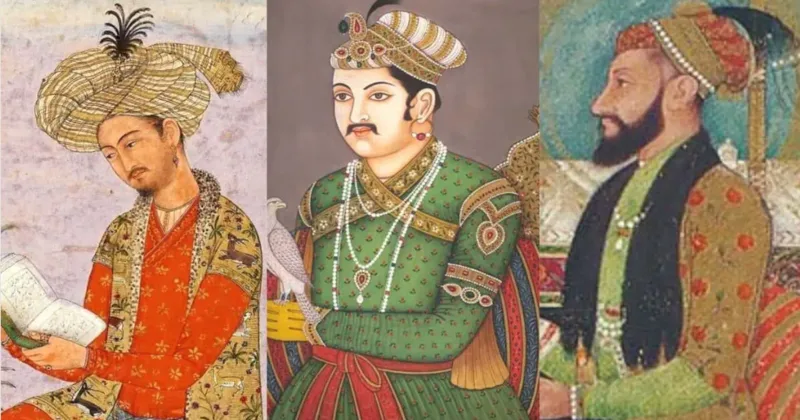
In a much-anticipated historiographical about-turn, the NCERT has steadfastly recalibrated its pedagogical bearing, steering in the direction of a more nuanced and historically appropriate representation of India’s past, primarily with respect to the controversial regimes of Mughal emperors Akbar and Aurangzeb. This has enabled NCERT to break free from the larger civilizationalist narrative of sanitization that had earlier held sway, and push for a historiographical recalibration embedded in archival truth and epistemic rigor.
This venture of historiographical science fiction, which has elicited both plaudits and polemics, is a noble stride toward historical adulthood an admirable combination of pedagogical nerve and scholarly honesty. It is no exaggeration to say that for decades school textbooks were pickled in Nehruvian consensus that saw history not as a field of empirical excavation, but as a canvas for civilisational romanticism. The selective elision of unpleasant truths notably the gut-churning violence and sectarian savagery practiced by certain monarchs was a pedagogical legerdemain that deprived generations of Indians of a richly detailed and unsanitized encounter with their own past. And these recent revisions, which include mentions of Akbar’s political brutalities and Aurangzeb’s fondness for temple desecration, fix that historical myopia.
First, let’s consider the case of Jalal-ud-din Muhammad Akbar until very recently the poster-boy of syncretic statesmanship and imperial largesse. Though it is true that Akbar’s Sulh-i-Kul (universal tolerance) policy and support for arts and interfaith dialogue made him a sui generis figure in medieval India, it would be historiographical malfeasance to gloss over his more unsavory policies. Akbar was, however, a conqueror before he was a conciliator. His brutal destruction of the Rajput rebels (including the notorious slaughter of 30,000 soldiers in captivity in Chittorgarh in 1568) is a blot that can’t be excised from historical memory with florid euphemism. His territorial appetite was not only militarist but civilizationally triumphal reducing local polities to vassals, enforcing alliances by arranged marriage, and leaving scorched earth. To cover up such thing in the name of harmony is no less than a historical lie with the ink of pedagogy.
More grotesquely airbrushed in former textbooks was that of Aurangzeb Alamgir, a ruler known for an exegetical rigorism and Islamic puritanism which made him the subject of terror and loathing. That he was a great ruler and general is not in doubt. But to toast his administrative skills, his genocidal temple-destruction sprees, his discriminatory jizya reimposition and his unbreaking stranglehold on non-Islamic practices, well, that’s not even half one save half a half. Now with the belated addition of his iconoclastic campaigns, including the demolition of the Kashi Vishwanath and Somnath temples, pedagogical justice is finally done to a story that has long been held hostage by politically whitewashed historiography.
The claim that certain truths can cause sectarian tension not only is infantilizing but it is also a patronizing attitude toward the intellectual development of students. There is no higher value in education than truth. Protecting young minds from the kaleidoscopic complexity of their past does them no favours; it only spawns a generation allergic to nuance and unaccustomed to wrestling with contradiction. The telling of these truths is not an exponentiation of collective indictment, but rather an acknowledgment of historical knowledge and a victory of democratic pedagogy.
And, on a not unrelated note, I think one of the interesting features in global historiography today is that more and more countries are rethinking their pasts, although I believe rethinking is too undiscriminating a word, that more of the records and background of their present are getting attention with a critical perspective. Postcolonial societies, in particular, are risking toppling the statues of selective memory and replacing them with the narratives that register the cacophonous truths of history.
The American reappraisal of Confederate symbols, the British argument about Churchillian colonialism, the Truth and Reconciliation Commission in South Africa bear witness to the need for the rightness of facing up to unpalatable truths. NCERT’s changes are thus an overlong overdue yet bold attempt to bring India in line with the basic practices of honest historiography. It is also important to point out that this curricular course correction isn’t to just blanket vilify the Mughals, but rather to locate their contradictions. To disclose Akbar’s violence is not to refuse his genius; to criticize Aurangzeb’s orthodoxy is not to forget his infrastructural feats. Rather it is to free the characters from the binary of good versus evil and portray the characters for what they were which was less a cacophony of heroes and villains and more a fallible, multifaceted group that are every bit as brilliant as they are brutal. This kind of historiographical approach opens to critical thinking and intellectual honesty to very young students who are future citizens in a democratic society.
Opponents have criticized these moves and see them as driven by political considerations and as being part of a broader saffronization of education. Although we must always be wary of ideological capture, the credibility of the historical claims incorporated in the new curriculum are not political ploys, they are verifiable facts. Unlike the sustained revisionism with which the same primary sources and, specially, the Ain-i-Akbari, are subjected these days to, the sort of counter-revisionism reviewed here cannot be dismissed as a simple exercise in ideological somersaults. Instead, they represent a deliberate shift from post-colonial defensiveness towards historical authenticity. For in fact, the previous disinclination for a critical appraisal of Mughal excesses was usually a performative backlash against such British colonial historiography’s caricature of Indian Muslims as naturally tyrannical. In an effort to dismantle these Orientalist tropes, Indian historians forged counter-mythologies that only further mimicked the misrepresentationin reverse. What we are seeing now is a healthy move toward balance: a historiography that neither demonizes nor deifies, but instead delineates.
In addition it is a strong antidote to civilizational amnesia. In a region as plural and protean as India, acknowledging past injustices committed by either foreign conquerers or native monarchs is foundational to cultural reconciliation. Truth-telling is not inimical to national unity; it is a prerequisite for it. If Germany can educate its children about the Holocaust with no fear of tearing itself apart as a nation, then India too needs to give its citizens the kind of unsparing grounding in their historical reality that will make them free. Akbar’s ruthless behavior in the military and Aurangzeb’s religious oppression are also valuable aspects of the curriculum still for today’s kids. These criticque allow students to question the mutually reinforcing nature of power and ideology, question the morality of statecraft, and be sensitized to the distinction between diversity by policy and diversity by principle. It provides the populace with the intellectual scaffolding required to assess current politics without falling for either historical romanticism or ideology.
The recent changes in NCERT textbooks constitute a historiographical turning point, one that merits, not ridicule, but profound appreciation. They are not acts of erasure, but restoration; not a descent into parochialism, but a rise into pedagogical truthfulness. In choosing to cast a light upon historical shadows rather than merely luxuriate in its golden sepia, these authors of the curricular renaissance have done a service not just to the academy, but to the republic as well. Accordingly, a country that worships half-truths and hides discomfiting truths is not going to manufacture citizens who are skilled in democratic judgment. The urgency of NCERT’s and such other initiatives is thus not a curriculum-related one, but a civilisational one. For the carpers at the resurrection of Mughal cruelties in schoolbooks, there is only a paraphrase of another aphorism: the past is not dead; it’s not even past.” And it is a story, it deserves to be told at long last, in full.