“If we are to preserve unity in diversity, we must learn to value every language, every culture, as a thread in the fabric of our nation.”— Inspired by the ideals of Sardar Vallabhbhai Patel.
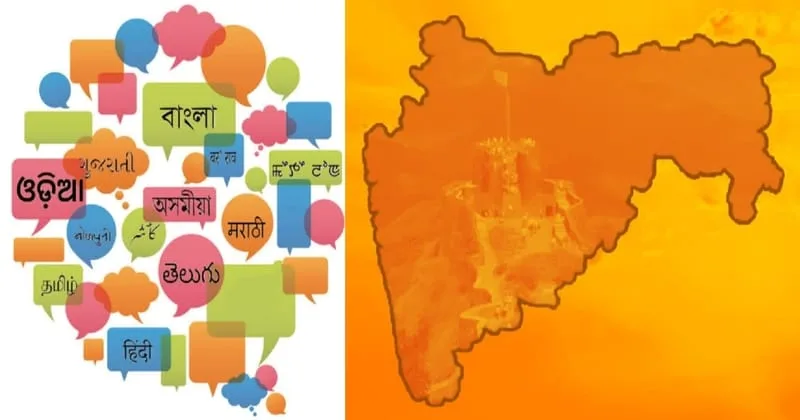
India has long stood as a beacon of pluralism, a civilisational state that houses a mosaic of languages, cultures, and traditions under the umbrella of a single nation. With 22 scheduled languages recognised by the Constitution and hundreds of dialects thriving in its many regions, India’s diversity is not just a fact—it is a defining strength. However, recent developments in Maharashtra, Punjab, Tamil Nadu, and other Indian states suggest a disturbing trend: the deliberate weaponisation of linguistic identity by regional political parties for electoral gains. This has resulted in heightened tensions, social fragmentation, and an undercurrent of hostility that threatens the very foundation of India’s unity.
The language row in Maharashtra is not an isolated incident but part of a growing pattern wherein regional parties, faced with diminishing relevance or seeking short-term political mileage, resort to linguistic chauvinism. The attempt to impose Marathi as a compulsory language in various spheres of public and private life—often with punitive overtones—mirrors similar language-first campaigns in other parts of the country. While the promotion of a regional language is, in itself, a valid cultural exercise, the coercive, exclusionary, and divisive manner in which it is often carried out betrays the true intent: not the preservation of heritage but the incitement of parochial sentiments.
In Maharashtra, recent controversies over the mandatory use of Marathi in municipal affairs, the imposition of language tests for government jobs, and the branding of Hindi-speaking citizens—often migrants from Uttar Pradesh and Bihar—as “outsiders,” are deeply disturbing. Such efforts aim to manufacture a false sense of cultural siege, portraying linguistic minorities as economic and social threats. This rhetoric gains further legitimacy when political leaders openly oppose Hindi signage or national schemes using non-Marathi languages, fuelling a dangerous us-versus-them narrative. When regional identity is wielded not as a celebration of culture but as a tool to isolate and exclude fellow Indians, it amounts to a betrayal of the very spirit of federalism.
Punjab, too, has witnessed the troubling rise of language-based identity politics, where certain factions have sought to reframe Punjabi not merely as a regional language, but as a boundary marker of political allegiance. However, what makes Punjab’s case unique is the large-scale migration of its youth to foreign lands—particularly to Canada, Australia etc. This mass exodus has created a socio-economic vacuum, especially in labour-intensive and service sectors. Into this space have stepped hardworking individuals from other Indian states, including Bihar, Uttar Pradesh, Uttarakhand, and Odisha. These migrants contribute not only to the state’s economy but also to the cultural fabric of modern Punjab. Yet, instead of embracing this mutually beneficial arrangement, some regional political voices have chosen to view this internal migration through a narrow, linguistic lens—demanding rigid adherence to Punjabi and expressing resentment against the growing use of Hindi and other Indian languages.
Such forced impositions are counterproductive and dangerous. Language is a medium of communication, not a tool for exclusion. Migrants who come to Punjab for work should be encouraged to learn Punjabi voluntarily as a gesture of respect and integration—not coerced through state policy or public pressure. Similarly, Punjabi citizens must acknowledge that internal migration is a natural part of any healthy federation, and that linguistic diversity is not a threat but a strength.
Tamil Nadu, perhaps more than any other state, has historically exhibited an intense attachment to its language, culture, and identity. While there is nothing inherently wrong with such pride, the manner in which the Dravidian political establishment has consistently framed Hindi as a threat has created an entrenched resistance to national linguistic integration. The anti-Hindi agitations of the 20th century were, to some extent, reactions to genuine fears of cultural domination. But in the present context, when there is no top-down imposition of Hindi by the Union Government, continued hostility towards the language appears politically motivated. It serves as a tool for certain parties to stoke fears and consolidate votes through a narrative of resistance.
This form of linguistic politics is not new. It dates back to the early decades after Independence, when demands for linguistic states were raised. However, the reorganisation of states on linguistic lines was intended to ensure better administration and respect for regional identities—not to create fiefdoms of regional pride that supersede national unity. Unfortunately, many regional parties today have distorted this legacy. By turning language into a political weapon, they draw artificial boundaries between communities, portraying linguistic minorities—often internal migrants—as threats. This divisive rhetoric not only undermines the constitutional values of equality and inclusivity but also endangers the harmonious coexistence of India’s multiple identities.
The real casualty in all of this is the Indian citizen—the ordinary person who moves from one state to another in search of education, employment, or a better life. These citizens, who are part of the larger Indian story, find themselves subjected to discrimination, bureaucratic hurdles, and social alienation simply because of the language they speak. This creates ghettos of linguistic homogeneity and discourages national integration. It disrupts the free flow of labour and talent and disturbs the delicate fabric of national unity that has taken decades to weave.
Even more disturbing is the parallel phenomenon of casteist slurs and mocking of food choices, often directed at migrants and linguistic minorities. In a country that rightfully takes pride in its culinary and social diversity, such minuscule thinking is both regressive and offensive. It reflects a deeply ingrained parochialism that must be confronted head-on. If India is to be a true federation of diverse people, then such narrow-mindedness must have no place in either public life or private behaviour. One must also consider the psychological cost of this divisive politics. Children in linguistic minority families often grow up with an inferiority complex, taught that their language is unwelcome or inferior. They are made to feel alien in their own country, their sense of national belonging eroded by constant reminders of their “outsider” status.
It is ironic that when the world admires India’s multicultural ethos, it is self-defeating to allow regional linguistic politics to define our national discourse. India’s strength lies in its ability to accommodate diversity without diluting unity. Our cultural tapestry is enriched by the confluence of languages—be it Sanskrit, Tamil, Hindi, Bengali, Punjabi, Marathi, Telugu, Urdu, or dozens of others. Rather than pitting them against each other, we must create a framework where they coexist, where mutual respect replaces competitive chauvinism. The central idea should be promotion, not imposition; celebration, not confrontation.
The Constitution of India guarantees every citizen the right to move freely throughout the territory of India and to reside and settle in any part of it. These rights become hollow if linguistic discrimination continues unchecked. The framers of the Constitution envisioned a country where language would be a bridge, not a barrier. It is the duty of both regional and national political actors to uphold this vision, not subvert it for electoral gain.
Moreover, it is imperative to acknowledge that the imposition of linguistic conformity in a country as diverse as India is both impractical and undesirable. No one language can or should be projected as the singular medium of national identity. Instead, we need to encourage multilingualism and mutual respect. A North Indian learning Tamil or Punjabi should be seen as a gesture of integration, and not as submission. Likewise, a South Indian speaking Hindi should not be seen as betraying their culture, but embracing a national link language that enhances communication and unity.
The recent language rows in Maharashtra, Punjab, Tamil Nadu, and elsewhere are more than just cultural debates—they are symptoms of a deeper malaise in our polity, where short-term political ambitions override the long-term national interest. India must resist the pull of parochialism and reaffirm its commitment to the ideals of unity in diversity. We are not a country bound by one language, one culture, or one tradition. We are a nation that thrives precisely because we are many things at once—different yet united. It is this pluralism that has kept India resilient through centuries of upheaval. We must remember that our motherland speaks in many tongues—but her message is always one.