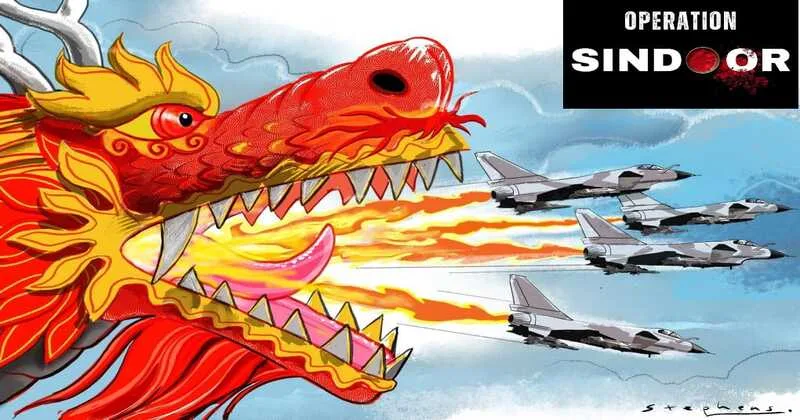
French military and intelligence officials have accused China of using its embassies to discredit Rafale fighter jets in the aftermath of India’s Operation Sindoor military action against Pak terror camps. According to a report by the Associated Press (AP), citing French intelligence sources, Chinese efforts aimed to tarnish the reputation and global sales of France’s premier fighter aircraft.
The report states that defence attaches in Chinese embassies abroad spearheaded the campaign, seeking to undermine confidence in the Rafale jets. They attempted to persuade countries that had already purchased the French-made fighter, particularly Indonesia, to reconsider further acquisitions, while urging other nations to opt for Chinese-made jets instead.
India had reportedly deployed Rafale jets to strike strategic targets in Pakistan. At the same time, reports indicated that Pakistan had used Chinese aircraft and weaponry in response. It was during this period, the report notes, that Chinese embassies allegedly engaged in disinformation campaigns to boost their own arms exports.
Pakistan had claimed to have downed five Indian aircraft during the conflict, including three Rafales. While the Indian military acknowledged the loss of some aircraft, it did not disclose exact figures.
Despite this, French officials expressed concern that Chinese propaganda, channelled through Pakistan’s narrative, was sowing doubt among countries that had procured Rafales. These disinformation efforts, they said, cast aspersions on the jet’s performance and reliability.
French researchers further revealed that China employed artificial images, AI-generated content, and even video game footage to disseminate false claims about the superiority of Chinese military technology. Over 1,000 newly created social media accounts were reportedly used to amplify these narratives during the Indo-Pakistani conflict.
French intelligence agencies said that Chinese embassy defence attaches echoed these online disinformation campaigns during direct meetings with defence and security officials in various countries. They repeated unfounded claims that India’s Rafales had underperformed and instead promoted Chinese-made weapons systems.
The attaches, according to French sources, targeted countries that had already placed orders for Rafales, as well as those that were seen as prospective buyers. French officials added that they had received reports and intelligence from several nations that had been approached by China, shedding light on Beijing’s attempts to influence global defence procurement decisions.
India’s military action not only exposed the deep-rooted terror hubs operating in Pakistan but also highlighted the vulnerabilities of the Chinese defence systems that Pakistan relied upon during its failed retaliation. In response, China resorted to a disinformation campaign against the Rafale jets, using Pakistan as a proxy and deploying its propaganda machinery to divert attention from its own defence shortcomings. By weaponising false narratives and manipulating global perceptions, China is proving to be not just a regional menace to its immediate neighbours but a disruptive force for countries far beyond its borders.