Israel-Iran tensions threaten oil as Strait of Hormuz risks disruption
June 10, 2026
  • Read Ecopy
  • Circulation
  • Advertise
  • Careers
  • About Us
  • Contact Us
Android AppiPhone AppArattai
Organiser
  • ‌
  • Bharat
    • Assam
    • Bihar
    • Chhattisgarh
    • Jharkhand
    • Maharashtra
    • View All States
  • World
    • Asia
    • Europe
    • North America
    • South America
    • Africa
    • Australia
  • Editorial
  • International
  • Opinion
  • RSS @ 100
  • More
    • Op Sindoor
    • Analysis
    • Sports
    • Defence
    • Politics
    • Business
    • Economy
    • Culture
    • Special Report
    • Sci & Tech
    • Entertainment
    • G20
    • Azadi Ka Amrit Mahotsav
    • Vocal4Local
    • Web Stories
    • Education
    • Employment
    • Books
    • Interviews
    • Travel
    • Law
    • Health
    • Obituary
  • Subscribe
    • Subscribe Print Edition
    • Subscribe Ecopy
    • Read Ecopy
  • ‌
  • Bharat
    • Assam
    • Bihar
    • Chhattisgarh
    • Jharkhand
    • Maharashtra
    • View All States
  • World
    • Asia
    • Europe
    • North America
    • South America
    • Africa
    • Australia
  • Editorial
  • International
  • Opinion
  • RSS @ 100
  • More
    • Op Sindoor
    • Analysis
    • Sports
    • Defence
    • Politics
    • Business
    • Economy
    • Culture
    • Special Report
    • Sci & Tech
    • Entertainment
    • G20
    • Azadi Ka Amrit Mahotsav
    • Vocal4Local
    • Web Stories
    • Education
    • Employment
    • Books
    • Interviews
    • Travel
    • Law
    • Health
    • Obituary
  • Subscribe
    • Subscribe Print Edition
    • Subscribe Ecopy
    • Read Ecopy
Organiser
  • Home
  • Bharat
  • World
  • Operation Sindoor
  • Editorial
  • Analysis
  • Opinion
  • Culture
  • Defence
  • International Edition
  • RSS @ 100
  • Magazine
  • Read Ecopy
Home World

Geopolitical Tensions and the Global Economy: The Iran-Israel conflict’s impact on oil

Tensions between Israel and Iran threaten global stability, with any disruption in the Strait of Hormuz risking a significant oil crisis. As oil prices climb, the world watches closely to see how this geopolitical flashpoint unfolds

WEBDESKWEBDESK
Jun 27, 2025, 10:30 pm IST
in World, West Asia, Asia, International Edition
Follow on Google News
Representative image

Representative image

FacebookTwitterWhatsAppTelegramEmail

The escalating tensions between Israel and Iran carry significant implications for the global economy, particularly for the oil market. A full-blown conflict between these two regional powers could trigger a cascade of economic disruptions.

Oil prices rose on June 24 as traders monitored potential supply disruptions. US oil futures climbed 4.28 per cent to settle at roughly $74.84 per barrel — the highest closing price since January. Brent crude, the global benchmark, rose 4.4 per cent to $76.45 per barrel. There have so far been no material disruptions to the global flow of oil. Yet if oil exports are disrupted, or if Iran tries to block the Strait of Hormuz, the global oil market could face an existential crisis. Global markets have remained relatively calm amid the escalating tensions between Iran and Israel. But that sentiment could quickly shift, according to experts, if the conflict affects the Strait of Hormuz.

A critical choke point in this geopolitical calculus is the Strait of Hormuz. This narrow waterway, situated between Iran and Oman, serves as the only sea passage from the Persian Gulf to the open ocean. It is an indispensable conduit for global oil supplies, with approximately 20 million barrels of oil and oil products transiting through it daily. This volume accounts for roughly 21 per cent of the world’s crude trade, underscoring the strait’s unparalleled importance to the global energy system. Any disruption to this vital artery would be akin to severing a major vein in the global economy, leading to immediate and severe repercussions for oil-importing nations.

While Iran’s geographical position grants it control over the narrowest point of the Strait of Hormuz, international conventions generally prohibit the impediment of foreign ship passage. However, historical precedents exist where Iran has caused disruptions in the strait, demonstrating its capacity and willingness to leverage this strategic advantage during periods of heightened tension.

The threat of closure, rather than an immediate plan, often serves as a potent tactical tool for Iran. A complete blockade, while seemingly a powerful move, would also significantly harm Iran’s own economy, as a substantial portion of its oil exports rely on this very waterway. Moreover, such a drastic measure could antagonise major trading partners like China, Iran’s largest oil customer, which would likely exert pressure for the strait to remain open.

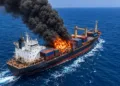
Since the fighting between Israel and Iran broke out, however, there haven’t been any major attacks on commercial shipping in the region. But shipowners are increasingly wary of using the waterway, with some ships having tightened security and others cancelling routes there. Electronic interference with commercial ship navigation systems has surged in recent days around the waterway and the wider Gulf. This interference is having an impact on vessels sailing through the region. As there appears to be no immediate end to the conflict, markets remain on edge. Any blockade of the waterway or disruptions to oil flows could trigger a sharp spike in crude prices and hit energy importers hard, particularly in Asia. Meanwhile, tanker rates for vessels carrying crude and refined oil products from the region have jumped in recent days.

It has been estimated that 82 per cent of crude and other fuel shipments that traversed the strait went to Asian consumers. China, India, Japan and South Korea were the top destinations, with these four countries together accounting for nearly 70 per cent of all crude oil and condensate flows that traversed the strait. These markets would likely be most affected by supply disruptions in the strait. If Iran takes action to close the strait, it could potentially draw military intervention from the United States.

The US Fifth Fleet, based in nearby Bahrain, is tasked with protecting commercial shipping in the area. Any move by Iran to disrupt oil flows through the waterway could also jeopardise Tehran’s ties with Gulf Arab states like Saudi Arabia and the United Arab Emirates with whom Iran has painstakingly improved relations within recent years.

Gulf Arab countries have so far criticised Israel for launching the strikes against Iran, but if Tehran’s actions obstruct their oil exports, they might be pressured to side against Iran. Gulf Arab nations like Saudi Arabia and the UAE have sought alternative routes to bypass the strait in recent years.

To avoid engulfing in these geopolitical issues, both the apex Gulf countries have set up infrastructure that allows them to transport some of their crude via other routes. Saudi Arabia, for instance, operates the East-West Crude Oil Pipeline with a capacity of five million barrels per day, while the UAE has a pipeline linking its onshore oil fields to the Fujairah export terminal on the Gulf of Oman.

Therefore, the escalating risk of conflict is speeding up de-globalisation, a trend where countries are increasingly prioritising “friend-shoring”, trading exclusively with like-minded nations. This involves establishing independent energy systems and intensifying trade nationalism. While seemingly a rational reaction to global instability, this shift could ultimately result in a poorer, less efficient, and more fragmented world. Unravelling of this crisis is proportionate to the fluctuations in the global oil prices. Thus, de-escalation must be high on the agenda to avoid any further disruptions.

 

Topics: Strait of HormuzOil marketsIran-Israel ConflictEnergy SecurityAsia Oil DependenceUS 5th FleetOil pricesglobal economy
ShareTweetSendShareSend
✮ Subscribe Organiser YouTube Channel. ✮
✮ Join Organiser's WhatsApp channel for Nationalist views beyond the news. ✮
Previous News

A Shifting Alliance: Why Russia leans on North Korea over Iran

Next News

Bangladesh: Hindu Mohajot protest against Yunus govt’s atrocities after Durga temple destroyed, murtis dumped

Related News

West Asia Conflict: Collective response to energy crisis

India-flagged vessel attacked near Strait of Hormuz; Seafarers send distress signal; All crew members rescued safely

How India keeps cooking gas cheaper than most nations

The LPG Reality Check: Why India still has the world’s cheapest cooking gas

Strait of Hormuz Crisis: Why India cannot afford to be a spectator

PM Modi’s 2025 Oman visit marked a major diplomatic breakthrough as India and Oman signed the landmark CEPA, strengthening New Delhi’s strategic, economic and energy footprint in a turbulent West Asian region

India-Oman CEPA Comes Into Force: A positive-sum partnership amid Gulf crisis and global economic turmoil

Outgoing Chief of the Naval Staff Dinesh K. Tripathi

Naval Chief underscores inseperable link between maritime & energy security; Assures safe passage of tankers via Hormuz

Load More

Latest News

PM Narendra Modi

‘The problem was Congress, not Hindus’: PM Modi’s blistering attack, lists India’s milestones in last 12 years

Leader of Opposition R. Ashoka files complaint with Karnataka governor over scam in awarding tender for waste management

Karnataka Garbage Scam: BJP alleges Rs 36,000-crore of scandal, seeks CBI probe; Files complaint to governor

Assam: Auto driver Monowar Hussain arrested for molesting, attempting to rape tribal woman passenger in Guwahati

The world recognises unprecedented growth in digital infrastructure during the 12 years of Modi's government

12 Years of Modi Government: How India built one of the world’s largest digital public infrastructure ecosystems

The image of alleged "Kolkotta Bayee" Jewel King living at Pathanamthitta

Keralam: WhatsApp status reveals illegal Bangladeshi who lived in Pathanamthitta for five years as ‘Kolkotta Bayee’

Following TMC’s defeat in 2026 West Bengal Assembly election, speculation grew that its MPs were moving towards the NDA under BJP pressure

Why TMC MPs are looking towards the NDA: Examining the electoral arithmetic behind the political shift

Father dies on the day of daughter's Nikah over dispute over Mehar amount in Uttarakhand

Uttarakhand: Bride’s father dies of heart attack amid pressure and dispute over mehar amount in nikah

India has been transformed by major advances in digital governance, financial inclusion, and global influence under Modi govt

India After 12 Years of Modi: A record, revolution and remaining challenges

Will CM Joseph Vijay preserve Tamil Nadu’s priceless temple heritage as artefacts decay in Egmore museum

Book Review | Zubeen Garg: 'The Voice That Bridged Worlds' by Prosenjit Nath

Book Review | Zubeen Garg: ‘The Voice That Bridged Worlds’ by Prosenjit Nath

Load More
  • Privacy
  • Terms
  • Cookie Policy
  • Refund and Cancellation
  • Delivery and Shipping

© Bharat Prakashan (Delhi) Limited.
Tech-enabled by Ananthapuri Technologies

  • Home
  • Search Organiser
  • Bharat
    • Assam
    • Bihar
    • Chhattisgarh
    • Jharkhand
    • Maharashtra
    • View All States
  • World
    • Asia
    • Africa
    • North America
    • South America
    • Europe
    • Australia
  • Editorial
  • Operation Sindoor
  • Opinion
  • Analysis
  • Defence
  • Culture
  • Sports
  • Business
  • RSS @ 100
  • Entertainment
  • More ..
    • Sci & Tech
    • Vocal4Local
    • Special Report
    • Education
    • Employment
    • Books
    • Interviews
    • Travel
    • Health
    • Politics
    • Law
    • Economy
    • Obituary
  • Subscribe Magazine
  • Read Ecopy
  • Advertise
  • Circulation
  • Careers
  • About Us
  • Contact Us
  • Policies & Terms
    • Privacy Policy
    • Cookie Policy
    • Refund and Cancellation
    • Terms of Use

© Bharat Prakashan (Delhi) Limited.
Tech-enabled by Ananthapuri Technologies