
PM Modi’s foreign policy is a hybrid of nationalist-driven geopolitics and pragmatic geoeconomics. India has followed a policy of “multi-alignment” rather than “non-alignment.” This suggests that India is willing to unite with allies, but only on specific issues. Many foreign policy analysts say India has always done this, but it is simply more open and forthright about how it conducts foreign policy today. The idea of protecting and maintaining India’s “strategic autonomy” is the top priority today that was missing earlier. PM Modi has numerous reasons to capitalize on achievements and accelerate India’s rise up the world power ladder. He has long stressed increasing India’s global position. Fast forward to the present day, and the same countries and leaders who once chastised PM Modi in Gujarat now recognize his critical role in managing complicated global issues. Bharatiya Janata Party (BJP) election campaign in 2014, the year he became prime minister, promised to develop “a strong, self-reliant, self-confident India, regaining its rightful place in the comity of nations.”
Balancing the equations
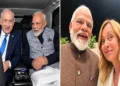
Through his India-first strategy, PM Modi has attempted to handle a number of competing interests in favour of India. For example, formerly difficult relationships with Saudi Arabia, Israel, the UAE, and Iran have gained fresh momentum. Prime Minister Modi’s alliance with West Asia for economic success exemplifies the concept that national interests come first. He has not only pushed for closer ties with the region’s major Muslim states, but also Israel. Prime Minister Modi has successfully engaged with and visited major countries that have not seen an Indian Prime Minister in decades. Canada and the UAE are instances of this. Connecting with the diaspora in countries throughout the world has been a priority for the government. Engagements with the diaspora have not only elevated the status of the Indian diaspora in countries, but also transformed them into a political force to be reckoned with. The most significant advance in India’s foreign policy was an agreement with China on patrolling arrangements along the Line of Actual Control (LAC).
The Modi government’s response to cross-border terrorism, illegal trade, and trafficking, as well as its forceful approach to national security, have affected India’s foreign policy calculation in South Asia. The 2016 surgical strikes, the 2019 Balakot airstrikes and Operation Sindoor demonstrated a more aggressive strategy to dealing with regional security problems. In 2015, the Modi government signed a Land Boundary Agreement (LBA) with Bangladesh to resolve a boundary issue that emerged during the 1947 partition. Under the policy toward the neighbors, PM Modi frequently visited Nepal and Bhutan and signed various developmental projects for regional stability and growth.
Focus on Bharatiya roots and culture
This government has attempted to strengthen soft power by promoting tradition and Indian culture. Convincing the United Nations to designate a “International Day of Yoga” or garnering global recognition for a “International Year of Millets,” a cereal crop with allegedly ancient origins in India, are two notable examples.
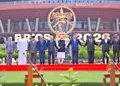
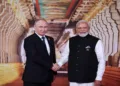
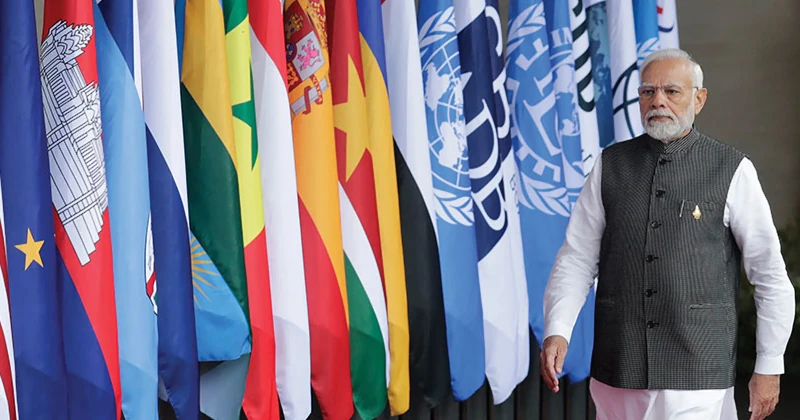
S Jaishankar, the External affairs Minister, praised PM Modi as a politician with “networking, standing, and respect.” He is not mistaken: most governments are eager to interact with Modi’s India. India hosted the G20 in 2023, and it mostly demonstrated this attitude. Modi’s vigorous popularization of foreign policy in Indian public debate marks a significant break from the past, when foreign policy events were virtually unknown outside the corridors and chancelleries of New Delhi. PM Modi has managed to keep both his adversaries and supporters on edge by pursuing a pragmatic foreign policy with the ‘India first’ mantra at its center. The international order has undergone several structural modifications. India has emerged as the focal point of modern world political discourse. The world, which has become accustomed to a pontificating India in the past, now hears an Indian voice on the global arena capable of articulating a narrative of a responsible stakeholder who, despite being deeply rooted in its own culture, is unwilling to shirk global obligations.
Strengthening Economy
There is a clear indication of the close relationship between Indian foreign policy and home economic concerns. Despite domestic difficulties, foreign direct investment has not slowed. This integration may also be seen in projects such as Make in India, Digital India, Mudra loan, Start ups etc. Another important area in which India’s foreign policy may shift is Free Trade Agreements (FTAs). FTAs help India increase exports, attract FDI, and secure vital technologies. Ongoing free trade agreements with Japan, Singapore, and Australia, among others, have proven to be extremely advantageous. Some free trade agreements, including those with the United Kingdom, the European Union, and ASEAN, will be examined. Countries are increasingly interested in trade agreements that address the digital economy and e-commerce. Economic diplomacy and the development of strong trade partnerships have been fundamental to India’s foreign policy under PM Modi. The Modi government has highlighted projects like ‘Make in India’ and ‘Atmanirbhar Bharat’ to boost local manufacturing and exports. The signing of significant trade agreements, such as the Regional Comprehensive Economic Partnership (RCEP) and the India-EU Free Trade Agreement discussions, demonstrates India’s efforts to strengthen economic ties with its worldwide partners. Furthermore, Prime Minister Modi’s emphasis on bilateral trade ties with countries such as the United States, Japan, and Australia has resulted in increased economic cooperation and investment flows. The strategic convergence of economic interests has boosted India’s economic resilience while simultaneously increasing its diplomatic leverage on the global stage.
The India-US collaboration has previously worked effectively without India explicitly adopting an alliance. Every other year, both countries’ international influence grows. Under Modi 3.0, this relationship will enter new phases. India has big economic and trade objectives, and an economic agreement with many developed and developing nations will help it achieve them. To attain independence in the semiconductor business, India must prioritize increased investment and technology.
The Indian Navy’s rescue of a commercial ship hijacked by pirates off Somalia’s coast demonstrates that Indian policymakers are now willing to shoulder operational responsibilities in order to ensure the safety of commercial shipping and freedom of navigation in strategically important waterways.
For starters, PM Modi’s election to a third term, followed by an invitation to the G-7 summit as an observer, demonstrates his transformation from a once-ignored “provincial leader” and “regional politician” to a statesman with a dominating presence on the international arena. The dimensions of the PM Modi government’s nation-first policy have lifted the standard on the international stage, with every Indian appreciated and Indian culture recognized as developing individuals and society for a brighter future. If we as a community align ourselves with foreign policy, we can benefit ourselves and the world socially, economically, and culturally. Focusing on creating businesses, industries, and strengthening the service sector makes it easier to establish big footprints in the global market thanks to the Modi government’s best foreign policy decisions.