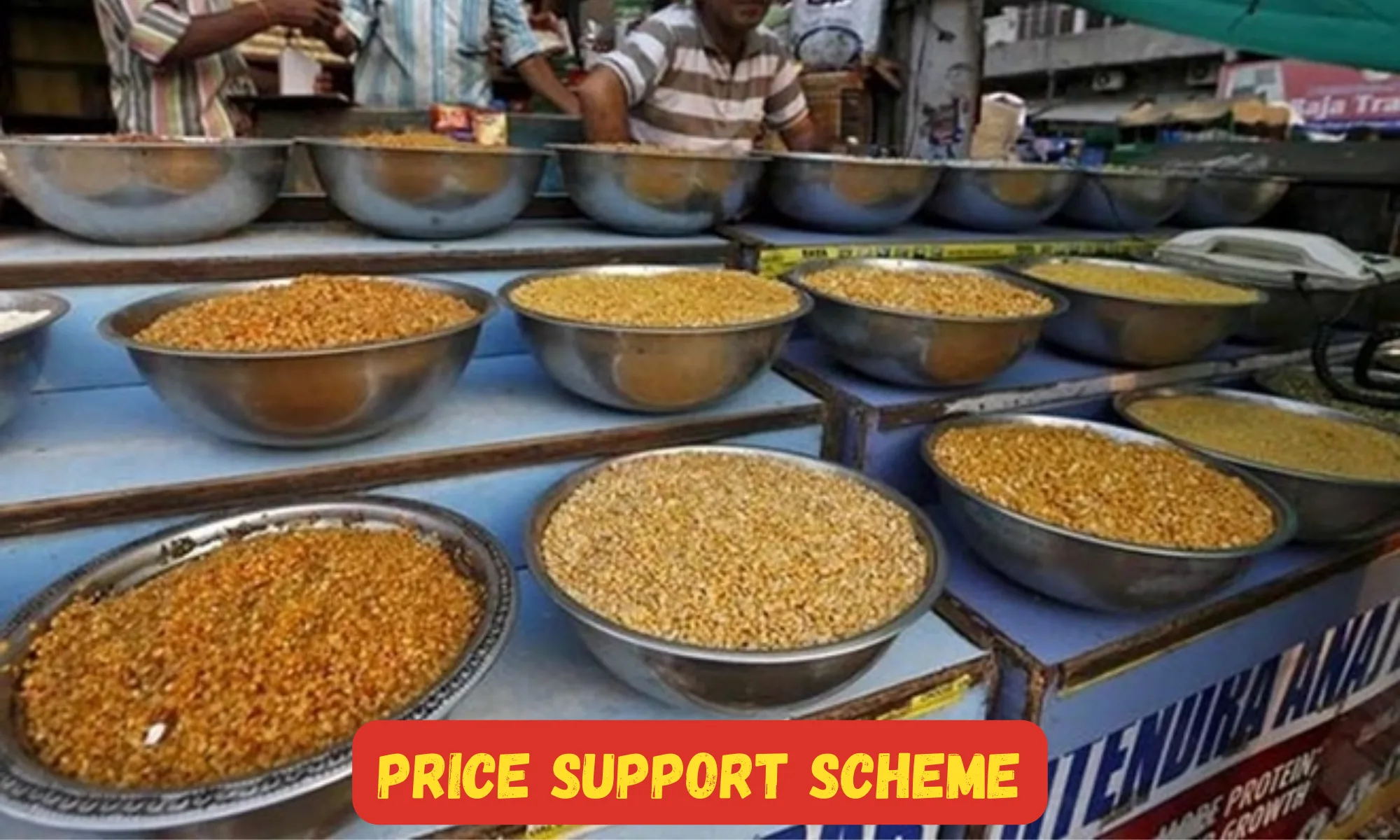
In a bid to reaffirm its commitment to farmer welfare as well as being self-sufficient in the presentment of pulses, the Government of India has sanctioned large procurement purchases under the Price Support Scheme (PSS) for the 2025-26 summer crops season. The scheme involves the purchase of 54,166 metric tonnes (MT) of Moong from the states of Haryana, Uttar Pradesh, and Gujarat, and 50,750 MT of Groundnut from Uttar Pradesh. Red gram (Tur) procurement has also been extended for 15 days in Andhra Pradesh for the Kharif 2024–25 season, as instructed by Union Agriculture Minister Shivraj Singh Chouhan.
These decisions, taken on June 12, constitute a strategic move by the Centre to balance agricultural markets, ensure minimum support prices (MSP), and encourage indigenous pulse cultivation against rising import reliance.
The recent procurement clearance comes under the wider umbrella scheme of Pradhan Mantri Annadata Aay Sanrakshan Abhiyan (PM-AASHA) initiated in 2018.
Impactful Strategy for Summer Crops
As the world’s largest producer and consumer of pulses is India, maintaining stable domestic supply is of vital importance to national food security and farmer livelihoods. The purchase of summer Moong and Groundnut under PSS is a part of the overall effort to contain market volatility and shield farmers from distress sales when prices fall below MSP levels. It is particularly important for the farmers of Haryana, Uttar Pradesh, and Gujarat who are among the prominent contributors to India’s pulse basket.
The Centre’s move is also in line with its overall goal of pulse diversification and self-sufficiency in pulses. By accepting production directly from farmers at MSP, the government is trying to incentivise more farmers to grow pulses during the lean summer season, which was historically regarded as less profitable and risky because of unpredictable market conditions.
Pulse Procurement at 100 Percent of State Production
Outside the summer season, the government also increased the procurement policy for large pulses like Arhar (Tur), Urad, and Masur for the Kharif and Rabi seasons. Procurement of these pulses will be permitted up to 100 percent of the corresponding state’s total production of the procurement year 2024–25 under the new policy. This is a historic move in terms of scope, which is an unmatched commitment to stock buffer creation and market stabilisation.
Central Nodal Agencies such as the National Agricultural Cooperative Marketing Federation of India (NAFED) and the National Cooperative Consumers’ Federation (NCCF) will execute the scheme. This is a follow-up on a similar undertaking in the Union Budget 2025 to extend this aggressive procurement policy for another four years, to 2028–29.
Extension in Andhra Pradesh
As a response to feedback from ground stakeholders, the red gram purchase in Andhra Pradesh has been extended by 15 days, until June 26. This extension offers timely relief to farmers who could not sell their produce within the earlier window period due to logistical or climatic reasons. The move is an example of the government’s flexible and responsive policy towards farmer welfare.
Red gram, commonly consumed in Indian homes and a necessary part of protein consumption for millions, has experienced fluctuating prices in recent years because of weather disruptions and uncertain demand. By stretching procurement periods, the government makes sure that late-harvest farmers are not denied MSP cover benefits.
PM-AASHA: A Consolidated Framework for Farmer Protection
The recent procurement clearance comes under the wider umbrella scheme of Pradhan Mantri Annadata Aay Sanrakshan Abhiyan (PM-AASHA) initiated in 2018. The integrated scheme has three components:
1. Price Support Scheme (PSS),
2. Price Deficiency Payment Scheme (PDPS), and
3. Market Intervention Scheme (MIS) supplemented with the further support of the Price Stabilisation Fund (PSF).
In the PSS, procurement is done when market prices drop below MSP, safeguarding farmers during peak harvesting seasons. This is particularly crucial for pulses and oilseeds, which are more susceptible to price collapse than staple cereals such as wheat and rice.
The PDPS supplements PSS by paying farmers the difference between MSP and market price where actual procurement is not feasible. In the meantime, MIS is triggered for perishables and horticultural crops where price stabilization is needed immediately to avoid farmer losses.
Cumulatively, these programmes form a financial safety net that motivates farmers to bring about varied cropping patterns, thus breaking the over-reliance on water-scarce cereals and shifting towards a balanced, sustainable agro system.
Aatmnirbharta to meet local demand
India currently imports huge quantities of pulses to match its domestic requirements, mainly from Myanmar, Canada, and Mozambique. In the previous financial year, the import bill for pulses surpassed ₹20,000 crore, which presents a challenge to trade equilibrium as well as food security.
By providing guaranteed procurement at MSP, the government wants to curb this import dependence and become self-sufficient in pulses in four years’ time. Agricultural economists say this can also improve soil health since pulse crops improve the soil through nitrogen fixation, making them well suited for sustainable farming systems.
Additionally, growing domestic pulse production assists in nutritional security by encouraging protein-rich consumption among poorer segments of society, where pulses are the main source of protein.
Ground level execution by NAFED and NCCF
The onus of executing PSS falls on the central agencies like NAFED and NCCF, which have procurement centers located in different mandis and agricultural areas. They coordinate with the state governments, farmers’ cooperatives, and Panchayati Raj institutions to provide timely and transparent procurement.
With the aid of digital technologies, such as real-time procurement monitoring and payment to farmers via Direct Benefit Transfer (DBT), the PSS implementation has become quicker and more transparent. The payment delays have substantially decreased in recent years, with farmers receiving their payments within days of procurement.
Policy Backed by Purpose
The recent government approvals of Moong, Groundnut, and Red gram purchases are a strong indication of the government’s resolve to enhance farmer welfare through price guarantee and market facilitation. As climate change, global price fluctuations, and input prices swing in their favour, India’s marginal and small farmers require the sort of stability and incentive that PSS guarantees.
As the government doubles down on procurement, credit support, and diversification of crops, it’s giving a loud and clear message: the Indian farmer is at the heart of India’s economic resilience and food sovereignty. By establishing a culture of reasonable pricing and widening pulse coverage under PM-AASHA, the government is not only insulating farmers’ incomes but also bet on a more sustainable, secure, and self-reliant future of agriculture.