Pakistan's own dossier exposes India’s devastating deep strikes
June 6, 2026
  • Read Ecopy
  • Circulation
  • Advertise
  • Careers
  • About Us
  • Contact Us
Android AppiPhone AppArattai
Organiser
  • ‌
  • Bharat
    • Assam
    • Bihar
    • Chhattisgarh
    • Jharkhand
    • Maharashtra
    • View All States
  • World
    • Asia
    • Europe
    • North America
    • South America
    • Africa
    • Australia
  • Editorial
  • International
  • Opinion
  • RSS @ 100
  • More
    • Op Sindoor
    • Analysis
    • Sports
    • Defence
    • Politics
    • Business
    • Economy
    • Culture
    • Special Report
    • Sci & Tech
    • Entertainment
    • G20
    • Azadi Ka Amrit Mahotsav
    • Vocal4Local
    • Web Stories
    • Education
    • Employment
    • Books
    • Interviews
    • Travel
    • Law
    • Health
    • Obituary
  • Subscribe
    • Subscribe Print Edition
    • Subscribe Ecopy
    • Read Ecopy
  • ‌
  • Bharat
    • Assam
    • Bihar
    • Chhattisgarh
    • Jharkhand
    • Maharashtra
    • View All States
  • World
    • Asia
    • Europe
    • North America
    • South America
    • Africa
    • Australia
  • Editorial
  • International
  • Opinion
  • RSS @ 100
  • More
    • Op Sindoor
    • Analysis
    • Sports
    • Defence
    • Politics
    • Business
    • Economy
    • Culture
    • Special Report
    • Sci & Tech
    • Entertainment
    • G20
    • Azadi Ka Amrit Mahotsav
    • Vocal4Local
    • Web Stories
    • Education
    • Employment
    • Books
    • Interviews
    • Travel
    • Law
    • Health
    • Obituary
  • Subscribe
    • Subscribe Print Edition
    • Subscribe Ecopy
    • Read Ecopy
Organiser
  • Home
  • Bharat
  • World
  • Operation Sindoor
  • Editorial
  • Analysis
  • Opinion
  • Culture
  • Defence
  • International Edition
  • RSS @ 100
  • Magazine
  • Read Ecopy
Home Bharat

Pakistan’s own dossier exposes India’s devastating deep strikes during Operation Sindoor: 8 secret targets hit by IAF

Pakistan’s leaked Operation Bunyan un Marsoos dossier reveals that India’s Operation Sindoor struck eight additional deep targets, including Peshawar, Jhang, and Hyderabad, beyond official disclosures. The scale of these precision strikes forced Pakistan into a ceasefire, exposing Islamabad’s false claims of minimal damage

WEBDESKWEBDESK
Jun 4, 2025, 07:00 am IST
in Bharat, World
Follow on Google News
FacebookTwitterWhatsAppTelegramEmail

Post-Operation Sindoor, a classified Pakistani military dossier has exposed a game-changing truth: India struck deeper and harder than it publicly admitted during Operation Sindoor, launched in retaliation for the brutal April 22 terror attack on Hindu pilgrims in Pahalgam.

Titled Operation Bunyan un Marsoos, the leaked Pakistani dossier—accessed by multiple international outlets and confirmed by Organiser through defence sources—maps at least eight previously unacknowledged Indian airstrikes in core Pakistani urban and military zones, some as far west as Peshawar and south as Hyderabad, Sindh. The document shatters Islamabad’s posturing and points to the psychological, military, and strategic masterstroke of India’s evolving counterterror doctrine.

Map in Pakistan dossier

While the Indian Air Force (IAF) and Director General of Military Operations (DGMO) acknowledged precision airstrikes on nine terrorist targets in Pakistan and Pakistan-occupied Kashmir (PoK), the Bunyan un Marsoos dossier reveals additional strike locations, including:

  • Peshawar (Khyber Pakhtunkhwa)
  • Hyderabad (Sindh)
  • Gujrat (Punjab)
  • Jhang (Punjab)
  • Bhawalnagar (Punjab)
  • Gujranwala (Punjab)Attock (Punjab)
  • Chor (Sindh)

These cities are not typically associated with terror training camps. However, intelligence reports suggest many of these zones house dual-use military-civilian facilities, clandestine radicalization centers, and sleeper-cell coordination hubs. The strategic targeting of these locations suggests a doctrine shift: not just a punitive counterterror strike, but a full-spectrum decapitation strike on Pakistan’s state-backed jihadist infrastructure.

From Pahalgam Massacre to Precision Retaliation

The chain of events began on April 22, when 26 Hindu pilgrims were mercilessly killed in a terrorist attack in Pahalgam, Jammu and Kashmir. The Indian government accused Jaish-e-Mohammed (JeM) and Lashkar-e-Taiba (LeT)—two UN-designated terror groups with deep state links in Pakistan.

India’s response was swift and layered. Operation Sindoor, launched on May 7, was a carefully calibrated aerial and missile strike campaign, with India initially confirming hits on:

  • Jaish-e-Mohammed HQ, Bahawalpur
  • Lashkar-e-Taiba Training Centre, Muridke
  • Muzaffarabad, Kotli, Rawalakot, Bhimber, Chakswari, Neelum Valley, Jhelum, Chakwal

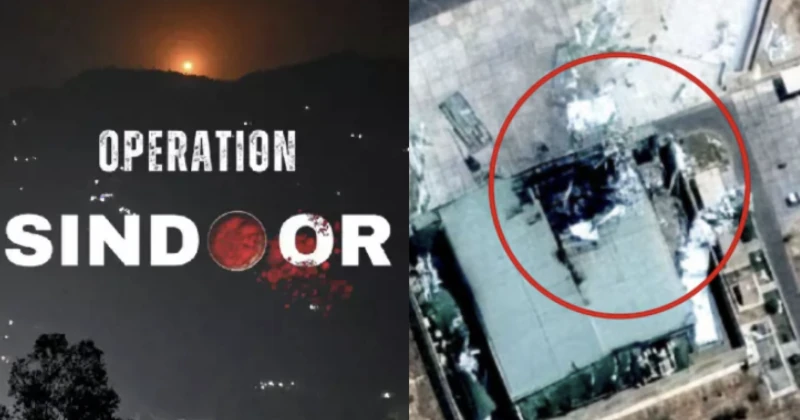
These locations were verified through satellite imagery by Maxar Technologies, which showed widespread destruction and crater patterns consistent with high-yield munitions. But now, Pakistan’s own leak expands the theatre of destruction dramatically.

Why India stayed silent on the full list

Sources in the Indian defence establishment indicate that India’s deliberate decision not to reveal all strike locations was part of a psychological operation (psy-ops) to force Pakistan into a credibility crisis.

“If we say we hit only nine, and they scream about others, they’re admitting we got deeper than they claimed. If they stay silent, their public and military lose trust in their own defence narrative,” said a retired senior Air Marshal, requesting anonymity. India thus turned Pakistan’s information warfare doctrine on its head—by weaponising silence.

Soon after the three-day escalation, Pakistan sent backchannel messages requesting a mutual ceasefire. While Islamabad initially boasted about tit-for-tat retaliation, including drone and missile strikes on Indian civilian zones, the sheer damage from Indian counterstrikes left the Pakistani military in disarray.

India had bombed eleven key air bases deep inside Pakistan:

  • Nur Khan (Rawalpindi)
  • Rafiqui (Shorkot)
  • Murid (Jehlum)
  • Sukkur (Sindh)
  • Sialkot (Punjab)
  • Pasrur (Punjab)
  • Chunian (Punjab)
  • Sargodha (Punjab)
  • Skardu (PoK)
  • Bholari (Sindh)
  • Jacobabad (Sindh)

This list alone makes it clear: India was not just retaliating—it was escalating with surgical precision, targeting command-and-control hubs, radar installations, and air defence nodes. Pakistan’s desperate plea for a ceasefire was not borne out of diplomacy, but military exhaustion and strategic paralysis.

From Surgical Strikes to Full-Spectrum Deterrence

Operation Sindoor marks a doctrinal shift in Indian military policy, moving beyond symbolic “surgical strikes” to multi-domain warfare, combining:

  • Precision air power
  • Satellite intelligence (ISRO-DRDO real-time targeting data)
  • Deep cyber penetration
  • Media and narrative control

The unacknowledged targets disclosed in the Pakistani dossier demonstrate India’s capacity to hit hardened targets in urban zones far beyond the traditional conflict arc of PoK or border areas.

New Delhi’s strategic messaging is now clear: any future terror attack on Indian civilians will be treated as an act of war. India reserves the right to retaliate across air, land, and cyber domains. And crucially, India may or may not disclose it.

This information warfare model appears to have blindsided Islamabad, which is accustomed to quick propaganda wins and fast denials. The fact that Pakistan’s own intelligence community leaked the full extent of Indian strikes shows a fracture within its military-intelligence narrative control.

Topics: India-PakistanIAFPakistani militaryOperation SindoorOperation BunyanISRO-DRDO
ShareTweetSendShareSend
✮ Subscribe Organiser YouTube Channel. ✮
✮ Join Organiser's WhatsApp channel for Nationalist views beyond the news. ✮
Previous News

Bihar: CM Nitish Kumar led cabinet approves 47 key proposals  

Next News

Buddha relics return to Bharat after Vietnam pilgrimage: 17.8 million devotees pay homage

Related News

Saurav Das, Chief Spokesperson of CJP

Exposing CJP’s Saurav Das: Inside his controversial commentary on Article 370, Umar Khalid & nationalism

As Khalistani networks seek new platforms beyond the West, Azerbaijan has emerged as a key venue for conferences, campaigns and narratives aligned with the Pakistan-Turkey axis against India.

Khalistan’s New Grazing Ground: Azerbaijan emerges as new hub for Turkey-Pakistan backed anti-India networks

Bangladesh’s reported JF-17 push has triggered fresh scrutiny after India’s Ops Sindoor exposed the vulnerabilities of Pakistani-Chinese defence systems and precision strike capabilities

Shadows of Operation Sindoor: Questions loom over Bangladesh’s JF-17 ambitions amid Sino-Pakistani tech vulnerabilities

Rajnath Singh releases book on Operation Sindoor; The publication chronicles unparalleled valour of the Indian soldiers

Operation Safed Sagar; a turning point in the history of military aviation

Operation Safed Sagar: How Kargil war shaped India’s precision strike doctrine

1 Year of Operation Sindoor | India’s Strategic Shift: A step in the right direction

Load More

Latest News

Sanatan Dharma teaches that spiritual growth is built through simple daily actions performed with sincerity, discipline, and devotion

Living Sanatan Dharma Every Day: 24 traditional habits that inspire a meaningful and virtuous life    

Indian Army to train 5 lakh personnel in drone operations; Scripting strategic edge in next gen battlefield tactics

CJP Under the Lens: From Delhi Riots defenders to foreign media endorsements

Cockroach Janata Party Under Scrutiny: From Naxal sympathizers to foreign media endorsements- Know real face of CJP

A representative image

The Middle Class Story: How governance reforms are powering India’s next growth engine

From Armenia and Greece to Cyprus, India's defence diplomacy is creating new pressure points for Turkey

How India’s Mediterranean Push and Indo-Pacific rise unsettle Turkey’s strategic calculus

Gadag seer enters 33-day Shiva Yoga Samadhi for world peace and welfare

Karnataka: Sri Rachoteshwara Shivacharya Mahaswamiji begins rare 33-day sealed Shiva Yoga Samadhi in Gadag

Indian surgeon conducts world’s longest cardiac telesurgery; Made-in-India robot echoes indigenous medical prowess

Pro-Khalistan slogans raised, Bhindranwale posters displayed at Sri Akal Takht Sahib

Operation Blue Star Anniversary: Pro-Khalistan slogans raised, Bhindranwale posters displayed at Sri Akal Takht Sahib

Inspired by Bhagwan Shiva's teachings, this ancient breathing practice helps calm the mind and reduce stress

Ancient Yogic Breathing for Modern Stress: How the Shiva method cultivates peace & self-awareness

The Vedic age saw remarkable women sages, known as Rishikas, who composed hymns and shaped India's spiritual and philosophical heritage

Rishikas of Vedic Age: How Gargi, Maitreyi & other women shaped ancient India’s spiritual and philosophical tradition

Load More
  • Privacy
  • Terms
  • Cookie Policy
  • Refund and Cancellation
  • Delivery and Shipping

© Bharat Prakashan (Delhi) Limited.
Tech-enabled by Ananthapuri Technologies

  • Home
  • Search Organiser
  • Bharat
    • Assam
    • Bihar
    • Chhattisgarh
    • Jharkhand
    • Maharashtra
    • View All States
  • World
    • Asia
    • Africa
    • North America
    • South America
    • Europe
    • Australia
  • Editorial
  • Operation Sindoor
  • Opinion
  • Analysis
  • Defence
  • Culture
  • Sports
  • Business
  • RSS @ 100
  • Entertainment
  • More ..
    • Sci & Tech
    • Vocal4Local
    • Special Report
    • Education
    • Employment
    • Books
    • Interviews
    • Travel
    • Health
    • Politics
    • Law
    • Economy
    • Obituary
  • Subscribe Magazine
  • Read Ecopy
  • Advertise
  • Circulation
  • Careers
  • About Us
  • Contact Us
  • Policies & Terms
    • Privacy Policy
    • Cookie Policy
    • Refund and Cancellation
    • Terms of Use

© Bharat Prakashan (Delhi) Limited.
Tech-enabled by Ananthapuri Technologies