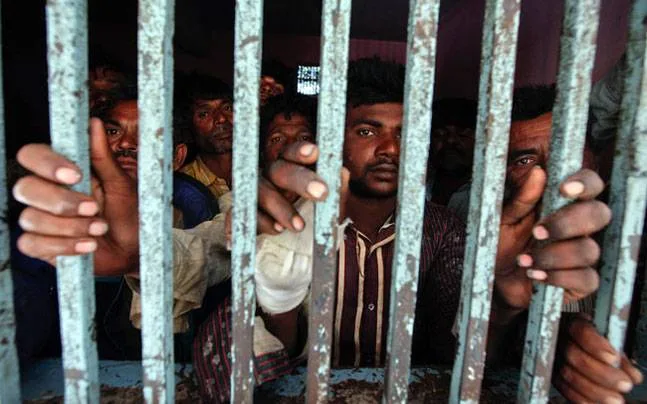
A Bench comprising Chief Justice Ashwani Kumar Mishra and Justice Rohit Kapoor on Tuesday expressed concern over the condition of inmates in Punjab’s prisons.
According to data placed before the court, 15,768 out of 35,449 prisoners in Punjab are currently drug-dependent, accounting for roughly 44% of the state’s prison population.
The court observed that the figures indicate a serious problem within the state’s prison system, particularly because the number of inmates dependent on drugs appears to have increased substantially after their admission to prison.
Nearly 83 percent enrolled in treatment after entering jail
The data presented before the court showed that around 83 percent of drug-dependent inmates were enrolled in Out Patient Opioid Assisted Treatment (OOAT) clinics only after entering prison.
The court contrasted this figure with the number of prisoners who were already receiving opioid-assisted treatment when they entered jail.
According to the affidavit submitted by the Punjab government, 2,540 inmates were already registered with OOAT clinics and receiving medication before their admission to prison.
The number has since risen to 15,768 drug-dependent inmates.
The court said the figures suggest that while some prisoners enter jail with existing drug dependence, a much larger number are subsequently identified as drug-dependent after entering prison.
Court questions Punjab government’s de-addiction system
The Bench directed the Punjab government to explain how it is implementing scientific de-addiction programmes prescribed under prison rules.
The court’s observations raise an important question for the AAP-led Punjab government: if prisoners are becoming drug-dependent at such a significantly higher rate after entering jail, what measures are being taken inside prisons to prevent drug use and provide timely treatment?
The state government is now expected to explain the availability and implementation of de-addiction services, including whether prisoners have adequate access to treatment and whether existing programmes are producing measurable results.
The court also stressed that authorities cannot treat the issue merely as an administrative matter.
‘Serious issue’ linked to prisoners’ right to life
The High Court said the issue was serious and reminded the authorities of their constitutional obligations towards inmates.
It observed that prison authorities must remain conscious of their responsibility to help affected prisoners recover and secure their right to life under Article 21 of the Constitution.
The court also sought details from the Centre regarding its methodology for helping drug-dependent inmates return to normal life.
Haryana reports lower numbers after treatment
The court also considered data from neighbouring Haryana.
According to the figures presented, 1,295 out of 27,111 prisoners in Haryana were drug-dependent. The number had reportedly declined from 1,829 after treatment was provided.
The comparison could put additional focus on Punjab’s prison de-addiction system and the effectiveness of treatment being offered to inmates.
Questions for Punjab government
The High Court’s observations put the spotlight on several issues concerning prison administration in Punjab:
Why has the number of drug-dependent inmates increased from 2,540 at the time of admission to 15,768 currently?
Are drugs reaching prisoners despite security and surveillance measures inside jails?
How effective are the existing OOAT and de-addiction programmes?
Are all drug-dependent inmates being identified and provided timely treatment?
What steps has the Punjab government taken to prevent prisoners from developing drug dependence after entering jail?