Despite 1948 and 1975 crises, RSS emerged stronger: Dr Bhagwat
August 4, 2026
  • Read Ecopy
  • Circulation
  • Advertise
  • Careers
  • About Us
  • Contact Us
Android AppiPhone AppArattai
Organiser
  • ‌
  • Bharat
    • Assam
    • Bihar
    • Chhattisgarh
    • Jharkhand
    • Maharashtra
    • View All States
  • World
    • Asia
    • Europe
    • North America
    • South America
    • Africa
    • Australia
  • Editorial
  • International
  • Opinion
  • RSS @ 100
  • More
    • Op Sindoor
    • Analysis
    • Sports
    • Defence
    • Politics
    • Business
    • Economy
    • Culture
    • Special Report
    • Sci & Tech
    • Entertainment
    • G20
    • Azadi Ka Amrit Mahotsav
    • Vocal4Local
    • Web Stories
    • Education
    • Employment
    • Books
    • Interviews
    • Travel
    • Law
    • Health
    • Obituary
  • Subscribe
    • Subscribe Print Edition
    • Subscribe Ecopy
    • Read Ecopy
  • ‌
  • Bharat
    • Assam
    • Bihar
    • Chhattisgarh
    • Jharkhand
    • Maharashtra
    • View All States
  • World
    • Asia
    • Europe
    • North America
    • South America
    • Africa
    • Australia
  • Editorial
  • International
  • Opinion
  • RSS @ 100
  • More
    • Op Sindoor
    • Analysis
    • Sports
    • Defence
    • Politics
    • Business
    • Economy
    • Culture
    • Special Report
    • Sci & Tech
    • Entertainment
    • G20
    • Azadi Ka Amrit Mahotsav
    • Vocal4Local
    • Web Stories
    • Education
    • Employment
    • Books
    • Interviews
    • Travel
    • Law
    • Health
    • Obituary
  • Subscribe
    • Subscribe Print Edition
    • Subscribe Ecopy
    • Read Ecopy
Organiser
  • Home
  • Bharat
  • World
  • Operation Sindoor
  • Editorial
  • Analysis
  • Opinion
  • Culture
  • Defence
  • International Edition
  • RSS @ 100
  • Magazine
  • Read Ecopy
Home Bharat

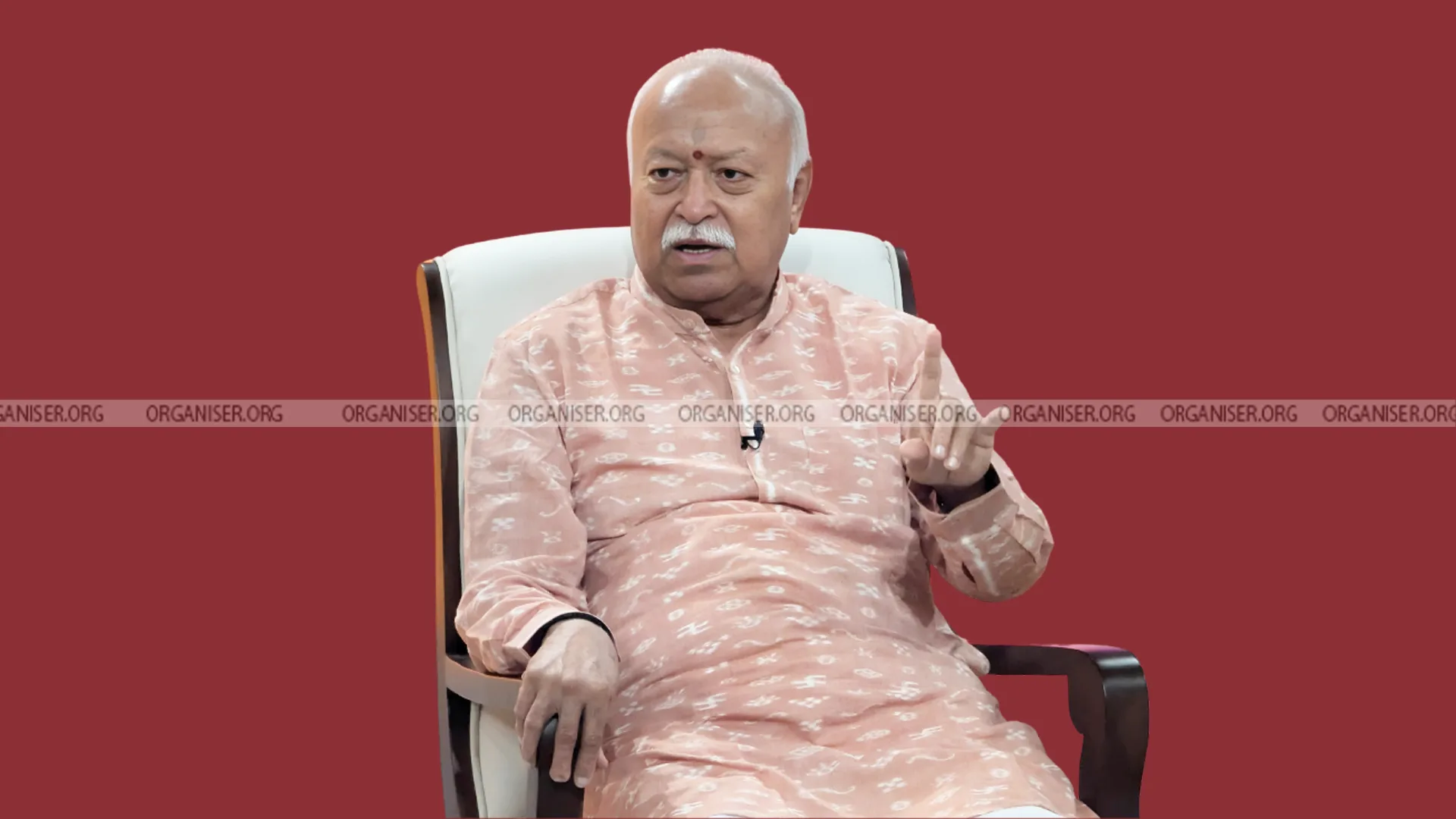
Interview | Despite 1948 and 1975 crises, RSS emerged stronger and unblemished: Dr Mohan Bhagwat

In an exclusive interview to Organiser, RSS Sarsanghchalak Dr Mohan Bhagwat extensively talked about many issues including the learnings from the crises of 1948 and 1975

WEBDESKWEBDESK
May 25, 2025, 01:00 pm IST
in Bharat, Delhi, RSS News, RSS in News
Follow on Google News
FacebookTwitterWhatsAppTelegramEmail

In the interview with Organiser, Dr Mohan Bhagwat noted that, “Both the 1948 and 1975 bans on the RSS were politically motivated. Even those who imposed them knew very well that the Sangh was not harmful — on the contrary, it was beneficial. However, due to the natural ideological competition in such a large society, to maintain their political dominance, the people in the Government chose to suppress the Sangh”, he said.

“During the first ban, everything was at odds; the Sangh was bound to perish. Despite all adversities, the RSS emerged unblemished and, within 15–20 years, not only regained its ground but grew even stronger. Swayamsevaks, who only use to run shakhas and did not have any major societal role, started participating in various social activities, ensuring their decisive roles”, he further said.

Read More: Indian Balochs wish for a supportive India on sovereign Balochistan

These challenges, he added, helped the Sangh in realising its own potential, encouraging a shift from routine shakha work to impactful engagement with national life. “In a way, the ban of 1948 helped the Sangh in realising its own potential and Swayamsevaks started planning for a leading role in social and systemic transformation. From the inception, it was clear that the Sangh work is not limited to a one-hour shakha but the Sangh Sanskars, the values imbibed in the Shakha, should be reflected in the remaining 23 hours— in personal, family, social and professional life. Later during the 1975 Emergency, society could experience the inherent but extended strength of the Sangh.  When many of the stalwarts were paralysed in fear and despair, an ordinary Swayamsevak would confidently remain assured about the passage of difficult times and emerging scratchless from the crisis”, he said.

“During the 1975 Emergency, the RSS prioritised restoring democracy over fighting against ban on itself. We also stood by those who generally used pessimistic language against Sangh.     In this period, Sangh emerged as an intellectual, trustworthy pole of the society, especially among the though leaders. Post-Emergency, the Sangh came out with a multifold strength, he said.

Topics: RSSRSS Sarsanghchalak Dr Mohan Bhagwat1975 Emergency
ShareTweetSendShareSend
✮ Subscribe Organiser YouTube Channel. ✮
✮ Join Organiser's WhatsApp channel for Nationalist views beyond the news. ✮
Previous News

Miss World 2025: Miss England quits midway, exposes pageant ‘exploitation’

Next News

Bharat’s claim to the land of displaced population from Pakistan

Related News

How RSS karyakartas helped Dadra & Nagar Haveli get independence (This is an AI generated image)

Beyond Independence: How RSS karyakartas helped free Dadra and Nagar Haveli from Portuguese rule

The third Sarsanghchalak of the RSS Balasaheb Deoras (Image source: https://archives.vsktelangana.org/)

Balasaheb Deoras’ letters to Indira Gandhi during Emergency: RSS stood between the dictatorship and democracy

(Left) Sanket Upadhyay (Right) Veteran BBC journalist Rehan Fazal

Veteran Journalist Rehan Fazal claims BBC India blocked RSS coverage, raising questions over editorial neutrality

RSS Sarkaryavah Dattatreya Hosabale

Viksit Bharat needs education that nurtures character and values along with knowledge and skills : Dattatreya Hosabale

National Conference on “Education for Viksit Bharat” to be Held in Mumbai on August 1

National Conference on “Education for Viksit Bharat”: RSS Sarkaryawah Dattatreya ji to lead deliberations

Jagdish Aphale takes charge as first secretary of Ram Janmabhoomi Trust

From Architect of Ram Mandir to its Sentinel: Jagdish Aphale takes charge as first secretary of Ram Janmabhoomi Trust

Load More

Latest News

Keralam BJP VP KS Radhakrishnan alleges two Christian Bishops mobilised youths for CJP agitation

DRDO calls MSMEs to build swarm drones; The game-changing tech to consolidate India’s capabilities in next-gen warfare

Balochistan & Enthno-Nationalist Armed Resistance: A nightmare for the Pakistani Army

Tamil Nadu: Supreme Court refuses to stay HC order on Thiruparankundram Deepam; TVK govt faces legal setback

Beyond the “Gaumutra” jibe

FCRA and NGOs: Ensuring accountability, protecting sovereignty

Tamil Nadu: Hindu Munnani’s protest stops meat waste dumping at historic Shiva temple in Tiruvallur

Devotees throng Baba Baidyanath Dham in Deoghar

Jharkhand: Devotees throng Baba Baidyanath Dham in Deoghar on first Monday of Shravan

FCRA and NGOs: Rewriting the rulebook

India-China border trade resumes after 6 years; Himalayan routes of Nathu La, Shipki La & Lipulekh signal reset in ties

Load More
  • Privacy
  • Terms
  • Cookie Policy
  • Refund and Cancellation
  • Delivery and Shipping

© Bharat Prakashan (Delhi) Limited.
Tech-enabled by Ananthapuri Technologies

  • Home
  • Search Organiser
  • Bharat
    • Assam
    • Bihar
    • Chhattisgarh
    • Jharkhand
    • Maharashtra
    • View All States
  • World
    • Asia
    • Africa
    • North America
    • South America
    • Europe
    • Australia
  • Editorial
  • Operation Sindoor
  • Opinion
  • Analysis
  • Defence
  • Culture
  • Sports
  • Business
  • RSS @ 100
  • Entertainment
  • More ..
    • Sci & Tech
    • Vocal4Local
    • Special Report
    • Education
    • Employment
    • Books
    • Interviews
    • Travel
    • Health
    • Politics
    • Law
    • Economy
    • Obituary
  • Subscribe Magazine
  • Read Ecopy
  • Advertise
  • Circulation
  • Careers
  • About Us
  • Contact Us
  • Policies & Terms
    • Privacy Policy
    • Cookie Policy
    • Refund and Cancellation
    • Terms of Use

© Bharat Prakashan (Delhi) Limited.
Tech-enabled by Ananthapuri Technologies