India launched a massive outreach program, dispatching seven all-party parliamentary delegations to 32 countries and the European Union (EU) to rally global support against terrorism following the audacious Operation Sindoor. This meticulously planned initiative, rooted in India’s response to the April 22, 2025, terror attack in Pahalgam, J&K, which claimed 26 lives, aims to project a unified national stance, counter Pakistan’s narrative, and reinforce India’s zero-tolerance policy on terrorism. As the delegations prepare to engage with global leaders, think tanks, and media, the strategy behind selecting these 32 nations reveals a calculated effort to leverage geopolitical influence, secure international backing, and isolate Pakistan on the global stage.
Genesis of Operation Sindoor and the diplomatic push
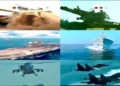
The roots of this diplomatic blitz trace back to the devastating Pahalgam attack, where terrorists linked to The Resistance Front (TRF), an offshoot of the Pakistan-based Lashkar-e-Taiba (LeT), brutally killed 26 civilians, including one Nepali national, in a planned assault. The attack, marked by its barbarity, most victims were shot at point-blank range, was a grim reminder of Pakistan’s role in fostering cross-border terrorism, a charge India has long levelled against its neighbour. In response, on May 7, India launched Operation Sindoor, a series of 24 precision missile strikes targeting nine terror camps in Pakistan and Pakistan-occupied Kashmir (PoJK). The operation, executed by the Indian Army, Navy, and Air Force, neutralised over 100 terrorists, including key figures linked to past attacks like the 1999 IC 814 hijacking and the 2019 Pulwama bombing, while carefully avoiding civilian and military targets.
The military success of Operation Sindoor was only part of India’s strategy. Recognising the need to counter Pakistan’s attempts to portray itself as a victim and deflect blame at international forums like the United Nations Security Council (UNSC), where Pakistan holds a non-permanent seat until 2026, India devised an ambitious diplomatic campaign.
The goal: to present a unified front, expose Pakistan’s complicity in terrorism, and secure global support for India’s actions. The decision to send all-party delegations, comprising 59 parliamentarians and former diplomats, underscores India’s commitment to transcending domestic political divides in the face of national security threats.
The Strategic Selection of 32 Countries
On May 20, Foreign Secretary Vikram Misri briefed members of three of the seven delegations at South Block, outlining the rationale behind the selection of the 32 countries and the EU. The chosen nations, carefully curated by the Ministry of External Affairs (MEA), include permanent and non-permanent UNSC members, incoming UNSC members, and other influential global players. This strategic selection reflects India’s intent to maximise its diplomatic leverage at a time when Pakistan is expected to push anti-India narratives at the UNSC and other forums.
The list includes major powers like the United States, United Kingdom, France, Russia, and China (the five permanent UNSC members), alongside non-permanent members such as Panama, Guyana, and Greece. Five additional countries, set to join the UNSC as non-permanent members in the coming months, were included to preemptively shape their perspectives. The remaining nations, such as Saudi Arabia, UAE, Qatar, Brazil, and South Africa, were chosen for their geopolitical clout, economic influence, or regional significance.
For instance, Middle Eastern countries like Saudi Arabia and Qatar are critical due to their influence in the Islamic world, where Pakistan often seeks sympathy through bodies like the Organisation of Islamic Cooperation (OIC). Similarly, African nations like Ethiopia and South Africa were selected for their leadership roles in the Global South, while countries like Japan, South Korea, and Singapore represent key Asian allies with strong economic and diplomatic ties to India.
BJP MP Aparajita Sarangi, a member of Group 3 led by Janata Dal (United) MP Sanjay Jha, attended the briefing and elaborated on the strategy.
“The Foreign Secretary explained that these 32 countries are either current or incoming UNSC members or hold significant influence globally,” Sarangi told reporters. “Pakistan will undoubtedly use its UNSC seat to push baseless claims against India, as it has done in the past. Our delegations aim to present the truth about Operation Sindoor, that it was a precise, anti-terror operation, not an attack on civilians as Pakistan falsely alleges.”
Sarangi’s delegation, which includes BJP MPs Brij Lal, Pradan Baruah, and Hemang Joshi, CPI(M) MP John Brittas, former Minister Salman Khurshid, and former ambassador Mohan Kumar, is scheduled to visit Japan (May 22), South Korea (May 24), Singapore (May 27), Indonesia (May 28), and Malaysia (May 31).
A Unified Message Against Terrorism
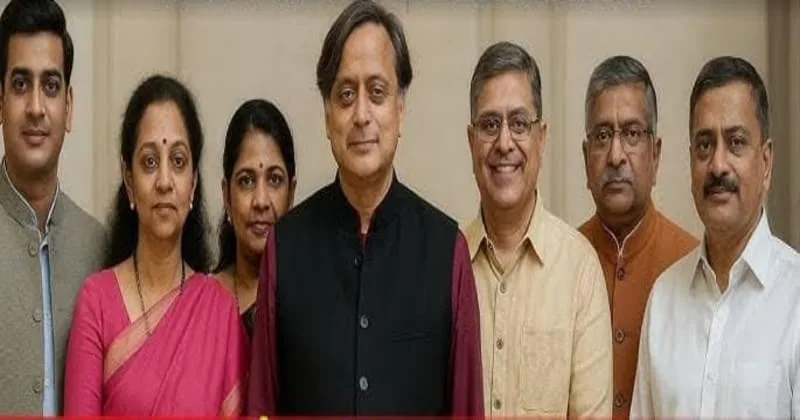
The delegations, comprising 31 MPs from the ruling National Democratic Alliance (NDA) and 20 from opposition parties, are led by prominent figures such as BJP MPs Baijayant Jay Panda and Ravi Shankar Prasad, Congress MP Shashi Tharoor, Shiv Sena’s Shrikant Shinde, DMK’s Kanimozhi Karunanidhi, NCP’s Supriya Sule, and JDU’s Sanjay Jha. Each group is accompanied by retired diplomats, ensuring diplomatic finesse in conveying India’s message. The inclusion of opposition leaders like Tharoor and Khurshid reflects a rare bipartisan effort, reminiscent of the 1994 delegation led by Atal Bihari Vajpayee to counter Pakistan’s narrative at the UN Human Rights Commission.
The MEA has equipped the delegations with detailed dossiers on the Pahalgam attack, the specifics of Operation Sindoor, and evidence of Pakistan’s support for terror groups like LeT, Jaish-e-Mohammed (JeM), and Hizbul Mujahideen.
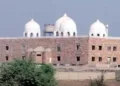
Foreign Secretary Misri emphasised that the strikes were “proportionate, precise, and non-escalatory,” targeting only terror infrastructure, such as LeT’s Markaz Taiba in Muridke and JeM’s Markaz Subhan Allah in Bahawalpur.
He refuted Pakistan’s claims of civilian casualties, calling them “absolute and complete fabrication” and warning that any retaliatory escalation by Pakistan would face a decisive response.
The delegations’ mission is threefold: to brief foreign governments on the necessity of Operation Sindoor, to expose Pakistan’s role in sponsoring terrorism, and to advocate for international action, including designating TRF as a terrorist organisation by the UN. By engaging with ministers, legislators, think tanks, and media in each country, the delegations aim to shape global opinion and counter Pakistan’s anticipated propaganda, particularly at the UNSC, where it has historically used its platform to make anti-India remarks.
Global Reactions and Diplomatic Context
The international response to Operation Sindoor has been mixed but largely supportive of India’s right to self-defence. The United States, through Secretary of State Marco Rubio, has urged de-escalation while acknowledging India’s actions as a response to terrorism.
Israel has been the most vocal supporter, with Ambassador Reuven Azar stating on X that “Israel supports India’s right for self-defence” against “heinous crimes.” Panama, a current UNSC member, also endorsed India’s counter-terrorism efforts, while the EU condemned the Pahalgam attack and called for restraint from both sides. China, Pakistan’s close ally, expressed “regret” over India’s strikes but joined others in condemning the April 22 attack.
However, tensions remain high. Pakistan’s retaliatory drone and missile strikes on May 7–9, targeting Indian military installations in Jammu, Pathankot, and Udhampur, were intercepted, but they underscored Islamabad’s intent to escalate. A stoppage of firing was reached on May 10, with US President Donald Trump claiming credit for mediation, a claim India refuted, asserting that its military actions compelled Pakistan to stand down. Copying India’s move, Pakistan’s Foreign Minister Bilawal Bhutto-Zardari has announced a counter-diplomatic campaign, signalling a battle of narratives on the global stage.
Challenges and Domestic Dynamics
Domestically, the outreach has not been without controversy. The Congress party criticised the selection of its delegates, noting that only one of its four recommended MPs, Anand Sharma, was included, while others like Shashi Tharoor were chosen independently. Congress MP Jairam Ramesh accused the BJP of politicising national security, though he affirmed the party’s participation in the “supreme national interest.”
Tharoor defended his involvement, citing his foreign affairs expertise and arguing that the mission transcends politics.
Defining Moment for India’s Global Image
As the delegations embark on their 10-day mission starting May 23, India’s diplomatic push represents a defining moment. By mobilising a bipartisan front, leveraging the influence of UNSC members, and targeting key global players, India aims to reshape the narrative on terrorism and isolate Pakistan diplomatically. The outreach, as Parliamentary Affairs Minister Kiren Rijiju described on X, is “a powerful reflection of national unity above politics.”
For the residents of Pahalgam, still reeling from the April tragedy, and for a nation determined to protect its 1.4 billion citizens, Operation Sindoor and its diplomatic aftermath signal a new era of resolve. As MP Sarangi put it, “India stands united against terrorism, and our message to the world is clear: we will act decisively to protect our people.” With the world watching, India’s delegations carry the weight of a nation’s resolve to combat terrorism and secure its rightful place on the global stage.