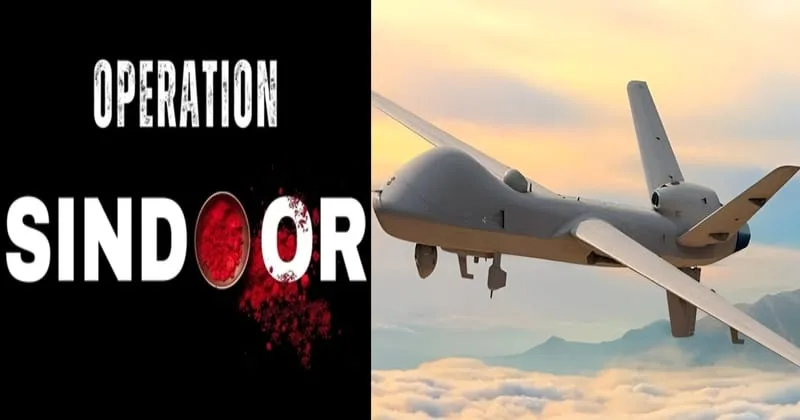
“Years ago, when Prime Minister Modi championed the ‘Make in India’ initiative, opposition leaders, including Rahul Gandhi, met the idea with mockery, questioning its feasibility and impact. However, today, the very spirit of ‘Made in India’ has demonstrably contributed to India’s success against Pakistan. In a bold and decisive move following the devastating terrorist attack in Pahalgam, the Indian Armed Forces executed ‘Operation Sindoor’ on the night of May 7, launching precision strikes against nine identified terrorist hideouts in Pakistan and Pakistan-occupied Jammu & Kashmir (PoJK). This retaliatory action not only targeted key infrastructure of groups like Lashkar-e-Taiba in Bahawalpur but also marked a significant milestone in India’s defence capabilities, with the inaugural deployment of an indigenously developed loitering munition under the ‘Make in India’ initiative.”
Operation Sindoor, a direct response to the Pahalgam attack that tragically claimed 26 lives, saw India leverage its growing technological prowess in its fight against cross-border terrorism. While the familiar might of the Bofors howitzer, a hero of the Kargil War, was once again positioned at the frontlines following the operation, the spotlight also shone brightly on a new, domestically produced weapon system that played a crucial role in delivering a targeted and impactful response.
“Nagastra-1”: India’s Indigenous ‘Suicide Drone’ Takes Flight in Operation Sindoor
In a testament to India’s self-reliance in defence manufacturing, “Operation Sindoor” witnessed the battlefield debut of the Nagastra-1, an indigenous loitering munition developed under the “Make in India” banner. This cutting-edge technology, often described as a “suicide drone” or “flying bomb,” represents a significant leap forward in India’s unmanned aerial capabilities.
Developed and supplied to the Indian Army by Nagpur-based Solar Industries, the Nagastra-1 is designed to autonomously seek and neutralise targets such as terrorist hideouts, launch pads, and infiltrating elements, all while minimising the risk to Indian soldiers. The deployment of 120 units of this indigenous drone underscores the commitment to equipping the armed forces with domestically produced, state-of-the-art weaponry.
During “Operation Sindoor,” the Nagastra-1 is reported to have been instrumental in the precise destruction of the nine targeted terrorist locations. Utilising its pinpoint accuracy, the loitering munition effectively dismantled critical terrorist infrastructure, marking India’s first major technological strike leveraging indigenous drone technology in a significant counter-terrorism operation. This successful deployment serves as a powerful validation of the “Make in India” initiative in the defence sector.
Key Features of the Indigenous Nagastra-1: Power and Precision Engineered in India
The Nagastra-1 boasts a range of impressive features that highlight India’s growing expertise in advanced defence technology:
Pinpoint Accuracy & Range: Equipped with GPS-enabled targeting, the Nagastra-1 can strike targets with an accuracy of within 2 meters at a range of up to 30 kilometres. This precision minimises collateral damage and ensures the effective neutralisation of intended targets.
Extended Flight Endurance: The drone possesses a flight time of up to 60 minutes, providing ample time for target acquisition and engagement. It offers operational flexibility with a 15 km range in “man-in-the-loop” mode, allowing for operator control, and a longer 30 km range in autonomous mode for pre-programmed missions.
Stealth Capabilities: Utilising an electric propulsion system, the Nagastra-1 maintains a low acoustic signature and a radar cross-section, enabling it to operate at altitudes as low as 200 meters with a reduced risk of detection. This stealth capability is crucial for covert operations and ensuring mission success.
Effective Payload & Versatility: The Nagastra-1 carries a 1 kg high-explosive warhead, sufficient to neutralise personnel and light infrastructure. Its design allows for effective operation both during the day and night, as well as in challenging environmental conditions, including cold climates and at high altitudes up to 4,500 meters.
Reusability Feature: A unique and cost-effective feature of the Nagastra-1 is its ability to be recovered. If a target is not engaged, the drone can safely return to base via parachute deployment, making it a reusable asset and significantly reducing operational costs.
Indigenous Design & Cost-Effectiveness: The Nagastra-1 is proudly built with approximately 75 per cent indigenous components, showcasing India’s growing manufacturing capabilities in the defence sector. Furthermore, it is reported to be around 40 per cent cheaper than comparable loitering munitions imported from countries like Israel or Poland, highlighting the economic benefits of indigenous defence production.
Rigorous Testing: The Nagastra-1 has undergone extensive testing in diverse terrains, including the high-altitude and challenging conditions of Ladakh’s Nubra Valley, demonstrating its reliability and effectiveness in real-world scenarios. This rigorous testing regime underscores its suitability for deployment in sensitive border regions.
India’s Strengthening Indigenous Defence Ecosystem
The successful deployment of the Nagastra-1 in “Operation Sindoor” is not an isolated event but rather a significant indicator of the growing strength and maturity of India’s indigenous defence manufacturing ecosystem. The “Make in India” initiative has spurred innovation and investment in the sector, leading to the development and production of a wide range of advanced weaponry and equipment within the country.
Beyond the Nagastra-1, the Indian Armed Forces are increasingly relying on domestically produced technologies across various domains:
Tejas Light Combat Aircraft (LCA): Designed and manufactured by Hindustan Aeronautics Limited (HAL), the Tejas is a multi-role combat aircraft that represents a significant step towards self-reliance in fighter jet production.
INS Vikrant Aircraft Carrier: India’s first indigenously designed and built aircraft carrier, INS Vikrant, showcases the nation’s shipbuilding capabilities and its commitment to projecting naval power.
Advanced Towed Artillery Gun System (ATAGS): Developed by the Defence Research and Development Organisation (DRDO) and private sector partners, ATAGS is a state-of-the-art howitzer that boasts superior range and firepower.
Pinaka Multi-Barrel Rocket Launcher System: This indigenously developed all-weather, indirect fire, free flight artillery rocket system provides the Army with a potent capability to neutralise large areas.
Anti-Satellite (ASAT) Missile: India’s successful test of an ASAT missile demonstrated its capability to protect its space assets, a significant achievement in strategic defence.
Various Electronic Warfare Systems, Radars, and Communication Systems: Numerous indigenous companies and DRDO laboratories are actively involved in developing and producing advanced electronic warfare suites, radar systems, and secure communication networks for the armed forces.
The increasing induction of “Made in India” defence equipment not only enhances the operational capabilities of the Indian military but also reduces dependence on foreign suppliers, strengthens the domestic economy, and fosters technological innovation within the country.
Operation Sindoor: A Multifaceted Response
While the deployment of the Nagastra-1 marks a technological leap, “Operation Sindoor” also involved the strategic positioning of battle-proven assets like the Bofors howitzer along the Line of Control. Following the Indian strikes, reports indicate retaliatory shelling from Pakistan across the LoC, reminiscent of the aftermath of previous cross-border operations. Indian security forces are maintaining a high state of alert and responding appropriately to any provocations.
The international community has largely called for de-escalation and restraint, emphasising the need for dialogue to resolve the underlying issues. However, India’s firm and targeted response through “Operation Sindoor,” highlighting both conventional strength and indigenous technological advancements, sends a clear message about its commitment to national security and its resolve to counter terrorism emanating from across its borders.
The successful deployment of the Nagastra-1 in a real-world operation like “Operation Sindoor” is a proud moment for India’s defence establishment and the “Make in India” initiative. It underscores the nation’s growing self-reliance in critical defence technologies and its determination to leverage indigenous innovation to safeguard its security and respond effectively to evolving threats. As the situation along the border remains tense, the focus will be on maintaining vigilance and utilising all available resources, both conventional and indigenous, to ensure the safety and security of the nation.