

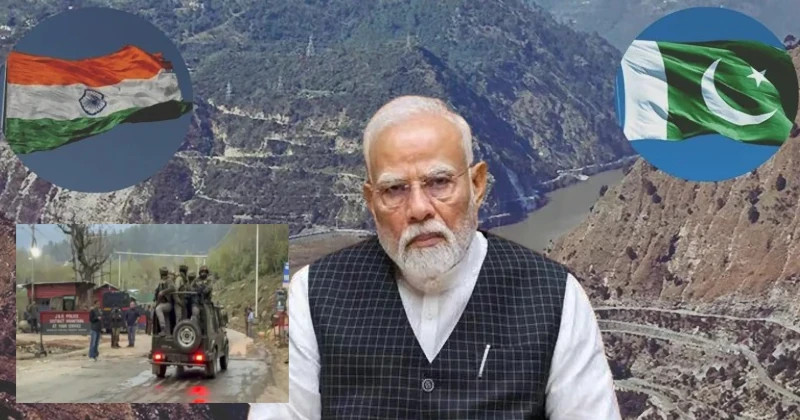
In a landmark decision that reverberates far beyond water diplomacy, India has placed the 1960 Indus Waters Treaty (IWT) with Pakistan in abeyance. This move—announced on April 23 by Foreign Secretary Vikram Misri—comes as a direct response to the gruesome terrorist attack in Pahalgam, J&K, that claimed the lives of 26 Hindu civilians, including tourists. The suspension of the IWT is no longer just a policy shift; it is a potent diplomatic signal to Pakistan: terror and talks cannot go hand in hand.
“Khun aur paani saath mein nahi beh sakte.” Blood and water cannot flow together. Pakistan’s state-sponsored terrorism that bleeds India must not be met with generosity in return.
This bold decision was taken after an emergency meeting of the Cabinet Committee on Security (CCS), reflecting a firm resolve to retaliate through every strategic, diplomatic, and legal tool available. By suspending the treaty, India has asserted its sovereignty and sent a message to both domestic and international audiences—that Bharat will not remain passive when its citizens are massacred by cross-border terrorism, aided and abetted by the Pakistani Army.
The Treaty and the Turning Point
The Indus Waters Treaty, brokered by the World Bank and signed in 1960 after protracted negotiations involving mediation by David Lilienthal and the International Bank for Reconstruction and Development, allocated the waters of the Eastern Rivers—Ravi, Beas, and Sutlej—to India for exclusive use, while granting Pakistan the rights over the Western Rivers—Indus, Jhelum, and Chenab. Despite being the upper riparian state, India respected the terms of the treaty even during wars and prolonged hostility with Pakistan.
But with the latest terrorist attack in Pahalgam, the ground realities have drastically changed. The decision to suspend the treaty reflects India’s shifting stance from defensive diplomacy to proactive deterrence.
The Legal and Strategic Implications
Former Indus Water Commissioner Pradeep Kumar Saxena has noted that although the IWT has no explicit provision for termination, Article 62 of the Vienna Convention on the Law of Treaties permits withdrawal from a treaty under a “fundamental change of circumstances.” The sustained export of terror by Pakistan certainly qualifies.
With the treaty suspended, India is no longer bound by constraints that previously limited its ability to harness the full potential of its rivers. This includes:
- Unrestricted reservoir flushing for projects like Kishanganga, aiding silt management and optimal reservoir function.
- Flexible reservoir filling schedules can now align with strategic or agricultural needs in India rather than being dictated by Pakistani concerns.
- Hydropower projects on Western Rivers can proceed without being stalled by Pakistan’s objections over design and operational protocols—objections that have long stymied India’s infrastructure goals.
- Flood data sharing—previously mandatory—can be withheld, potentially impacting Pakistan’s flood preparedness during monsoon seasons.
- Termination of Pakistani inspection visits under the treaty’s bilateral mechanisms.
Projects such as Salal, Baglihar, Kishanganga, and the more recent hydropower schemes in Ladakh will likely receive a fresh impetus, without Pakistan’s habitual stonewalling. With no compulsion to seek approval or maintain technical transparency with an adversary using terrorism as statecraft, India’s hand is significantly strengthened.
Economic Repercussions for Pakistan
The Indus River system is the lifeline of Pakistan’s agriculture. Over 90 per cent of the country’s food production is irrigated by waters from the Indus and its tributaries. Any disruption in water flow, especially during sowing seasons, could severely impact wheat and rice yields—directly affecting food security and rural stability in Pakistan’s Punjab and Sindh provinces.
India’s newfound operational flexibility may allow reservoir filling during peak sowing seasons in Pakistan, turning water into a strategic lever. Delaying or advancing storage activities also grants India significant influence without overt aggression.
Showcasing India’s Technological Edge
India’s engineering capabilities in harnessing river systems are far ahead of Pakistan’s. From the Chenab Valley to the higher reaches of Ladakh, India’s construction of modern, efficient hydropower dams and storage projects demonstrates its ability to utilise riverine resources sustainably. This includes the implementation of smart desilting techniques, off-river reservoirs, and the expansion of solar-hydro hybrid facilities—making India not only energy-efficient but strategically agile.
Strategic Realignment of Water and National Security
Water has always been a strategic resource, but India refrained from weaponising it even during its gravest conflicts with Pakistan. However, with terrorism becoming an existential threat, New Delhi is now integrating river water management into its national security calculus.
By withholding water-related cooperation, India is leveraging its upper riparian advantage—a right embedded in geography and the principle of reciprocity in international relations.
The IWT, which once stood as a rare testament to peaceful cooperation between hostile neighbours, is now being reassessed in light of consistent Pakistani aggression. What use is a water-sharing arrangement when the neighbour on the other side of the border sends blood instead of trust down the rivers?
Reclaiming Our Sovereign Rights
The very genesis of the water dispute dates back to the partition of India. The boundary line cut through the Indus Basin, with Pakistan inheriting the lower riparian status but heavily dependent on infrastructure and flow from Indian territory. At the time of Independence, vital irrigation works at Madhopur (Ravi) and Ferozepur (Sutlej) lay in Indian hands, prompting the need for a treaty. That goodwill now seems misplaced in the face of continued betrayal.
India has never sought to deprive Pakistan of its fair share of water. But that magnanimity must now be balanced against the national interest and the security of our citizens. Terrorism cannot be rewarded with treaties. There must be costs.
A Message to the World
As the Vishwaguru of the 21st century, Bharat must blend its civilisational values with firm statecraft. The suspension of the Indus Waters Treaty does not indicate a rejection of peace—but a refusal to be manipulated in its name. Just as Chanakya advocated shatruniti (strategic statecraft) when required, today’s Bharat must assert itself through every peaceful yet potent measure.
“India’s decision is a watershed moment in regional geopolitics,” says a senior fellow at the Institute for Strategic Water Resources. “It reflects a strategic shift from restraint to conditional engagement.”
Pakistan now stands at a crossroads. If it continues to pursue terrorism as a tool of foreign policy, it must face the consequences—diplomatic isolation, economic marginalisation, and now, potential water insecurity.
India, for its part, must continue to explain its position at global forums—whether through the United Nations, G20 water dialogues, or multilateral climate partnerships—to clarify: Bharat stands for peace, but not peace at the cost of its people’s lives.
Let this be a warning, not just to Islamabad, but to every adversary: Bharat’s rivers will no longer flow unchecked into lands that flood our soil with terror.