Groundbreaking study reveals how our brain learns
June 25, 2026
  • Read Ecopy
  • Circulation
  • Advertise
  • Careers
  • About Us
  • Contact Us
Android AppiPhone AppArattai
Organiser
  • ‌
  • Bharat
    • Assam
    • Bihar
    • Chhattisgarh
    • Jharkhand
    • Maharashtra
    • View All States
  • World
    • Asia
    • Europe
    • North America
    • South America
    • Africa
    • Australia
  • Editorial
  • International
  • Opinion
  • RSS @ 100
  • More
    • Op Sindoor
    • Analysis
    • Sports
    • Defence
    • Politics
    • Business
    • Economy
    • Culture
    • Special Report
    • Sci & Tech
    • Entertainment
    • G20
    • Azadi Ka Amrit Mahotsav
    • Vocal4Local
    • Web Stories
    • Education
    • Employment
    • Books
    • Interviews
    • Travel
    • Law
    • Health
    • Obituary
  • Subscribe
    • Subscribe Print Edition
    • Subscribe Ecopy
    • Read Ecopy
  • ‌
  • Bharat
    • Assam
    • Bihar
    • Chhattisgarh
    • Jharkhand
    • Maharashtra
    • View All States
  • World
    • Asia
    • Europe
    • North America
    • South America
    • Africa
    • Australia
  • Editorial
  • International
  • Opinion
  • RSS @ 100
  • More
    • Op Sindoor
    • Analysis
    • Sports
    • Defence
    • Politics
    • Business
    • Economy
    • Culture
    • Special Report
    • Sci & Tech
    • Entertainment
    • G20
    • Azadi Ka Amrit Mahotsav
    • Vocal4Local
    • Web Stories
    • Education
    • Employment
    • Books
    • Interviews
    • Travel
    • Law
    • Health
    • Obituary
  • Subscribe
    • Subscribe Print Edition
    • Subscribe Ecopy
    • Read Ecopy
Organiser
  • Home
  • Bharat
  • World
  • Operation Sindoor
  • Editorial
  • Analysis
  • Opinion
  • Culture
  • Defence
  • International Edition
  • RSS @ 100
  • Magazine
  • Read Ecopy
Home World

Groundbreaking study reveals how our brain learns

A groundbreaking study has revealed how the brain adapts and learns by tracking changes in synapses and neurons during learning activities. Using advanced visualisation techniques, researchers uncovered how different rules govern synaptic plasticity, offering insights into neurological disorders and AI development

WEBDESKWEBDESK
Apr 22, 2025, 11:00 pm IST
in World, Health
Follow on Google News
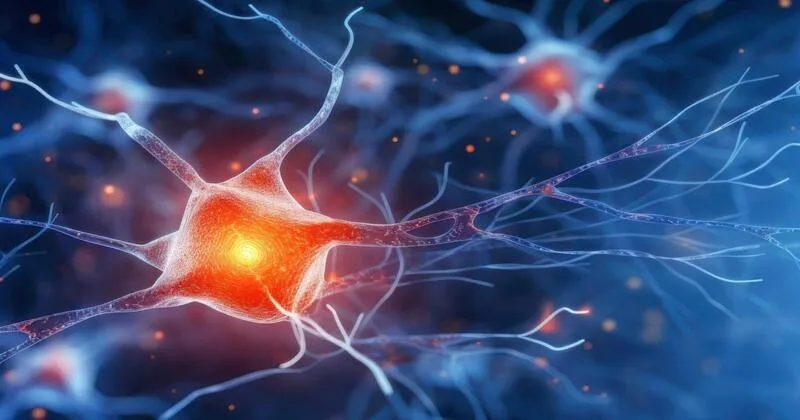
Representative image

Representative image

FacebookTwitterWhatsAppTelegramEmail

Neurobiologists using cutting-edge visualisation techniques have revealed how changes across our synapses and neurons unfold. The findings depict how information is processed in our brain’s circuitry, offering insights for neurological disorders and brain-like AI systems. How do we learn something new? How do tasks at a new job, lyrics to the latest hit song or directions to a friend’s house become encoded in our brains?

The broad answer is that our brains undergo adaptations to accommodate new information. To follow a new behaviour or retain newly introduced information, the brain’s circuitry changes. Such modifications are orchestrated across trillions of synapses — the connections between individual nerve cells, called neurons — where brain communication takes place.

In an intricately coordinated process, new information causes certain synapses to get stronger with new data while others grow weaker. Neuroscientists who have closely studied these alterations, known as “synaptic plasticity,” have identified numerous molecular processes causing such plasticity.

Yet an understanding of the “rules” selecting which synapses undergo this process remained unknown, a mystery that ultimately dictates how learned information is captured in the brain.

University of California, San Diego neurobiologists William “Jake” Wright, Nathan Hedrick and Takaki Komiyama have now uncovered key details about this process. The main financial support for this multi-year study was provided by several National Institutes of Health research grants and a training grant.

As published April 17 in the journal Science, the researchers used a cutting-edge brain visualisation methodology, including two-photon imaging, to zoom into the brain activity of mice and track the activities of synapses and neuron cells during learning activities.

With the ability to see individual synapses like never before, the new images revealed that neurons don’t follow one set of rules during episodes of learning, as had been assumed under conventional thinking.
Rather, the data revealed that individual neurons follow multiple rules, with synapses in different regions following different rules. These new findings stand to aid advancements in many areas, from brain and behaviour disorders to artificial intelligence.

“When people talk about synaptic plasticity, it’s typically regarded as uniform within the brain,” said Wright, a postdoctoral scholar in the School of Biological Sciences and first author of the study.

“Our research provides a clearer understanding of how synapses are being modified during learning, with potentially important health implications since many diseases in the brain involve some form of synaptic dysfunction.”

Neuroscientists have carefully studied how synapses only have access to their own “local” information, yet collectively they help shape broad new learned behaviours, a conundrum labelled as the “credit assignment problem.”

The issue is analogous to individual ants that work on specific tasks without knowledge of the goals of the entire colony.

The new information offers promising insights for the future of artificial intelligence and the brain-like neural networks upon which they operate. Typically, an entire neural network functions on a common set of plasticity rules, but this research infers possible new ways to design advanced AI systems using multiple rules across singular units.

For health and behaviour, the findings could offer a new way to treat conditions including addiction, post-traumatic stress disorder and Alzheimer’s disease, as well as neurodevelopmental disorders such as autism.

(With inputs from ANI)

 

Topics: NeurobiologyAlzheimersNeurodevelopmental DisordersaiBrain ResearchNeuroscienceSynaptic PlasticityLearning Process
ShareTweetSendShareSend
✮ Subscribe Organiser YouTube Channel. ✮
✮ Join Organiser's WhatsApp channel for Nationalist views beyond the news. ✮
Previous News

An office should not merely be a structure, but sanctum of purposeful work: Dr Bhagwat at inauguration of ABVP’s office

Next News

J&K: RSS Sarkaryavah Dattatreya Hosabale condemns terror attack in Pahalgam; calls it an attack on Bharat’s integrity

Related News

CM Mohan Charan Majhi along with Union IT Minister Ashwini Vaishnaw during the ground-breaking ceremony of the Heterogeneous Integration Packaging Solutions (3DGS) project at Info Valley.

Odisha hosts groundbreaking India’s 1st advanced 3D semiconductor packaging unit; Major boost to AI, 5G & Defence Tech

Representative Image

India’s AI Education Revolution: How policy, research and skilling are building the future workforce

India Finland increase cooperation

“India-Finland strategic partnership will accelerate cooperation from AI to 6G,” says PM Modi

Bharat GPT

India unveils Bharatiya GPT at AI Summit, blending ancient wisdom with artificial intelligence

Prime Minister Narendra Modi (centre) joins hands with Google CEO Sundar Pichai, OpenAI CEO Sam Altman and others during the India AI Impact Summit 2026, in New Delhi. | Photo: YouTube/@NarendraModi

AI Impact Summit: PM Modi presents human-centric ‘MANAV Vision’ for AI

Representative Image

Sanskrit’s Echo in English: Root forms that rewrite history?

Load More

Latest News

Andhra Pradesh Chief Minister N. Chandrababu Naidu inaugurates the Jonnagiri Gold Mining Project in Kurnool district

Andhra Pradesh: CM Chandrababu Naidu lunches first major gold mining project in Kurnool district

AI-generated image for representation

Tamil Nadu: School teacher faces action over alleged humiliation of menstruating student

Cochin Shipyard (File Photo)

Keralam: ‘I Love Pakistan’ inscription found inside vessel at Cochin Shipyard; Central agencies launch probe

BJP national spokesperson Pradeep Bhandari

Karnataka: BJP accuses Kharge family of illegally acquiring government land worth over Rs 100 crore

Elomi Global Worship Centre in Omalloor, Pathanamthitta district ; Pastor Binu Vazhakkuttom (Left to Right)

Keralam: Child abuse allegations at Pentecostal worship centre in Pathanamthitta; locals demand Pastor Binu’s arrest

Modi Govt’s Tourism Revolution: 183 projects, Rs 9,225 crore investment & rise of India’s cultural & spiritual circuits

Padma Awards 2026: Tamil Nadu’s distinguished achievers receive national honours

India’s history is not merely a tale of foreign domination but also a remarkable story of resilience, resistance & civilisational continuity

Indian History: Not just foreign rule, but a timeless story of resistance, self-respect and civilisational resilience

From $10 Billion to $190 Billion: Indian Bioeconomy Touches New Heights in 12 Years

From $10 Billion to $190 Billion: India’s Bioeconomy leads a 12-Year science revolution

Nagpur | Acceptance of Bharatiya civilisational values is steadily increasing worldwide: Shanta Kumari

Load More
  • Privacy
  • Terms
  • Cookie Policy
  • Refund and Cancellation
  • Delivery and Shipping

© Bharat Prakashan (Delhi) Limited.
Tech-enabled by Ananthapuri Technologies

  • Home
  • Search Organiser
  • Bharat
    • Assam
    • Bihar
    • Chhattisgarh
    • Jharkhand
    • Maharashtra
    • View All States
  • World
    • Asia
    • Africa
    • North America
    • South America
    • Europe
    • Australia
  • Editorial
  • Operation Sindoor
  • Opinion
  • Analysis
  • Defence
  • Culture
  • Sports
  • Business
  • RSS @ 100
  • Entertainment
  • More ..
    • Sci & Tech
    • Vocal4Local
    • Special Report
    • Education
    • Employment
    • Books
    • Interviews
    • Travel
    • Health
    • Politics
    • Law
    • Economy
    • Obituary
  • Subscribe Magazine
  • Read Ecopy
  • Advertise
  • Circulation
  • Careers
  • About Us
  • Contact Us
  • Policies & Terms
    • Privacy Policy
    • Cookie Policy
    • Refund and Cancellation
    • Terms of Use

© Bharat Prakashan (Delhi) Limited.
Tech-enabled by Ananthapuri Technologies