The Rise of the Ancient: Ram Mandir
July 7, 2026
  • Read Ecopy
  • Circulation
  • Advertise
  • Careers
  • About Us
  • Contact Us
Android AppiPhone AppArattai
Organiser
  • ‌
  • Bharat
    • Assam
    • Bihar
    • Chhattisgarh
    • Jharkhand
    • Maharashtra
    • View All States
  • World
    • Asia
    • Europe
    • North America
    • South America
    • Africa
    • Australia
  • Editorial
  • International
  • Opinion
  • RSS @ 100
  • More
    • Op Sindoor
    • Analysis
    • Sports
    • Defence
    • Politics
    • Business
    • Economy
    • Culture
    • Special Report
    • Sci & Tech
    • Entertainment
    • G20
    • Azadi Ka Amrit Mahotsav
    • Vocal4Local
    • Web Stories
    • Education
    • Employment
    • Books
    • Interviews
    • Travel
    • Law
    • Health
    • Obituary
  • Subscribe
    • Subscribe Print Edition
    • Subscribe Ecopy
    • Read Ecopy
  • ‌
  • Bharat
    • Assam
    • Bihar
    • Chhattisgarh
    • Jharkhand
    • Maharashtra
    • View All States
  • World
    • Asia
    • Europe
    • North America
    • South America
    • Africa
    • Australia
  • Editorial
  • International
  • Opinion
  • RSS @ 100
  • More
    • Op Sindoor
    • Analysis
    • Sports
    • Defence
    • Politics
    • Business
    • Economy
    • Culture
    • Special Report
    • Sci & Tech
    • Entertainment
    • G20
    • Azadi Ka Amrit Mahotsav
    • Vocal4Local
    • Web Stories
    • Education
    • Employment
    • Books
    • Interviews
    • Travel
    • Law
    • Health
    • Obituary
  • Subscribe
    • Subscribe Print Edition
    • Subscribe Ecopy
    • Read Ecopy
Organiser
  • Home
  • Bharat
  • World
  • Operation Sindoor
  • Editorial
  • Analysis
  • Opinion
  • Culture
  • Defence
  • International Edition
  • RSS @ 100
  • Magazine
  • Read Ecopy
Home Bharat

The Rise of the Ancient: Ram Mandir — A symbol of resilience for the World’s Ancient civilisation

Bharat's unique resilience among ancient civilisations, preserves its spiritual and cultural heritage despite centuries of invasions. The reconstruction of the Ram Mandir stands as a powerful symbol of this enduring legacy, rooted in both historical evidence and collective sacrifice

Prof (Dr) Nandita SaikiaProf (Dr) Nandita Saikia
Apr 6, 2025, 08:00 am IST
in Bharat, Culture
Follow on Google News
FacebookTwitterWhatsAppTelegramEmail

Many great civilisations flourished throughout history, reaching the pinnacle of prosperity and leaving an indelible mark on humanity. The Mesopotamians of Iraq, the Ancient Egyptians, the Mayans of South America, the Aztecs of Mexico, the Sumerians of Southern Iraq, the Greeks, the Zoroastrians of Iran, the Aboriginals of Australia, the Buddhists of Afghanistan, and the Hindus of Pakistan—each had a rich cultural and spiritual heritage.

Like the Hindus, the ancient Greeks worshipped multiple deities, including the Twelve Olympians. Women deities held revered positions in Mesopotamia, Egypt, Sumer, and various African traditions. In pre-Islamic Arabia, the goddesses al-Lat, al-Uzza, and Manat were worshipped as divine daughters of God.

Yet, despite their once-glorious existence, most of these civilisations and their ways of life now survive only in history books, artefacts, and museum exhibits. What led to their decline? Many were destroyed, absorbed, or replaced by expansionist ideologies and supremacist religions that sought to erase their past.

However, one civilization has stood the test of time—Bharat. Unlike others, the Bharatiya civilization has endured a thousand years of foreign invasions, yet it remains alive, preserving its sacred traditions, philosophy, and way of life. What is described in Hindu scriptures, etched into temple walls, passed down through oral traditions, and recorded by foreign travellers like Megasthenes and Xuanzang is still practised in modern Bharat.

But this continuity came at a great cost. Countless sons and daughters of Bharat sacrificed their lives to protect the sanctity of this land. And despite centuries of oppression, Bharat remained a haven for persecuted people of all faiths, offering shelter without ever losing its essence of universal acceptance.

Ram Mandir: A Symbol of the Resilience of Ancient Civilisations

Hindu philosophy embraces the idea that “My path is one of many ways to reach the divine.”

In contrast, expansionist religions have often propagated the belief that “My way is the only way and all must follow it.” With this ideology, invaders razed thousands of Hindu temples during the Mughal era, attempting to erase an entire cultural and spiritual legacy.

Even today, anyone travelling through Bharat can see the remnants of these attacks. The ruins of the Martand Sun Temple in Kashmir, the Somnath and Modhera Temples in Gujarat, Krishna Janmabhoomi in Mathura, Gyanvapi in Kashi, the Chausath Yogini Temple in Madhya Pradesh, and the 27 Hindu and Jain temples at the Qutub Minar complex in Delhi bear witness to the centuries of destruction.

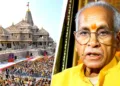
Yet, despite relentless assaults, Hindus never abandoned their sacred spaces. They continued to reclaim their heritage, often at the cost of their lives. The reconstruction of Ram Mandir is not just a religious event—it is one of the most significant moments in the history of Bharat in the last few centuries.

For some, it may appear to be just another temple. But for Hindus and those who revere ancient civilisations, it represents something far greater—a symbol of resilience, defiance against foreign oppression, and the revival of a once-suppressed spiritual heritage. The reclamation of Bhagwan Ram’s birthplace is the culmination of a 500-year-long struggle, a testament to the unbreakable spirit of millions who fought to uphold their faith and culture.

It was not a political movement or led by a single sect or class. It was a people’s movement where Hindus, Jains, Sikhs, and devotees from all walks of life united to restore what was rightfully theirs.

The Scientific and Historical Evidence Behind Ram Janmabhoomi

The legitimacy of Bhagwan Ram’s birthplace is not merely based on faith but is backed by extensive historical and scientific evidence. Hindu scriptures provide detailed genealogies of Bhagwan Ram’s ancestors. The geographical, cultural, and historical continuity of the Ramayana and Mahabharata is deeply embedded in Bharat’s traditions.

Even Islamic scholars who accompanied invaders documented how grand Hindu temples were demolished as a mark of victory. Eminent historian Meenakshi Jain (Padma Bhushan awardee) has compiled records from Islamic chroniclers and British officers, all of whom acknowledged the existence of Ram Janmabhoomi.

Archaeological excavations have further reinforced these claims. The findings of legendary archaeologists like B.B. Lal and K.K. Muhammed provide undeniable evidence of a grand temple structure beneath the Babri structure. These discoveries were meticulously examined by the Honorable Supreme Court of India, which ultimately ruled in favour of Ram Janmabhoomi, recognising the historical and cultural truth behind the Hindu claim.

Reclaiming Heritage with Pride, Not Guilt

Hindus should not feel apologetic about reclaiming their most sacred place in their ancestral land. Unlike expansionist religions that destroyed the holy sites of others, Hindus did not invade foreign lands to demolish sacred spaces in Arabia or Jerusalem. The rebirth of temples is not an act of vengeance but a homage to ancestors, a way of honouring those who fought to preserve Dharma in Bharat.

Every Hindu today owes their existence to the countless generations who sacrificed to keep this civilisation alive. To be born as a Hindu today is a privilege made possible by the unwavering devotion of those who came before us. So, let us celebrate this moment with pride, love, and devotion.
Topics: HindusRam MandirAncient civilisationAncient EgyptiansRam Navami 2025
Share29TweetSendShareSend
✮ Subscribe Organiser YouTube Channel. ✮
✮ Join Organiser's WhatsApp channel for Nationalist views beyond the news. ✮
Previous News

Arbitrary Waqf is now UMEED Act: President Droupadi Murmu gives her assent to the Waqf bill passed by the Parliament

Next News

Balochistan situation volatile as Mahrang Baloch, Akhtar Mengal rebuff Pakistan government’s offer

Related News

VHP International President Alok Kumar

Ram Mandir Donation Case: VHP’s Alok Kumar demands evidence from Kejriwal, Priyanka Gandhi over allegations

AI generated video depicts Jesus as the father of Hindu deities

Attack on Hindu Faith Using AI: Video claims ‘Jesus is the father of Hindu deities’; Hindu groups protest, FIR filed

Amazon in dock for mocking Hindu Gods

Amazon File: From Ganesha to Aryabhatta – Has Amazon India become a platform for Anti-Hindu narratives?

Bangladesh Hindus protest against Bhagwan Ram photo desecration; Chant Jai Sri Ram against radical islamist atrocities

The Modi era is presented as a transformative phase in Indian politics, governance, and national identity, reflecting the aspirations of a rapidly evolving India

Modi Yug: How twelve years of governance reshaped India’s aspirations, identity & development trajectory

RSS Sarsanghchalak Dr Mohan Bhagwat addressing the gathering in Keralam on the occasion of lecture series on 100 years of RSS

Journey of RSS in 100 Years | Hindu means cultural heritage of Bharat; none is outsider to Sangh: Dr Bhagwat in Keralam

Load More

Latest News

Shri Ram Janmabhoomi Teerth Kshetra Trust accepts resignation on moral grounds; SIT submits interim report

Ayodhya Ram Mandir Donation Row: Trust accepts resignations, promises greater transparency; SIT submits interim report

Nida Khan one of the accused in Nashik TCS Corporate Jihad Case gets bail

Nashik TCS Corporate Jihad Case: Court grants bail to Nida Khan in conversion and sexual harassment case

Karnataka State BJP files complaint with Election Commission over irregularities in voter verification

Karnataka SIR Row: NDA submits documentary evidence to Election Commission, alleges irregularities in voter revision

Hindenburg report was a conspiracy to tarnish the image of India’s industrial sector using the Adani Group as a pretext

Battlefield to Top of the World: Indian Paralympian Hokato Hotozhe Sema becomes No.1 in shot put F57 category

Editor of Organiser Weekly Prafulla Ketkar and West Bengal Governor R N Ravi at the Narad Jayanti Udjapan & Narad Samman 2026

Whether my reporting is in the interest of nation or not is a litmus test for journalist: West Bengal Governor R N Ravi

POJK Protests: A reality check on atrocities committed by Pakistan

117 pseudo-intellectuals write to PM Modi to extend diplomacy with Pakistan at the cost of national security

80 years of Organiser: Enduring voice

PM Modi and Australian PM Anthony Albanese

Powering India’s Nuclear Future: PM Modi’s Australia visit brings the landmark Uranium deal into focus

Load More
  • Privacy
  • Terms
  • Cookie Policy
  • Refund and Cancellation
  • Delivery and Shipping

© Bharat Prakashan (Delhi) Limited.
Tech-enabled by Ananthapuri Technologies

  • Home
  • Search Organiser
  • Bharat
    • Assam
    • Bihar
    • Chhattisgarh
    • Jharkhand
    • Maharashtra
    • View All States
  • World
    • Asia
    • Africa
    • North America
    • South America
    • Europe
    • Australia
  • Editorial
  • Operation Sindoor
  • Opinion
  • Analysis
  • Defence
  • Culture
  • Sports
  • Business
  • RSS @ 100
  • Entertainment
  • More ..
    • Sci & Tech
    • Vocal4Local
    • Special Report
    • Education
    • Employment
    • Books
    • Interviews
    • Travel
    • Health
    • Politics
    • Law
    • Economy
    • Obituary
  • Subscribe Magazine
  • Read Ecopy
  • Advertise
  • Circulation
  • Careers
  • About Us
  • Contact Us
  • Policies & Terms
    • Privacy Policy
    • Cookie Policy
    • Refund and Cancellation
    • Terms of Use

© Bharat Prakashan (Delhi) Limited.
Tech-enabled by Ananthapuri Technologies