Pakistani textile exports to US under jeopardy as stiff new tariffs
August 25, 2026
  • Read Ecopy
  • Circulation
  • Advertise
  • Careers
  • About Us
  • Contact Us
Android AppiPhone AppArattai
Organiser
  • ‌
  • Bharat
    • Assam
    • Bihar
    • Chhattisgarh
    • Jharkhand
    • Maharashtra
    • View All States
  • World
    • Asia
    • Europe
    • North America
    • South America
    • Africa
    • Australia
  • Editorial
  • International
  • Opinion
  • RSS @ 100
  • More
    • Op Sindoor
    • Analysis
    • Sports
    • Defence
    • Politics
    • Business
    • Economy
    • Culture
    • Special Report
    • Sci & Tech
    • Entertainment
    • G20
    • Azadi Ka Amrit Mahotsav
    • Vocal4Local
    • Web Stories
    • Education
    • Employment
    • Books
    • Interviews
    • Travel
    • Law
    • Health
    • Obituary
  • Subscribe
    • Subscribe Print Edition
    • Subscribe Ecopy
    • Read Ecopy
  • ‌
  • Bharat
    • Assam
    • Bihar
    • Chhattisgarh
    • Jharkhand
    • Maharashtra
    • View All States
  • World
    • Asia
    • Europe
    • North America
    • South America
    • Africa
    • Australia
  • Editorial
  • International
  • Opinion
  • RSS @ 100
  • More
    • Op Sindoor
    • Analysis
    • Sports
    • Defence
    • Politics
    • Business
    • Economy
    • Culture
    • Special Report
    • Sci & Tech
    • Entertainment
    • G20
    • Azadi Ka Amrit Mahotsav
    • Vocal4Local
    • Web Stories
    • Education
    • Employment
    • Books
    • Interviews
    • Travel
    • Law
    • Health
    • Obituary
  • Subscribe
    • Subscribe Print Edition
    • Subscribe Ecopy
    • Read Ecopy
Organiser
  • Home
  • Bharat
  • World
  • Operation Sindoor
  • Editorial
  • Analysis
  • Opinion
  • Culture
  • Defence
  • International Edition
  • RSS @ 100
  • Magazine
  • Read Ecopy
Home World

Pakistani textile exports to US under jeopardy as stiff new tariffs, higher than on India, make them too costly

The imposition of 29 per cent tariff duties by the US on Pakistani goods, as compared to 26 per cent on those from India, is going to hit its exports hard as its textiles and other goods become costlier. What can help India further is that its competitors like Vietnam, China and Bangladesh have been slapped with much higher tariffs by US President Donald Trump.

Sant Kumar SharmaSant Kumar Sharma
Apr 5, 2025, 09:00 pm IST
inWorld, International Edition
Follow on Google News
Facebook
Twitter
WhatsAppTelegramEmail

Eid fervour lasts in most areas of Pakistan for at least three to four days after the D day, the exact day of celebrations when festivities are at a peak. This time around, March 31 was the official Eid day and much before that, Pakistan Prime Minister Shehbaz Sharif gave his cabinet colleagues festival gift or Eidi. This he did by raising the salaries of Members of National Assembly (MNAs) and Senators (MPs of Upper House Senate) sharply.

Sharif airbrushed considerations of fiscal prudence, a bloated ministry and such other considerations, apparently minor for him. He glossed over the inconvenient fact of the life of average Pakistani being very burdensome due to inflation, poor economy, an official drought declared by Sindh. It needs to be mentioned here that it is the International Monetary Fund (IMF) tranches of a $7 billion loan which have kept Pakistani economy afloat so far.

Amid all the euphoria and Eid celebrations, thousands of miles away, US President Donald Trump made an announcement on April 2 regarding imposition of tariffs worldwide, on friends and foes alike. Pakistan was one among many countries which will now have to pay an additional 29 per cent tariff on its exports to the US. India is also among the nations which will have to pay additional tariffs to enter the US markets, at a rate of 26 per cent.

In comparison to Pakistan, India will thus have to pay a three per cent lesser tariff on its exports to the same market. This can prove to be a major blessing for the textile sector of India, besides others, as its cotton products will become cheaper as compared to those made in Pakistan.

According to most financial analysts, it can prove to be a serious setback for Pakistan as it can suffer a massive reduction worth $6 billion in its basket of exports to the US in the days ahead. On its own, Islamabad charged a hefty tariff of 58 per cent on imported goods from the US.

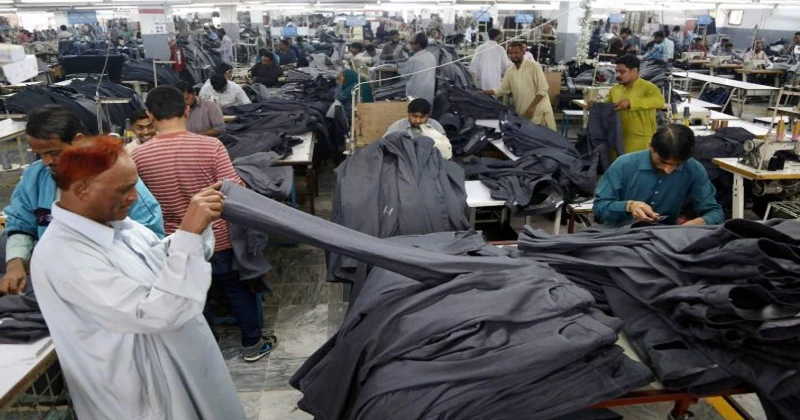
The fact that Trump’s previous tariffs had not targeted Pakistan, it has now been virtually caught off guard by the imposition of a reciprocal tariff of 29 per cent. This is going to impact Pakistan’s export sector, particularly the already textile industry very hard. It needs to be mentioned here that the cotton production may be hit hard due to drought in Sindh making it costlier. When exports are hit, so will be the foreign reserves and this in turn will lead to unemployment, all put together accentuating the country’s economic challenges.

At one time, Pakistan was trying to invite Chinese factories to relocate in order to avoid the tariffs imposed on China. However, this effort failed miserably due to an unfriendly business environment and political instability caused by the ongoing power struggle between politicians (read opposition) and the establishment (the executive, the judiciary and elephant in the room, military).

The imposition of tariffs by the US on its trading partners is motivated by its efforts to boost domestic manufacturing and generate revenue. These tariffs have ranged from 10-48 per cent, in addition to a universal 10 per cent tariff applied to all countries.

In 2024, US imports totalled $3.36 trillion, and Pakistan’s share was a mere 0.16 per cent of this figure compared to India’s 2.7 per cent. Yet, the US is Pakistan’s single largest export destination, accounting for $6 billion annually, or 18 per cent of Pakistan’s total exports. It is this $6 billion which it likely to take a bad hit, at a time when the country is facing challenges in the European Union (EU) markets also which has threatened to withdraw trade concessions granted to Pakistan on its exports.

Textiles face tariff challenges

Textiles constitute 75 to 80 per cent of Pakistan’s exports to the US, with other exported goods including leather, surgical instruments, basmati rice, cement, steel products, and rock salt. Pakistan’s textile exports compete primarily with China, India, Vietnam, Cambodia, Indonesia, and Bangladesh. The imposed tariffs on textile exports vary: China (34 per cent), Vietnam (46 per cent), Sri Lanka (44 per cent), and Bangladesh (37 per cent) face higher tariffs than Pakistan (29 per cent), while India benefits from a slightly lower tariff (26 per cent), according to The Tribune newspaper of Pakistan.

The challenge for Pakistan is more acute as India exports similar textile products (product codes 61, 62, 63, and 52) to the US. Lower tariff rate can mean India holds a competitive advantage to push out Pakistani products from the US markets. Conversely, higher duties on Bangladesh and Vietnam products can provide some relief to Pakistan’s textile exports. All through this, India can be expected to gain at the cost of China, Vietnam, and Bangladesh.

Trade imbalance favours Pakistan

Pakistan’s trade balance with the US remains in surplus as it exports more and imports lesser US goods. In the previous financial year, Pakistan exported $5.44 billion worth of goods to the US while importing goods worth only $1.88 billion, resulting in a trade surplus of $3.57 billion, according to official data. This surplus can be reduced substantially in the current financial year as the time goes by.

According to some reports, textiles continued to dominate Pakistan’s exports to the US, accounting for 91.9 per cent of total exports in previous financial year (FY), amounting to no less than $5 billion.

Mitigation strategies

Are there any, or many, mitigation strategies which Pakistan can adopt to buck the trend and save itself from the impact of the 29 per cent US tariff hike on its exports? The prospects do not look very bright as words like strategic and policy-driven response sound hollow due to a host of factors, none bigger than political instability and looming drought which will engulf more areas as summer begins.

One effort it can make is to try to negotiate reciprocal trade agreements to reduce tariffs on exports, especially textiles. Conversely, it can lower duties on US imports like raw cotton to maintain competitiveness.

Topics: PakistanEconomyUS tariffstextile exports
Share
Tweet
SendShareSend
✮ Subscribe Organiser YouTube Channel. ✮
✮ Join Organiser's WhatsApp channel for Nationalist views beyond the news. ✮
Previous News

Empuraan: Prithivraj receives IT notice amid controversies; Filmmaker asked to respond by April 29

Next News

Srimanta Shankardev: Shankara who rekindled vaishnavite bhakti

Related News

JeM headquarters rebuilt in Bahawalpur, Pakistan

Pakistan: Destroyed in Operation Sindoor, JeM base rebuilt in 15 months; Exposes Islamabad’s eternal terror nexus

Representative Image

India’s Emerging Military Challenge: Air campaign alone cannot replace boots on the ground

Representative Image

Balochistan: Hindu trader shot dead in Noshki; Policeman killed, 6 injured in IED blast in Mastung

Pakistan PM Shehbaz Sharif and Former PM Imran Khan

Pakistan: Contempt plea filed against PM Shehbaz Sharif & 2 ministers for defying Supreme Court order on Imran Khan

Photo collage depicting people associated with Balochistan amid concerns over alleged human rights violations in the region. (Image Source: Human Rights Council of Balochistan)

Balochistan Human Rights Crisis Deepens: HRCB reports 1,482 enforced disappearances and 598 killings in 2025

MEA Spokesperson Randhir Jaiswal slams Pakistan

MEA calls removal of barricade outside Pakistan High Commission as proportionate action; Hails J&K as integral to India

Load More

Latest News

Russian President Vladimir Putin and External Affairs Minister Dr. S. Jaishankar

EAM Jaishankar meets Russian President Putin & briefs bilateral developments; Extends PM Modi’s invite to BRICS Summit

Tamil Nadu Assembly

Tamil Nadu: TVK govt drops Parandur airport project, announces free bus travel and LPG cylinders

From students voice to political instrument?

PM addressing the Nation on the occasion of 80th Independence Day celebrations at Red Fort, in Delhi on August 15, 2026.

80th Independence Day Address of PM Modi: Walking the difficult path confidently

Representative Image

Beyond ‘Gen Z’: Why Bharat must reclaim its younger generation through ‘Samvad’ and ‘Kutumb Prabodhan’

JeM headquarters rebuilt in Bahawalpur, Pakistan

Pakistan: Destroyed in Operation Sindoor, JeM base rebuilt in 15 months; Exposes Islamabad’s eternal terror nexus

Dimagi Naxals: Decoding the cognitive virus

“A result of a gang war”: Former Envoy to Canada Sanjay Verma on Goldy Brar’s purported claim of hand in Nijjar killing

Tamil Nadu: Tirunelveli POCSO court awards death sentence to church pastor Abraham, for sexually assaulting minor girls

AI Generated Image

West Asia: 20,000+ Pakistanis deported; Gulf countries flag illegal entry, drug trafficking & national security threat

Load More
  • Privacy
  • Terms
  • Cookie Policy
  • Refund and Cancellation
  • Delivery and Shipping

© Bharat Prakashan (Delhi) Limited.
Tech-enabled by Ananthapuri Technologies

  • Home
  • Search Organiser
  • Bharat
    • Assam
    • Bihar
    • Chhattisgarh
    • Jharkhand
    • Maharashtra
    • View All States
  • World
    • Asia
    • Africa
    • North America
    • South America
    • Europe
    • Australia
  • Editorial
  • Operation Sindoor
  • Opinion
  • Analysis
  • Defence
  • Culture
  • Sports
  • Business
  • RSS @ 100
  • Entertainment
  • More ..
    • Sci & Tech
    • Vocal4Local
    • Special Report
    • Education
    • Employment
    • Books
    • Interviews
    • Travel
    • Health
    • Politics
    • Law
    • Economy
    • Obituary
  • Subscribe Magazine
  • Read Ecopy
  • Advertise
  • Circulation
  • Careers
  • About Us
  • Contact Us
  • Policies & Terms
    • Privacy Policy
    • Cookie Policy
    • Refund and Cancellation
    • Terms of Use

© Bharat Prakashan (Delhi) Limited.
Tech-enabled by Ananthapuri Technologies