संग़च्छध्वं संवदध्वं सं वो मनांसि जानताम्।
देवा भागं यथा पूर्वे सञ्जानाना उपासते।।
“Let us move together, let us speak together, let our minds be united.
Just as the divine beings in the past accepted their share of responsibilities in unity, let us also work together in harmony.”
In his address at the 98th Akhil Bharatiya Marathi Sahitya Sammelan, Prime Minister Narendra Modi reflected on the profound influence of the Rashtriya Swayamsevak Sangh (RSS) and its founder, Dr. Keshav Baliram Hedgewar, on his personal and ideological development. He expressed pride in the fact that a Marathi individual, Dr. Hedgewar, established the RSS nearly a century ago in Maharashtra, a state renowned for its rich cultural and historical heritage.
The Prime Minister highlighted that the RSS, under Dr. Hedgewar’s vision, has grown into a vast organization, inspiring countless individuals to dedicate their lives to the nation. He acknowledged that his own association with the RSS provided him the privilege of connecting deeply with Marathi language and traditions, enriching his cultural and ideological perspectives.
This connection underscores the RSS’s role in preserving and promoting Bharat’s diverse cultural heritage, fostering a sense of unity and national pride among its members. PM Modi’s reflections emphasize the organization’s commitment to instilling values of discipline, service, and cultural appreciation, which have significantly influenced his journey and leadership.
A hundred years ago, on the auspicious day of Vijayadashami in 1925, a seed was planted in the heart of Bharat—an idea rooted in discipline, nationalism, and unwavering commitment to the motherland. That seed was the Rashtriya Swayamsevak Sangh (RSS), and today, it stands tall as a mighty banyan tree, its branches spreading across every corner of society, inspiring crores of swayamsevaks dedicated to national service, cultural revival, and social harmony.
From a handful of committed young men in Nagpur to a nationwide movement influencing Bharat’s social, cultural, and political consciousness, RSS has been the silent yet unshakable force behind Bharat’s resurgence. It has not only preserved and strengthened the civilizational values that define Bharat but has also shaped leaders, warriors, and visionaries who have dedicated their lives to the nation’s progress.
For a century, the RSS has been more than just an organization—it has been a way of life, a movement of transformation, and a force of national resurgence. It has survived resistance, overcome adversities, and stood firm against every challenge, proving that its strength does not lie in material power but in the unbreakable spirit of its swayamsevaks, their discipline, and their unwavering dedication to Bharat Mata.
As Bharat steps into a new era, RSS enters its next century with the same fire, the same mission, and the same vision—to make Bharat a Vishwa Guru, a self-reliant, strong, and united nation, deeply rooted in its cultural ethos yet marching confidently toward the future. The story of RSS is not just a chapter in history—it is the pulse of Bharat’s soul, beating stronger with each passing decade.
The Birth of an Idea: Foundation of RSS
In the early 20th century, Bharat was striving for independence, but beyond the political battle against British rule, there was a deeper need for national rejuvenation. The nation was fragmented, cultural confidence was diminishing, and a sense of unity was missing. Amidst this backdrop, a visionary named Dr. Keshav Baliram Hedgewar realized that true independence would be meaningless without a strong, self-aware, and culturally rooted society. On Vijayadashami in 1925, he laid the foundation of the Rashtriya Swayamsevak Sangh in Nagpur, with the belief that a disciplined, selfless, and committed cadre could revive Bharat’s lost identity and prepare the nation for its resurgence.
The RSS was not established as a political movement but as a long-term social and cultural transformation initiative. Dr. Hedgewar envisioned a system where individuals would be trained in character, discipline, and patriotism through daily shakhas—small local gatherings where swayamsevaks would engage in physical, intellectual, and ideological training. The concept of shakhas became the cornerstone of RSS, shaping generations of committed karyakartas who would go on to serve Bharat in diverse fields.
The Ideological Core: A Vision of Unity and National Awakening
The RSS is not just an organisation; it is a movement rooted in the philosophy of Sanatan Dharma and Bharat’s eternal cultural traditions. It believes in the revival of national consciousness, drawing from the ideals of Vasudhaiva Kutumbakam (the world is one family) and Dharma (righteousness and duty). The organization has never sought to impose its ideology but rather to awaken the inherent strength and self-respect within every Bharatiya.
The guiding philosophy of RSS has always been collective unity, which is reflected in its decision-making process, selfless leadership, and disciplined structure. Unlike many organisations that revolve around personalities, the RSS functions through collective decision-making, ensuring continuity and resilience. This has been one of its greatest strengths, allowing it to adapt to changing times without compromising on its core values.
A Well-Planned Structure: The Strength of Organisation and Discipline
The growth of RSS has been a testament to its strategic planning, disciplined execution, and grassroots approach. The shakha system, which started as a small initiative in Nagpur, has today expanded into over 73,000 daily shakhas across the country, with a vision to reach 100,000 shakhas by 2025. These shakhas are not just places of gathering but centers of leadership training, community service, and national consciousness.
Unlike political organizations, RSS does not rely on hierarchical authority but operates through a self-sustaining network of dedicated workers. The concept of Pracharaks—full-time workers who dedicate their lives to the Sangh’s mission—has ensured ideological continuity and expansion. Over the years, this model has enabled RSS to build a strong national presence without any centralized control, making it one of the most unique and effective organizations in the world.
As part of its long-term vision, RSS has also nurtured several affiliated organizations that cater to specific sectors of society. The Bharatiya Mazdoor Sangh (BMS) has championed the rights of workers, the Akhil Bharatiya Vidyarthi Parishad (ABVP) has inspired youth activism, the Vishva Hindu Parishad (VHP) has worked towards cultural unity, and Seva Bharati has led numerous social welfare initiatives. These organizations function autonomously but remain rooted in the shared vision of national service and cultural resurgence.
Leadership and Evolution: Strengthening the Vision
The resilience and adaptability of RSS can be credited to its visionary leaders who have guided it through different eras while staying true to its founding principles. Dr. Hedgewar laid the foundation, but it was Madhav Sadashiv Golwalkar “Guruji” who expanded the Sangh’s influence, making it a national movement. Under Balasaheb Deoras, RSS emphasized social harmony and upliftment of the marginalized, while Rajendra Singh and K.S. Sudarshan focused on modernization and economic nationalism. In recent times, Mohan Bhagwat has led the RSS into a new era of global outreach, ensuring that the message of cultural and national self-reliance reaches beyond Bharat’s borders.
Each leader has ensured that RSS remains relevant in changing times, whether it was during the freedom struggle, post-independence nation-building, or the modern era of globalization. The ability to evolve while staying anchored in core values has been the hallmark of RSS’s leadership.
Keshav Kunj, Jhandewalan: A Symbol of 100 Years of Commitment
As RSS completes its centenary, the inauguration of “Keshav Kunj” in Jhandewalan, New Delhi, stands as a powerful symbol of its incredible journey. This modern 12-story headquarters, unveiled on Shivaji Jayanti, February 19, 2025, reflects the growth, resilience, and commitment of RSS over the last hundred years. With state-of-the-art facilities, a research center, and national policy discussions, Keshav Kunj is not just a building but a testament to the disciplined and methodical approach that RSS has followed since its inception.
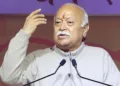
During the inauguration, Dr.Mohan Bhagwat Ji emphasized that while the Sangh’s infrastructure has expanded, its true power lies in its people—selfless karyakartas who continue to dedicate their lives to the nation.
The Next Century: A Roadmap for Bharat’s Future
As RSS moves into its second century, its focus remains on strengthening Bharat from within. The roadmap ahead includes expanding its grassroots presence, promoting national self-reliance, fostering unity, and empowering the youth. The organization aims to deepen its cultural and intellectual engagement, ensuring that Bharat’s civilizational heritage remains the guiding force for its future progress.
A Century of Service, Discipline, and Nationalism
The journey of the Rashtriya Swayamsevak Sangh over the past hundred years is not just the story of an organization—it is the story of a national resurgence, cultural reaffirmation, and disciplined nation-building. From its humble beginnings in Nagpur in 1925 to becoming a formidable force shaping Bharat’s destiny, RSS has remained steadfast in its commitment to the nation, undeterred by challenges, and unwavering in its vision.
Through shakhas, selfless karyakartas, and a structured grassroots approach, RSS has created a cadre of disciplined, service-oriented individuals who work tirelessly for the upliftment of society. It has been instrumental in preserving Bharat’s civilizational ethos, promoting social harmony, and strengthening national unity. Unlike movements driven by transient goals, the RSS has always functioned with a long-term vision—one that transcends political fluctuations and remains focused on the deeper cultural and societal transformation of Bharat.
As RSS enters its next century, it carries with it not just a legacy of service but a responsibility to shape Bharat’s future. The challenges ahead—social, economic, and cultural—require greater unity, self-reliance, and national consciousness. The organization’s unwavering commitment to Seva (service), Samrasta (social harmony), and Swabhiman (self-respect) will continue to guide Bharat toward a future where it stands tall as a global leader, rooted in its values yet forward-looking in its aspirations.
Just as a small seed planted in 1925 has grown into a vast banyan tree, providing shade and strength to millions, RSS will continue to be the unshakable pillar of Bharat’s spiritual and cultural awakening. As the Sangh marches forward with the mantra of संग़च्छध्वं संवदध्वं सं वो मनांसि जानताम्।—”Let us move together, let us speak together, and let our minds be united”, it reminds every Bharatiya that the path to national greatness lies in collective effort, selfless service, and unwavering dedication to the motherland.