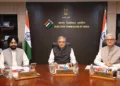
The much awaited Comptroller and Auditor General (CAG) report was finally presented in the Delhi Assembly by newly appointed Chief Minister Rekha Gupta on February 25. Out of 14 pending CAG reports, the first one to be tabled revealed that the Aam Aadmi Party (AAP) government’s excise policy for 2021-2022 led to a massive loss of Rs 2,000 crore.
At a time when Delhi is witnessing a major political shift, the report has further intensified legal troubles for the top leadership of AAP. Former CM Arvind Kejriwal, currently out on bail, along with Manish Sisodia and Rajya Sabha MP Sanjay Singh, are already facing serious allegations of corruption and money laundering in connection with the policy implementation.
Kejriwal, who built his political brand as a leader of the “common man” (Aam Aadmi), tried hard to maintain his clean image. He made grand promises, from free bus rides for women to financial aid for auto-rickshaw drivers, women and youngsters but ultimately failed to win the trust of Delhiites. This CAG report has shattered the party’s so-called “Kattar Imaandar” (staunchly honest) image, exposing how AAP, which once claimed to revolutionise Indian politics, was instead playing with the emotions of the common people.
What does the report reveal?
The report, titled “Performance Audit on Regulation and Supply of Liquor in Delhi,” reviews the Delhi Excise Department’s operations across four years, from 2017-18 to 2020-21, with a particular emphasis on the 2021-22 excise policy. The CAG audit found numerous flaws in the monitoring and regulation of liquor supply in Delhi, which amounted to large revenue losses. The estimated loss because of the disparities is Rs. 2,026.91 crore.
The 2021-22 excise policy which was promoted as a revolutionary initiative by the AAP government to remove the irregularities in the liquor trade, increase transparency and help boost state revenue, later resulted in a disastrous step in terms of transparency and revenue. The policy was later withdrawn by the AAP government following allegations of corruption.
Following the implementation of the policy, the government closed its liquor shops and allowed private businesses to take over through a new licensing system. The decision was made to improve efficiency, stop illegal sales, and increase revenue.
Under this policy, Delhi was divided into 32 zones, with each zone having at least 27 wards. A total of 849 liquor shops were to be run by 22 private companies, replacing the earlier system where four government corporations managed 377 shops, and private businesses operated 262. The aim was to break monopoly practices and create fair competition.
However, instead of bringing transparency and higher revenue, the new system led to monopoly, cartels, and financial misconduct.
According to the CAG report, the policy was meant to prevent monopolies and cartels, but its design had flaws. It created exclusive ties between manufacturers and wholesalers and required large retail zones with a minimum of 27 wards. This limited the number of license holders, increasing the risk of monopoly and cartel formation. The report also found that some businesses controlled multiple parts of the supply chain, leading to unfair market practices and favoritism in brand sales.
The CAG report highlights a major disparity which was the failure to implement the Rule 35 of the Delhi Excise Rules, 2010, which restricts related parties from getting multiple licenses. The audit discovered that common directorships existed across firms holding several types of licenses, potentially leading to conflicts of interest and possibilities of monopoly.
The report highlights a major issue: instead of creating a competitive market, the policy gave control of liquor distribution to a small group of wholesalers, forming an oligopoly. Under the previous system (2020-21), wholesale licenses for Indian Made Foreign Liquor (IMFL) and Foreign Liquor (FL) were given to 77 IMFL manufacturers and 24 FL suppliers, allowing for a diverse and competitive market. However, the new policy reduced the number of wholesale license holders to just 14 businesses.
An even bigger concern was how a few wholesalers gained overwhelming control over the liquor supply chain. Three major distributors controlled over 71 per cent of Delhi’s liquor supply. The CAG found that they had exclusive agreements with liquor manufacturers, deciding which brands would be available in the city. Out of 367 IMFL brands supplied by 13 wholesalers, Indospirit exclusively handled 76 brands, Mahadev Liquors controlled 71, and Brindco managed 45. Together, these three accounted for 71.7 per cent of all liquor sales in Delhi.
The Sheesh Mahal controversy
One of the most shocking revelations in the pending CAG reports is the audit of the lavish renovation of the Chief Minister’s residence, mockingly called ‘Sheesh Mahal’ by BJP leaders.
The project was initially estimated to cost Rs 7.91 crore, but the awarded contract increased this to Rs 8.62 crore with an overrun of 13.21 per cent. However, the final expenditure skyrocketed to a staggering Rs 33.66 crore, marking an unprecedented 342.31 per cent increase. This massive cost escalation points to serious financial mismanagement and raises concerns about the transparency and accountability of public fund usage.
It is shocking that such a huge amount was spent on building a house for a CM who came to power through a public movement. He, the one who used to carry a two-rupee pen in his pocket, travelled by public transport and spoke about Lokpal, public participation, and an ideal welfare state. But now has wasted crores of public money on a luxurious home, ran the government from jail, and completely abandoned the values he once stood for.
Mohalla Clinics suffering
CM Rekha Gupta tabled the seven-page CAG report on the health department which highlights the lack of health infrastructure in Delhi. During the COVID Central government allocated a fund of Rs. 787.91 Crore for health infrastructure in Delhi but the AAP government has only utilised the Rs.582.84 Crore. Even Mohalla Clinic lacks basic facilities like toilet, tables , staff, medicines etc. Out of Rs 119.85 crore released for PPE kits, masks and medicines required to prevent the emerging Covid pandemic, Rs 83.14 crore has not been utilised. This shows inefficiency, poor financial management and administrative negligence of the AAP government towards public health.
The CAG report paints a grim picture of Delhi’s healthcare infrastructure, exposing severe shortcomings in government hospitals, Mohalla Clinics, and AYUSH dispensaries.
Hospitals: Among 27 hospitals surveyed, basic medical services were lacking in many.
14 hospitals had no ICU services.
16 hospitals did not have blood banks.
8 hospitals lacked an oxygen supply.
15 hospitals had no mortuary services.
12 hospitals did not have ambulance services, putting emergency patients at grave risk.
Mohalla Clinics: These neighbourhood health centers, a key AAP initiative, were found to be in poor condition.
21 clinics lacked basic toilet facilities.
15 had no power backup, rendering them non-functional during outages.
12 clinics were inaccessible to persons with disabilities, restricting healthcare access for vulnerable groups.
AYUSH Dispensaries: The condition of traditional medicine centers was equally concerning.
17 dispensaries had no power backup.
7 did not have toilets.
14 lacked access to drinking water.
The BJP has claimed that the CAG reports will reveal the corruption of the previous AAP government in the national capital. The Delhi Assembly session began amid slogans of ‘Jai Bhim’ by AAP leaders. Speaker Vijender Gupta suspended twelve AAP MLAs, including LoP Atishi and Gopal Rai, for causing a disturbance during LG VK Saxena’s address.
Following the release of the CAG report, Chief Minister Rekha Gupta strongly criticised the previous AAP government’s excise policy. She stated:
“With the CAG report being tabled, it has become clear that the sole purpose of the liquor policy implemented by the previous government in Delhi was to give benefit to its favourite businessmen… Not only has the public come to know the truth about the liquor policy that is looting Delhi, but it has also become clear how personal interests were placed above the interests of the public.”
The findings add to the mounting legal troubles for AAP’s top leadership, further deepening the party’s credibility crisis.